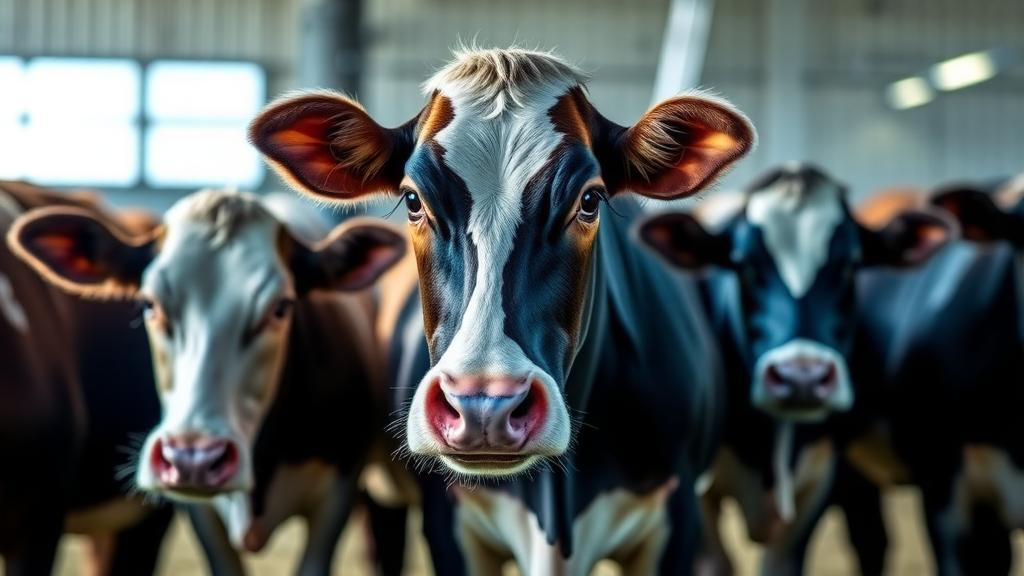
A small but carefully controlled study of Karan Fries dairy cows in India has identified four genes whose activity in milk cells differs sharply between high- and low-producing animals, offering a possible molecular handle for breeding decisions in crossbred cattle. Researchers at the National Dairy Research Institute (NDRI) in Karnal measured the expression of six candidate genes in milk somatic cells and found that MFGE8 and PDIA3 were significantly more active in high yielders, while S100A8 and RAGE were elevated in low yielders. The work, published in Dairy Science and Management, points to a non-invasive way of probing the biology of lactation using nothing more than a milk sample.
The Karan Fries is a synthetic crossbred developed at NDRI in April 1980 to boost the productivity of indigenous Indian cattle. Within the institute’s herd, milk output varies widely: some cows yield more than 4,000 kilograms in a single lactation while others produce less than 2,500 kilograms, a gap attributed to a mix of genetic and non-genetic factors along with each animal’s health status. Because crossbred cows contribute 29.81 percent of India’s total milk production and 57.43 percent of its cow milk, understanding what sets high producers apart at the molecular level has considerable practical appeal in a country whose milk output reached 230.58 million tons in 2022–23.
The study team, comprising Iwanrihun Nonglang, Akshata Patil and Vikas Vohra, began with 20 healthy Karan Fries cows, ten with a high expected producing ability (EPA) and ten with a low EPA, all in peak lactation at 60 to 80 days postpartum. Every animal was screened for mastitis with the California Mastitis Test to rule out infection. After RNA isolation, only samples with an RNA Integrity Number of at least 8 were kept, leaving six high-yielding cows with an average EPA of 3,983 kilograms and six low-yielding cows averaging 2,948 kilograms. A difference of more than 1,000 kilograms in EPA between the groups ensured a clear contrast, and all management conditions were held constant.
Milk somatic cells served as the analytical material. These cells, which occur in higher numbers in high-producing crossbred cows, provide a non-invasive window on mammary gland gene expression without the need for biopsy. Roughly 500 milliliters of milk were collected from each cow, and a modified protocol involving centrifugation, removal of the fat layer, and repeated washing with chilled, DEPC-treated PBS yielded a substantial cell pellet. Total RNA was extracted with QIAzol reagent, and refinements such as room-temperature incubation of the homogenized solution and chilled isopropanol precipitation improved both yield and purity, confirmed by spectrophotometric ratios and by agarose gels showing intact 28S, 18S and 5S ribosomal RNA bands.
The researchers then used reverse transcription quantitative PCR, one of the most sensitive techniques available for measuring gene expression, capable in principle of detecting a single copy of a target transcript. They quantified six genes selected from earlier molecular work on lactation: ANXA1, Moesin, S100A8, PDIA3, MFGE8 and RAGE, with the housekeeping gene GAPDH as the reference. Each gene was run in triplicate, non-template controls checked for contamination, and melt curve analysis with a single sharp peak above the 61-degree annealing temperature confirmed that each reaction amplified a specific product. Fold changes were calculated with the 2-ΔΔCT method, low yielders serving as the control group, and differences were tested with a t-test using GraphPad Prism, with significance set at p below 0.05.
The results divided cleanly along production lines. PDIA3, a gene involved in lipid formation, release and cell repair, was significantly upregulated in high yielders at 2.760 plus or minus 0.7222 relative expression, compared with 1.271 plus or minus 0.3051 in low yielders. MFGE8, a membrane glycoprotein abundantly expressed in the lactating mammary gland that releases milk fat globules, showed an even stronger contrast: 4.027 plus or minus 0.6614 in high yielders against 1.057 plus or minus 0.1472 in low yielders, significant at the p below 0.01 level. The authors suggest that MFGE8 supports milk fat secretion and may help maintain mammary gland integrity through RGD-dependent cell adhesion via integrin signaling, while PDIA3’s elevation may reflect its role in repairing the cellular damage that intense milk secretion inflicts on secretory cells.
The opposite pattern appeared for two other genes. S100A8, a calcium-binding protein with antimicrobial and inflammatory functions, was significantly higher in low-yielding cows at 1.452 plus or minus 0.560, versus just 0.1150 plus or minus 0.04730 in high yielders. The authors propose that S100A8 may hinder milk production by binding intracellular calcium and possibly by inhibiting casein kinase activity. RAGE, the receptor for advanced glycation end products that also serves as a receptor for S100 proteins, was significantly downregulated in high yielders at 0.1161 plus or minus 0.02035 but upregulated in low yielders at 1.939 plus or minus 0.8853, a pattern the researchers interpret as a possible inhibitory influence on milk secretion linked to inflammatory or cellular stress responses.
Not every gene told a story. ANXA1, part of the annexin family of calcium-binding proteins involved in inflammation and cell secretion, showed no significant difference between groups, with expression of 2.502 plus or minus 0.7315 in high yielders and 1.565 plus or minus 0.5044 in low yielders. Moesin, which helps maintain the structural integrity and basal polarity of milk-secreting cells through a complex with the prolactin receptor and NHERF1/EBP50, was likewise undistinguished, at 1.404 plus or minus 0.5185 versus 1.156 plus or minus 0.2399. The authors note that both genes may show stronger differences at early or late lactation stages rather than at the peak examined here, and that previous protein-level findings in Karan Fries cattle had suggested roles the transcript-level test did not confirm at this stage.
One of the study’s strengths is how well its transcript-level results align with earlier proteomic work on the same six proteins in mammary tissue of high- and low-yielding Karan Fries cows. That convergence across two independent measurement platforms strengthens the case that MFGE8, PDIA3, S100A8 and RAGE are genuinely associated with production differences rather than artifacts of one assay. The authors caution, however, that a full picture of these genes’ functions will require an integrative approach combining expression profiling with proteomic analysis, and they note that regulatory variations in promoter and untranslated regions may underlie the expression differences they observed.
The limitations are stated plainly by the researchers themselves: with only six animals per group after RNA quality filtering, the sample size restricts how broadly the findings can be applied. The results are described as preliminary evidence that MFGE8 and PDIA3 may serve as candidate genes associated with enhanced milk production in Karan Fries cattle, and validation in larger populations will be essential before these expression patterns could become reliable markers in breeding programs. Even so, the study fills a gap in a germplasm the authors describe as under-researched, and it demonstrates that a routine milk sample, processed with careful RNA quality control, can reveal molecular differences that parallel an animal’s entire production record. For a dairy sector where crossbred cattle carry more than half of cow milk output, that is a proof of concept worth watching as larger validation studies follow.
Subject of Research: Differential expression of lactation-associated genes in high- and low-yielding Karan Fries dairy cows measured in milk somatic cells
Article Title: Differential expression of lactation associated genes in cattle: a transcriptomic approach to precision dairy breeding
Article References: Nonglang, I., Patil, A., & Vohra, V. (2025). Differential expression of lactation associated genes in cattle: a transcriptomic approach to precision dairy breeding. Dairy Science and Management, 2(1), Article 8. https://doi.org/10.1186/s44363-025-00012-y
Image Credits: AI Generated
DOI: 10.1186/s44363-025-00012-y
Keywords: Karan Fries cattle, gene expression, qPCR, milk somatic cells, MFGE8, PDIA3, S100A8, RAGE, dairy breeding, lactation, NDRI, precision breeding
News Source: Juliet Wilcox. (October 29, 2026). Milk Cell Gene Test Reveals Molecular Signatures of High-Yielding Dairy Cows. Scienmag.