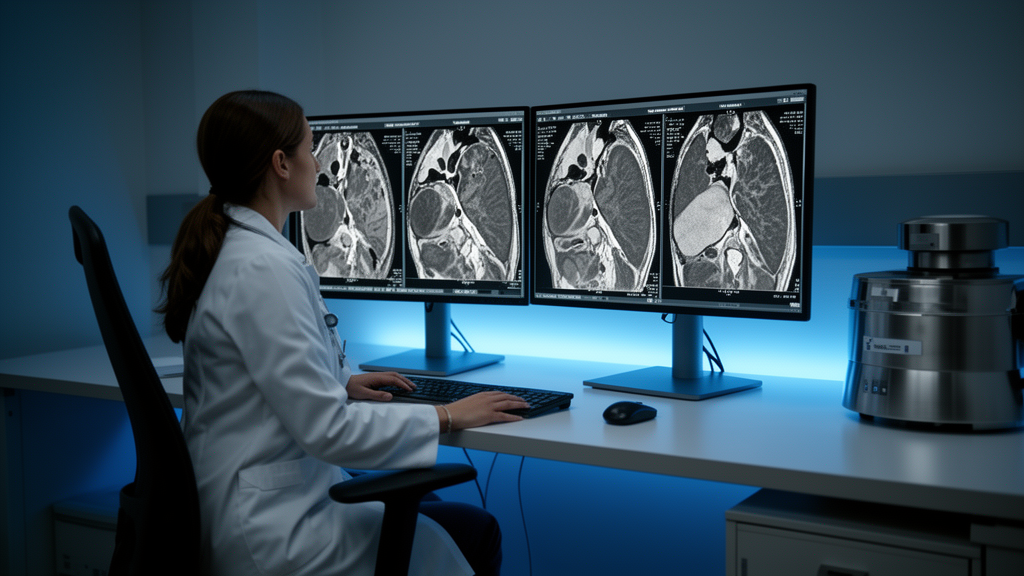
In a retrospective analysis of 517 patients with triple-negative breast cancer, researchers found that mid-treatment radiologic complete response on breast MRI serves as a strong early predictor of pathologic complete response following neoadjuvant chemotherapy. The study, published in Breast Cancer Research, examined the predictive value of imaging response in the context of modern treatment regimens that include carboplatin and pembrolizumab. By analyzing serial MRI scans taken at baseline, mid-treatment, and post-neoadjuvant chemotherapy, the team aimed to clarify how early radiologic findings correlate with final surgical outcomes across different therapeutic approaches.
The research involved three distinct treatment groups: 225 patients who received non-carboplatin regimens, 148 patients who received carboplatin-based regimens, and 144 patients who received pembrolizumab. The investigators evaluated associations between radiologic complete response and pathologic complete response. This multi-regimen design allowed the researchers to assess whether the predictive utility of mid-treatment imaging varied depending on the specific chemotherapy and immunotherapy components used.
Mid-treatment radiologic complete response rates were highest in the pembrolizumab group, reaching 24.3 percent. This rate was notably higher than the 12.8 percent observed in the carboplatin group and the 11.6 percent seen in the non-carboplatin group. Statistical analysis revealed that the inclusion of pembrolizumab independently increased the likelihood of achieving mid-treatment radiologic complete response, with an adjusted odds ratio of 3.13. The 95 percent confidence interval for this association was 1.67 to 5.91, with a p-value less than 0.001, indicating a statistically significant difference in early radiologic response between the immunotherapy group and the other regimens.
The central finding of the study is that mid-treatment radiologic complete response was a robust predictor of pathologic complete response across all three treatment regimens. The adjusted odds ratio for this prediction was 26.36, with a 95 percent confidence interval of 9.30 to 74.69 and a p-value less than 0.001. This suggests that patients who show a complete response on MRI during treatment are significantly more likely to achieve a complete pathologic response at the time of surgery.
When compared to post-neoadjuvant chemotherapy radiologic complete response, mid-treatment response demonstrated a stronger association with pathologic complete response. The adjusted odds ratio for post-neoadjuvant chemotherapy radiologic complete response was 8.92, with a 95 percent confidence interval of 5.58 to 14.23 and a p-value less than 0.001.
The study design was retrospective and conducted at a single center, spanning an extended period of time. The authors emphasize that these findings should be interpreted as hypothesis-generating rather than definitive proof of clinical utility. Despite these limitations, the consistency of the predictive association across different regimens provides a rationale for further investigation.
The authors suggest that these results provide a scientific basis for prospective, response-adapted trials that evaluate the use of mid-treatment MRI in triple-negative breast cancer.
Subject of Research: Predictive value of mid-treatment MRI for pathologic response in triple-negative breast cancer
Article Title: Mid-treatment radiologic response as an early predictor of pathologic response in TNBC in the era of pembrolizumab
Article References: Bae, S. J., Eun, N. L., Kim, J. H., Kook, Y., Youk, J. H., Kim, J.-A., Son, E. J., Jeong, J., Cha, Y. J., & Ahn, S. G. (2026). Mid-treatment radiologic response as an early predictor of pathologic response in TNBC in the era of pembrolizumab. Breast Cancer Research. https://doi.org/10.1186/s13058-026-02371-z
Image Credits: AI Generated
DOI: 10.1186/s13058-026-02371-z
Keywords: triple-negative breast cancer, breast MRI, pathologic complete response, pembrolizumab, neoadjuvant chemotherapy, radiologic response, oncology, biomarkers, Mid-treatment, radiologic, response, early
News Source: Nathaniel Bowman. (November 10, 2026). Mid-treatment MRI Predicts Pathologic Response in TNBC. Scienmag.