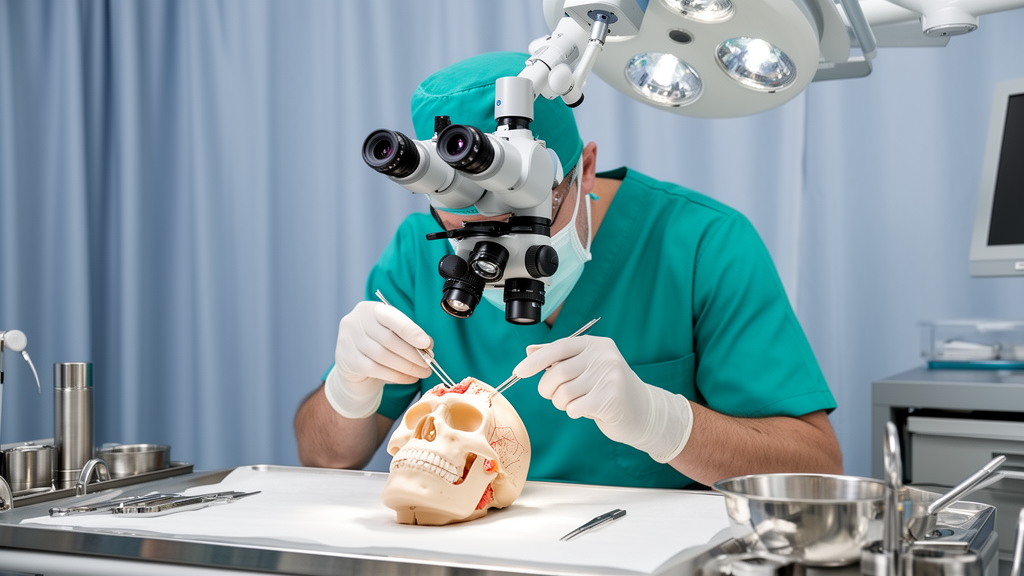
A mini-review published in Acta Neurochirurgica highlights a critical gap in neurosurgical training: the maintenance of psychomotor skills over time. While significant research has addressed how surgeons acquire microsurgical techniques, far less attention has been directed toward how these skills are retained, particularly for low-frequency, high-risk procedures. The review, led by Yasmin Sadigh and colleagues, argues that technical proficiency can deteriorate without regular reinforcement, posing a risk to patient safety in complex operations such as extracranial-intracranial bypass surgery, aneurysm clip reconstruction, and complex skull base surgery.
The authors note that microsurgical procedures in neurosurgery are characterized by steep learning curves, exceptional technical complexity, and limited tolerance for error. Although structured training programs are effective for initial skill acquisition, the review points out that technical performance may decline within weeks to months if skills are not regularly reinforced.
To address this issue, the mini-review examines lessons from high-reliability professions, including military special operations, aviation, and motorsport. These fields have developed robust frameworks for maintaining perishable skills through structured maintenance, objective performance assessment, and recurrent training. The authors suggest that similar principles can be applied to neurosurgical practice to ensure that expertise is sustained throughout a surgeon’s career.
The review analyzes the factors influencing microsurgical skill retention, identifying procedural complexity, practice frequency, and initial proficiency as key variables. It highlights that existing studies indicate simulation-based rehearsal, cadaveric training, and deliberate practice can mitigate skill decay and accelerate skill reacquisition. However, the authors emphasize that optimal retraining intervals and general ‘skill retention’ strategies remain poorly defined in the current literature.
The authors argue that retention-focused education, simulation, and assessment are essential for patient safety and procedural efficacy. They propose that future research should define decay timelines and evaluate the predictive validity of training methods to optimize how surgical competencies are preserved.
Subject of Research: Mini-review on skill retention in neurosurgery and lessons from high-reliability professions
Article Title: Skill maintenance in neurosurgery: lessons from high-reliability professions and a plea to prioritize psychomotor skill retention, a mini-review
Article References: Sadigh, Y., Paun, C., Carciumaru, T., Marziali, E., Boznea, C. M., Dindelegan, G., Meling, T. R., & Volovici, V. (2026). Skill maintenance in neurosurgery: lessons from high-reliability professions and a plea to prioritize psychomotor skill retention, a mini-review. Acta Neurochirurgica. https://doi.org/10.1007/s00701-026-07041-9
Image Credits: AI Generated
DOI: 10.1007/s00701-026-07041-9
Keywords: neurosurgery, skill retention, microsurgery, medical training, high-reliability professions, simulation, competency maintenance, Acta Neurochirurgica, Skill, maintenance, lessons, high-reliability
News Source: Ophelia Keating. (November 11, 2026). Neurosurgery Mini-Review Urges Focus on Skill Retention. Scienmag.