• HOME
  • NEWS
  • EXPLORE
    • CAREER
      • Companies
      • Jobs
    • EVENTS
    • iGEM
      • News
      • Team
    • PHOTOS
    • VIDEO
    • WIKI
  • BLOG
  • COMMUNITY
    • FACEBOOK
    • INSTAGRAM
    • TWITTER
Tuesday, October 27, 2026
BIOENGINEER.ORG
No Result
View All Result
  • Login
  • HOME
  • NEWS
  • EXPLORE
    • CAREER
      • Companies
      • Jobs
        • Lecturer
        • PhD Studentship
        • Postdoc
        • Research Assistant
    • EVENTS
    • iGEM
      • News
      • Team
    • PHOTOS
    • VIDEO
    • WIKI
  • BLOG
  • COMMUNITY
    • FACEBOOK
    • INSTAGRAM
    • TWITTER
No Result
View All Result
Bioengineer.org
No Result
View All Result
Home NEWS Science News Biology

Mid-Cretaceous amber reveals a flourishing island cradle of Southeast Asian plants

by
October 27, 2026
in Biology
Reading Time: 2 mins read
0
Mid-Cretaceous amber reveals a flourishing island cradle of Southeast Asian plants

Mid-Cretaceous amber reveals a flourishing island cradle of Southeast Asian plants

Share on FacebookShare on TwitterShare on LinkedinShare on RedditShare on Telegram

The tropical flora of Southeast Asia is often assumed to be a relatively young phenomenon, its celebrated diversity assembled mostly during the Cenozoic era. A new study in Nature Ecology & Evolution challenges that view. Based on plant fossils exquisitely preserved in mid-Cretaceous amber from Kachin, Myanmar, researchers report a large assemblage of exceptionally well-preserved plant fossils that includes a rich diversity of angiosperms, together with many other seed plants and cryptogams.

The scale of the find is striking. According to the authors, the morphospecies richness and clade diversity of this ancient flora rank among the highest recorded for any single Early to mid-Cretaceous plant megafossil assemblage.

The study also explains how such a diverse flora came to be in Southeast Asia. The plants reached the region rafted on the West Burma Block, an arc-shaped microplate that separated from the northwestern corner of the Australian Plate during the Jurassic and drifted northwards, finally colliding with Sundaland by the Eocene. Crucially, the Burma Terrane remained low-lying and at low latitudes during the intervening 100 to 50 million years. The authors describe this long stable interval as a sanctuary for clade preservation, a cradle for the diversification of modern clades, and a conduit for transferring flourishing Gondwanan angiosperm lineages into Asia.

Together, these findings suggest that the origins of what ultimately became Southeast Asia’s angiosperm-dominated tropical forests reach back more than 100 million years, far earlier than the recent Cenozoic origin often assumed for the region’s flora. Rather than being assembled from scratch in the aftermath of the Cretaceous, the region’s plant diversity appears to have deep roots in a mid-Cretaceous island ecosystem that both preserved ancient lineages and generated new ones. The Kachin amber assemblage thus reframes Southeast Asian biodiversity not as a late arrival, but as the product of a hundred-million-year history of drift, survival and diversification on a low-latitude island arc.

Subject of Research: A mid-Cretaceous amber-preserved plant assemblage from Myanmar and the role of the West Burma Block in the origins of Southeast Asian plant biodiversity.

Article Title: A mid-Cretaceous island as a cradle of Southeast Asian plant biodiversity

Article References: Shi, C., Wang, B.-P., Engel, M. S., Mar Win, T. T., Wang, H., Zhu, B.-Y., Yang, J., Zhang, Q., Lin, Q.-H., Shi, Z.-P., Huang, H.-S., Cai, H.-H., Shi, Y.-J., Zhao, X.-C., Zhang, D.-X., Guo, X., Jiang, Q., Li, Y., Fan, Y., … Wang, S. (2026). A mid-Cretaceous island as a cradle of Southeast Asian plant biodiversity. Nature Ecology & Evolution. https://doi.org/10.1038/s41559-026-03219-7

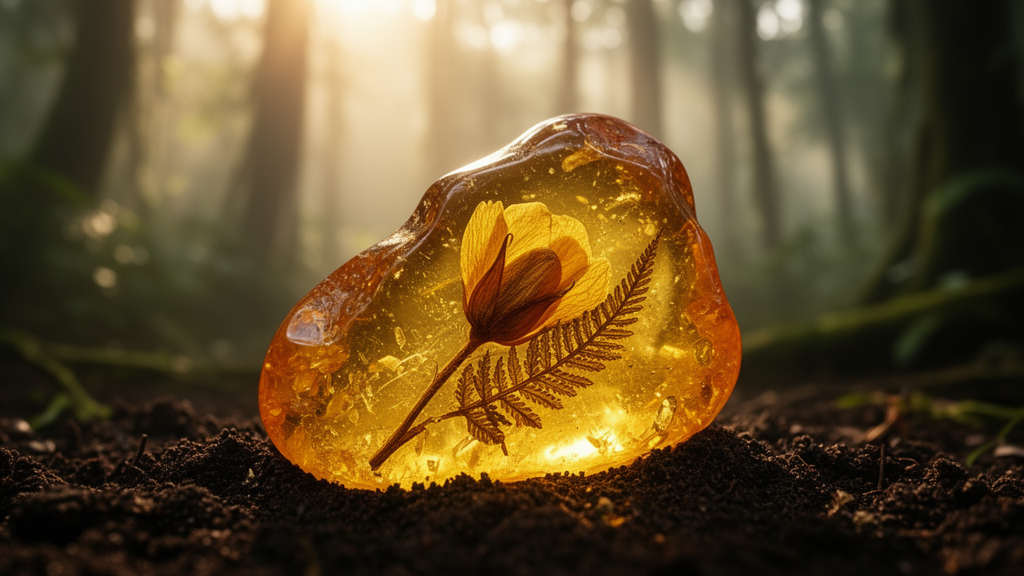
Image Credits: AI Generated

DOI: 10.1038/s41559-026-03219-7

Keywords: mid-Cretaceous, amber fossils, Kachin Myanmar, angiosperms, West Burma Block, Southeast Asia, plant biodiversity, paleobotany, Gondwanan lineages, tropical forests, morphospecies, plate tectonics

News Source: Drew Townsend. (October 27, 2026). Mid-Cretaceous amber reveals a flourishing island cradle of Southeast Asian plants. Scienmag.


Tags: Amber fossilsangiospermsGondwanan lineagesKachin Myanmarmid-Cretaceousmorphospeciespaleobotanyplant biodiversityPlate TectonicsSoutheast Asiatropical forestsWest Burma Block
Share12Tweet7Share2ShareShareShare1

Related Posts

Global tracking study reveals how delays ripple through bird migration schedules

Global tracking study reveals how delays ripple through bird migration schedules

October 27, 2026
Brood Parasitism Drives Faster W Chromosome Decay in Cuckoo Finches

Brood Parasitism Drives Faster W Chromosome Decay in Cuckoo Finches

October 27, 2026

New open platform links molecular simulations to NMR data across the GPCRome

October 27, 2026

Why Most Microbiome Therapies Never Reach the Clinic, and What Decides the Ones That Do

October 27, 2026

POPULAR NEWS

  • Iridium Catalyst Achieves Elusive para-C–H Activation of Free Aromatic Carboxylic Acids

    Iridium Catalyst Achieves Elusive para-C–H Activation of Free Aromatic Carboxylic Acids

    29 shares
    Share 12 Tweet 7
  • Mitofusin-blocking peptides shrink heart attack damage in mice

    29 shares
    Share 12 Tweet 7
  • Mid-Cretaceous amber reveals a flourishing island cradle of Southeast Asian plants

    29 shares
    Share 12 Tweet 7
  • Global tracking study reveals how delays ripple through bird migration schedules

    29 shares
    Share 12 Tweet 7

About

We bring you the latest biotechnology news from best research centers and universities around the world. Check our website.

Follow us

Recent News

Iridium Catalyst Achieves Elusive para-C–H Activation of Free Aromatic Carboxylic Acids

Mitofusin-blocking peptides shrink heart attack damage in mice

Mid-Cretaceous amber reveals a flourishing island cradle of Southeast Asian plants

Subscribe to Blog via Email

Enter your email address to subscribe to this blog and receive notifications of new posts by email.

Join 85 other subscribers
  • Contact Us

Bioengineer.org © Copyright 2023 All Rights Reserved.

Welcome Back!

Login to your account below

Forgotten Password?

Retrieve your password

Please enter your username or email address to reset your password.

Log In
No Result
View All Result
  • Homepages
    • Home Page 1
    • Home Page 2
  • News
  • National
  • Business
  • Health
  • Lifestyle
  • Science

Bioengineer.org © Copyright 2023 All Rights Reserved.