• HOME
  • NEWS
  • EXPLORE
    • CAREER
      • Companies
      • Jobs
    • EVENTS
    • iGEM
      • News
      • Team
    • PHOTOS
    • VIDEO
    • WIKI
  • BLOG
  • COMMUNITY
    • FACEBOOK
    • INSTAGRAM
    • TWITTER
Saturday, February 7, 2026
BIOENGINEER.ORG
No Result
View All Result
  • Login
  • HOME
  • NEWS
  • EXPLORE
    • CAREER
      • Companies
      • Jobs
        • Lecturer
        • PhD Studentship
        • Postdoc
        • Research Assistant
    • EVENTS
    • iGEM
      • News
      • Team
    • PHOTOS
    • VIDEO
    • WIKI
  • BLOG
  • COMMUNITY
    • FACEBOOK
    • INSTAGRAM
    • TWITTER
  • HOME
  • NEWS
  • EXPLORE
    • CAREER
      • Companies
      • Jobs
        • Lecturer
        • PhD Studentship
        • Postdoc
        • Research Assistant
    • EVENTS
    • iGEM
      • News
      • Team
    • PHOTOS
    • VIDEO
    • WIKI
  • BLOG
  • COMMUNITY
    • FACEBOOK
    • INSTAGRAM
    • TWITTER
No Result
View All Result
Bioengineer.org
No Result
View All Result
Home NEWS Science News Chemistry

Microscope lens inspired by lighthouse

Bioengineer by Bioengineer
October 5, 2020
in Chemistry
Reading Time: 2 mins read
0
IMAGE
Share on FacebookShare on TwitterShare on LinkedinShare on RedditShare on Telegram

IMAGE

Credit: © 2020 KAUST; Andrea Bertoncini

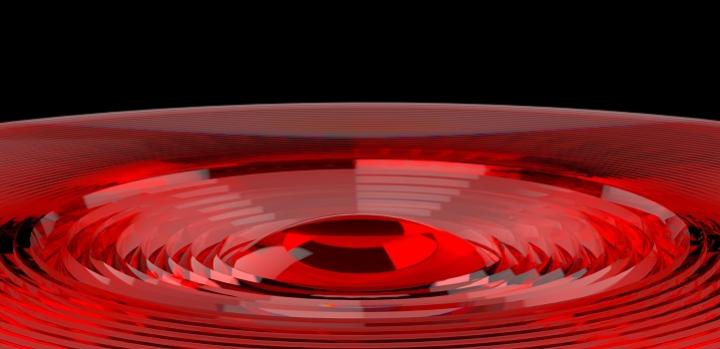
An optical device that resembles a miniaturized lighthouse lens can make it easier to peer into Petri dishes and observe molecular-level details of biological processes, including cancer cell growth. Developed by KAUST, the new lens is also very cost effective.

Many bioimaging techniques require fluorescent dyes to be added to specific cell targets. But a recently developed method known as stimulated raman scattering (SRS) microscopy can avoid cumbersome labeling steps by using laser pulses to collect molecular vibrational signals from biological samples. The ability of SRS microscopes to produce high-resolution, noninvasive images at real-time speeds has prompted researchers to deploy them also for in vivo disease diagnostic studies.

One drawback of SRS microscopes, however, is that the detection system is affected by a background signal, known as cross-phase modulation, which is generated by the intense interactions between laser pulses and the samples.

“This background signal is ubiquitous and reduces the contrast during microscopic observation of complex samples, such as live cells,” explains Carlo Liberale from KAUST. “It also makes it difficult to identify target molecules.”

To avoid the effects of cross-phase modulation, most SRS microscopes need to use bulky glass objectives capable of collecting wide angles of light. However, these kinds of lenses are nearly impossible to fit into the stage-top incubators that are used to grow live cells for bioimaging.

Andrea Bertoncini, a researcher in Liberale’s group, spearheaded work to create an ultrathin SRS lens using laser-based three-dimensional (3D) printing. Taking their cue from the slender design of lighthouse lenses, the KAUST team printed tiny lens-like and mirror-like features into a transparent polymer only a fraction of a millimeter thick.

“This type of lens design is a very efficient way to collect and redirect light coming from wide-angle sources right to our laser detector,” says Bertoncini. “And since it’s so thin, it easily fits into the closed chambers of an incubator.”

After calibration trials confirmed that their new lens could reject the cross phase modulation background, the researchers turned their sights on human cancer cells cultured in a conventional Petri dish. These experiments revealed that the lens could image the cell’s interior components with resolution similar to conventional SRS microscopes, but in a much more convenient and less expensive format.

“The objectives we normally use to collect SRS microscope signals cost a few thousand dollars,” says Bertoncini. “Now we have a lens with similar benefits that we can produce for less than a tenth of that price.”

###

Media Contact
KAUST Discovery team
[email protected]

Original Source

https://discovery.kaust.edu.sa/en/article/1039/microscope-lens-inspired-by-lighthouse

Related Journal Article

http://dx.doi.org/10.1002/jbio.202000219

Tags: BiotechnologyCell BiologyOpticsTechnology/Engineering/Computer Science
Share12Tweet8Share2ShareShareShare2

Related Posts

blank

Breakthrough in Environmental Cleanup: Scientists Develop Solar-Activated Biochar for Faster Remediation

February 7, 2026
blank

Cutting Costs: Making Hydrogen Fuel Cells More Affordable

February 6, 2026

Scientists Develop Hand-Held “Levitating” Time Crystals

February 6, 2026

Observing a Key Green-Energy Catalyst Dissolve Atom by Atom

February 6, 2026
Please login to join discussion

POPULAR NEWS

  • Robotic Ureteral Reconstruction: A Novel Approach

    Robotic Ureteral Reconstruction: A Novel Approach

    82 shares
    Share 33 Tweet 21
  • Digital Privacy: Health Data Control in Incarceration

    63 shares
    Share 25 Tweet 16
  • Study Reveals Lipid Accumulation in ME/CFS Cells

    57 shares
    Share 23 Tweet 14
  • Breakthrough in RNA Research Accelerates Medical Innovations Timeline

    53 shares
    Share 21 Tweet 13

About

We bring you the latest biotechnology news from best research centers and universities around the world. Check our website.

Follow us

Recent News

Decoding Prostate Cancer Origins via snFLARE-seq, mxFRIZNGRND

Digital Health Perspectives from Baltic Sea Experts

Florida Cane Toad: Complex Spread and Selective Evolution

Subscribe to Blog via Email

Enter your email address to subscribe to this blog and receive notifications of new posts by email.

Join 73 other subscribers
  • Contact Us

Bioengineer.org © Copyright 2023 All Rights Reserved.

Welcome Back!

Login to your account below

Forgotten Password?

Retrieve your password

Please enter your username or email address to reset your password.

Log In
No Result
View All Result
  • Homepages
    • Home Page 1
    • Home Page 2
  • News
  • National
  • Business
  • Health
  • Lifestyle
  • Science

Bioengineer.org © Copyright 2023 All Rights Reserved.