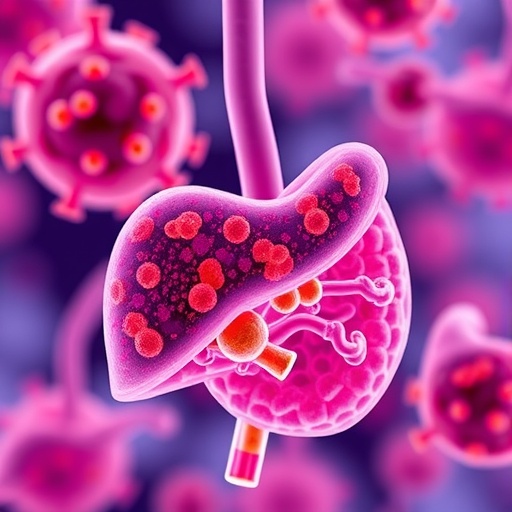
In a groundbreaking discovery that could revolutionize the treatment of chronic liver conditions, researchers at UC Davis Health have uncovered a natural microbial molecule capable of repairing liver damage and restoring gut integrity following exposure to aflatoxin, a notorious environmental toxin. This innovative study paves the way toward a novel, non-toxic therapeutic approach for combating non-alcoholic fatty liver disease (NAFLD), a condition now increasingly prevalent worldwide, affecting more than a quarter of the adult population in the United States alone.
Central to this research is 10-hydroxystearic acid (10-HSA), a bioactive compound synthesized by Lactobacillus species residing within the gut microbiome. The study employed murine models subjected to aflatoxin B1 (AFB1), a potent mycotoxin produced by Aspergillus fungi commonly contaminating staple crops such as peanuts and corn. Aflatoxin exposure is well-documented to induce hepatic injury and systemic inflammation, making it an ideal pathological trigger to investigate multimodal liver-gut interventions.
The intricate interplay between the gut and liver, commonly referred to as the gut-liver axis, has emerged as a critical focus of research in metabolic and inflammatory diseases. This bidirectional communication network hinges upon complex signaling pathways involving bile acids, immune effectors, and lipid metabolites which maintain homeostasis under physiological conditions. Dysregulation of this axis often manifests in diseases like NAFLD, where hepatic lipid accumulation coincides with compromised gut barrier function and heightened inflammatory responses.
.adsslot_ZykHYnRJdA{ width:728px !important; height:90px !important; }
@media (max-width:1199px) { .adsslot_ZykHYnRJdA{ width:468px !important; height:60px !important; } }
@media (max-width:767px) { .adsslot_ZykHYnRJdA{ width:320px !important; height:50px !important; } }
ADVERTISEMENT
In this study, treatment with 10-HSA demonstrated a robust therapeutic effect, reversing aflatoxin-induced pathologies by concurrently restoring the gut mucosal barrier and normalizing hepatic metabolism. The restoration of gut epithelial integrity is particularly significant given its role in preventing translocation of endotoxins and inflammatory mediators that exacerbate liver damage. Additionally, key bile acid metabolites, such as cholesterol and deoxycholate, which were perturbed under toxin exposure, returned to their physiological concentrations, signaling metabolic re-equilibration.
At the molecular level, 10-HSA exercises its protective effects through activation of peroxisome proliferator-activated receptor alpha (PPARα), a nuclear receptor pivotal in regulating fatty acid oxidation and energy homeostasis in hepatic tissue. Chronic liver diseases often involve suppression of PPARα signaling, contributing to lipid dysregulation and sustained inflammation. By reactivating this pathway, 10-HSA not only facilitates hepatic repair but also supports regulatory immune functions in the gut, showcasing a dual-organ therapeutic potential that has been elusive in previous pharmacological interventions.
Unlike many synthetic drugs that carry the risk of cytotoxicity or off-target effects, 10-HSA is a naturally derived metabolite produced endogenously by commensal bacteria, thereby offering an inherently safer profile. This highlights the strategic advantage of leveraging the microbiome’s bioactive repertoire as precision therapeutics that act in situ at inflammatory sites, delivering localized action with minimal systemic burden.
The implications of these findings extend beyond therapy for NAFLD. Aflatoxin exposure remains a global health threat, especially in agricultural communities with inadequate food safety infrastructure. Developing a microbiome-derived supplement based on 10-HSA could offer a transformative public health tool capable of mitigating the long-term deleterious effects of chronic aflatoxin ingestion, potentially reducing incidence of liver cancer and other related morbidities linked to toxin exposure.
This research shifts the paradigm from the traditional emphasis on short-chain fatty acids (SCFAs) to exploring more complex microbial metabolites produced in response to inflammatory stimuli within the gut ecosystem. Such molecules may hold a wealth of untapped therapeutic potential, particularly in diseases characterized by intertwined organ dysfunctions such as the gut and liver.
The team behind this pioneering work, led by Professor Satya Dandekar of UC Davis Health, is now advancing towards human clinical trials, aiming to validate efficacy and safety in patients with fatty liver disease and metabolic disorders. These upcoming studies may open new avenues for personalized biotherapeutics founded on symbiotic interactions between the human host and its microbiota.
The discovery of 10-HSA underscores the critical importance of the gut-liver axis as a drug target and the broader concept of microbiome pharmaceutics as a paradigm shift in managing chronic inflammatory diseases. By harnessing nature’s own medicinal chemistry crafted through host-microbe coevolution, this line of research heralds a future of innovative, safer, and more effective treatments that restore health by restoring balance.
In sum, this study not only elucidates the molecular mechanisms by which microbial metabolites orchestrate tissue repair across the gut-liver interface but also sets the stage for a new class of therapeutic agents grounded in the sophisticated metabolic interplay of our microbiome. As chronic liver diseases continue to surge globally, such insights offer hope for interventions that are as elegant as they are practical, merging microbiology with clinical hepatology in unprecedented ways.
Subject of Research: Animals
Article Title: Microbial biotherapeutic metabolite alleviates liver injury by restoring hepatic lipid metabolism through PPARα across the gut-liver axis
News Publication Date: 12-Aug-2025
Web References:
https://doi.org/10.1128/mbio.01718-25
Keywords: Liver damage, Microbiology, Gastrointestinal disorders, Digestive disorders, Gut microbiota, Probiotics, Human microbiota, Microorganisms, Microbial physiology, Bacteriology, Microbial ecology, Immune response, Mycology
Tags: 10-hydroxystearic acid benefitsaflatoxin liver damagebioactive compounds in healthchronic liver condition researchenvironmental toxins and liver diseasegut integrity restorationgut-liver axis interactionsLactobacillus gut microbiomemicrobial molecule for liver healthnatural therapeutic approachesnon-alcoholic fatty liver disease treatmentsystemic inflammation reduction