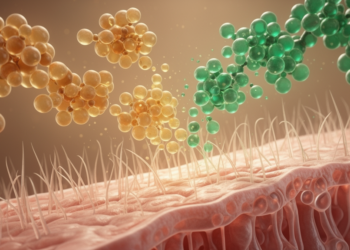
A comprehensive review published in Materials Today Bio in December 2026 proposes a new conceptual framework for evaluating metal-based hydrogen-generating therapeutic systems. The study, led by Shengwei Zhang and colleagues, argues that the field must move beyond simply measuring hydrogen production to understanding how specific administration routes shape local exposure and biological outcomes. By treating these materials as integrated systems of chemistry, formulation, and route, the authors aim to clarify the translational path for a class of therapeutics that has often been evaluated with inconsistent metrics.
Traditional hydrogen therapy relies on the administration of molecular hydrogen, a gas known for its small size and high diffusibility. While hydrogen has been investigated for its potential to attenuate oxidative injury and modulate inflammatory signaling, its clinical utility is limited by rapid diffusion and low aqueous solubility. These physical properties make it difficult to maintain a sustained and spatially controlled concentration of hydrogen within target tissues, a challenge that has driven the development of engineered delivery strategies.
Metal-based hydrogen-generating systems offer a solution by shifting the paradigm from passive gas administration to local reaction at the tissue interface. These materials, which include classical metal hydrides like magnesium hydride and calcium hydride, as well as reactive metals and metal-organic frameworks, produce hydrogen through hydrolysis, corrosion, or proton-responsive reactions. The therapeutic entity in these systems is not just the hydrogen gas itself, but the entire local reaction process, which may involve the release of metal ions, changes in pH, and other chemical modifications.
The review distinguishes between “H2-specific” and “H2-associated” biological effects to address a critical gap in mechanistic attribution. Because these materials release ions and alter the local chemical environment, it is often difficult to determine whether a therapeutic outcome is caused by hydrogen or by the metal components. The authors define H2-specific effects as those supported by experimental designs that separate hydrogen exposure from material-derived contributions, while H2-associated effects acknowledge the potential role of co-existing reaction products.
Administration route is identified as a primary determinant of therapeutic behavior. The authors categorize systems into oral, topical, injectable, intratumoral, intravenous, and implantable platforms, each creating a distinct reaction compartment. For instance, oral formulations must navigate the gastrointestinal tract to achieve systemic exposure, while topical dressings for wounds benefit from accessible placement and easier gas dissipation. Intravenous nanoplatforms, meanwhile, face the highest translational burden due to the need for circulation stability and controlled activation at the target site.
Chemical mechanisms vary significantly across material classes. Hydrolysis-driven systems, such as magnesium hydride, convert water access directly into hydrogen release, a process that can be rapid and potentially irritating if not properly confined. In contrast, storage-mediated systems like palladium hydride store hydrogen within a metallic lattice, allowing for a more gradual and sustained release. This difference in release kinetics dictates the engineering requirements for each platform, ranging from controlling burst release in hydrolytic systems to ensuring long-term stability in storage-based designs.
The review emphasizes that theoretical hydrogen capacity is an insufficient metric for evaluating these materials. In biological fluids, factors such as surface passivation, tissue buffering, and protein adsorption can substantially alter the actual release profile. Therefore, the authors advocate for a PK/PD-like exposure-response framework that links material input and reaction kinetics to the actual hydrogen exposure achieved in the target compartment, while accounting for accompanying chemical changes.
Safety and standardization are identified as major translational hurdles. The local reaction environment can lead to gas accumulation, excessive alkalization, or the release of bioactive ions that may have unintended effects. For intravenous and implantable systems, the long-term fate of metal residues and the potential for chronic inflammation require rigorous evaluation. The authors stress that safety margins must cover the entire reaction environment, not just the hydrogen gas, and that manufacturing reproducibility is essential for defining a reliable dose.
Future development of these systems should prioritize reproducible reaction profiles and credible mechanistic attribution. The review suggests that studies connecting material input with measured hydrogen exposure and biological response, while tracking accompanying chemical changes, will provide the strongest basis for selecting systems with realistic translational potential. By adopting a route-specific framework, the field can move toward more meaningful comparisons across different materials and delivery contexts.
This work provides a critical roadmap for the next generation of hydrogen-based therapies. By integrating chemical, engineering, and biological perspectives, the authors offer a structured approach to navigating the complexity of reactive material systems. As the field moves from preclinical proof-of-concept to clinical translation, the emphasis on route-matched exposure and comprehensive safety evaluation will be essential for realizing the therapeutic promise of metal-based hydrogen generation.
A detailed evaluation of specific chemical classes reveals substantial diversity in reaction pathways, functional architectures, and immediate chemical consequences beyond gas production. Classical metal hydrides such as magnesium hydride and calcium hydride generate molecular hydrogen primarily through hydrolysis upon contact with aqueous physiological fluids. In biological microenvironments, however, this water-driven reaction yields hydroxide-containing byproducts that elevate local pH, which may prove advantageous in acidic or infected lesions but risks tissue irritation if burst reactions proceed unchecked. In contrast, palladium hydride platforms incorporate hydrogen into the interstitial sites of a metallic lattice, enabling gradual diffusion and sustained exposure rather than an immediate water-driven release. Reactive metals such as zero-valent magnesium and iron do not require preloaded hydrogen, producing gas instead through corrosion, proton-responsive reactions, or acid-triggered oxidation in physiological electrolytes. Inorganic compounds, including two-dimensional magnesium diboride nanosheets and zirconium disilicide nanoparticles, further expand the material catalog through surface-mediated and water-associated reactions, though their distinct reaction residues require rigorous chemical tracing.
To convert these reactive cores into localized and controllable therapeutic agents, materials engineers assemble hybrid platforms that coordinate fluid ingress, matrix confinement, and byproduct diffusion. Incorporating reactive cores into metal-organic frameworks, polymer-coated microcapsules, or porous hydrogel depots allows researchers to modulate water access and prevent rapid burst release. For instance, encapsulating magnesium within poly(lactic-co-glycolic acid) microparticles establishes an in situ depot that sustains gaseous hydrogen evolution while preventing immediate local tissue inflammation. In other designs, surface coatings such as magnesium oxide shells protect reactive cores during gastrointestinal transit, delaying reaction onset until reaching target mucosal tissues. Furthermore, external triggers and procedural inputs—such as alternating magnetic fields, visible or near-infrared light irradiation, ultrasound, and galvanic coupling—can modulate reaction kinetics and enhance interfacial electron transfer. In surface-accessible tissues, light-activated photocatalytic hydrogels couple local hydrogen production with glucose depletion, whereas interventional platforms combine calcium hydride carriers with transarterial chemoembolization to generate gas inside tumor lesions during vascular occlusion.
The biological rationale for metal-based hydrogen generation encompasses diverse preclinical models, where therapeutic effects are frequently mediated through antioxidant defense, reduced lipid peroxidation, and suppressed inflammatory signaling. In rodent studies of high-fat diet-induced chronic kidney injury and acetaminophen-induced acute renal damage, oral administration of magnesium hydride feed mitigated renal dysfunction and reduced fibrotic remodeling, with molecular readouts implicating modulation of thioredoxin-interacting protein, NLRP3 inflammasome activation, and NF-κB pathways. Nanoparticulate magnesium hydride attenuated bone cancer pain by diminishing inflammatory sensitization, while oral reactive magnesium elevated hydrogen concentrations across blood, plasma, and cardiac tissue in isoproterenol-induced heart failure, correlating with decreased myocardial hypertrophy. In vascular and neurological investigations, zirconium disilicide nanoparticles targeted inflamed cerebral endothelium in ischemic stroke models, anchoring at the vessel interface to release diffusible hydrogen across the blood-brain barrier without requiring parenchymal penetration, and magnesium containers reduced mitochondrial impairment and neuronal ferroptosis following carotid artery occlusion and reperfusion.
Because these platforms simultaneously release bioactive ions and modify local tissue chemistry, resolving true hydrogen-mediated efficacy from accompanying material effects demands rigorous control designs. The release of magnesium ions can independently influence macrophage behavior, angiogenesis, and bone healing, while calcium-containing hydrolysis products alter cell survival and bacterial viability. Transition metals like iron and copper possess intrinsic redox activity capable of catalyzing reactions with endogenous oxidants and driving regulated cell death. Consequently, researchers must implement mechanism-matched controls—including hydrogen-deficient or passivated material analogues, ion-matched formulations, and carrier-only matrices—to verify whether observed tissue repair stems specifically from molecular hydrogen rather than concurrent alkalization, metal bioactivity, or procedural trauma. For light- or ultrasound-triggered systems, temperature-matched comparisons and energy-only sham controls are necessary to distinguish gas action from hyperthermic or acoustic damage.
Overcoming translational bottlenecks requires moving from small-batch laboratory synthesis to strict chemistry, manufacturing, and control specifications across the entire product lifecycle. Reactive hydrides and metallic magnesium exhibit acute sensitivity to oxygen and ambient moisture, where minor surface oxidation or partial hydrolysis during handling shifts reaction onset and alters exposure profiles. Sterilization processes represent another critical intervention that can alter hydride reactivity, framework porosity, or polymer matrix permeability without altering nominal composition or visual appearance. For intravenous nanomedicines, additional safety hurdles include reticuloendothelial system clearance, liver and spleen accumulation, and the long-term metabolic fate of persistent noble-metal or silicide residues. For implantable devices and bone scaffolds, prolonged material degradation must remain synchronized with mechanical load bearing, preventing excessive gas pocket accumulation or uncontrolled tissue alkalization before structural integration occurs.
Subject of Research: A review of metal-based hydrogen-generating therapeutic systems and their route-specific translational challenges.
Article Title: Metal-based hydrogen-generating therapeutic systems: From reactive chemistry to route-specific exposure and translational design
Article References: Zhang, S., Fan, W., Xu, Z., Zhen, Z., Qu, S., & Tan, J. (2026). Metal-based hydrogen-generating therapeutic systems: From reactive chemistry to route-specific exposure and translational design. Materials Today Bio, 41, Article 103774. https://doi.org/10.1016/j.mtbio.2026.103774
Image Credits: AI Generated
DOI: 10.1016/j.mtbio.2026.103774
Keywords: hydrogen therapy, metal hydrides, drug delivery, biomaterials, oxidative stress, translational medicine, reactive chemistry, nanomedicine, Metal-based, hydrogen-generating, therapeutic, systems
News Source: Gregory Coleman. (November 7, 2026). Metal Hydrogen Generators: A New Therapeutic Framework. Scienmag.