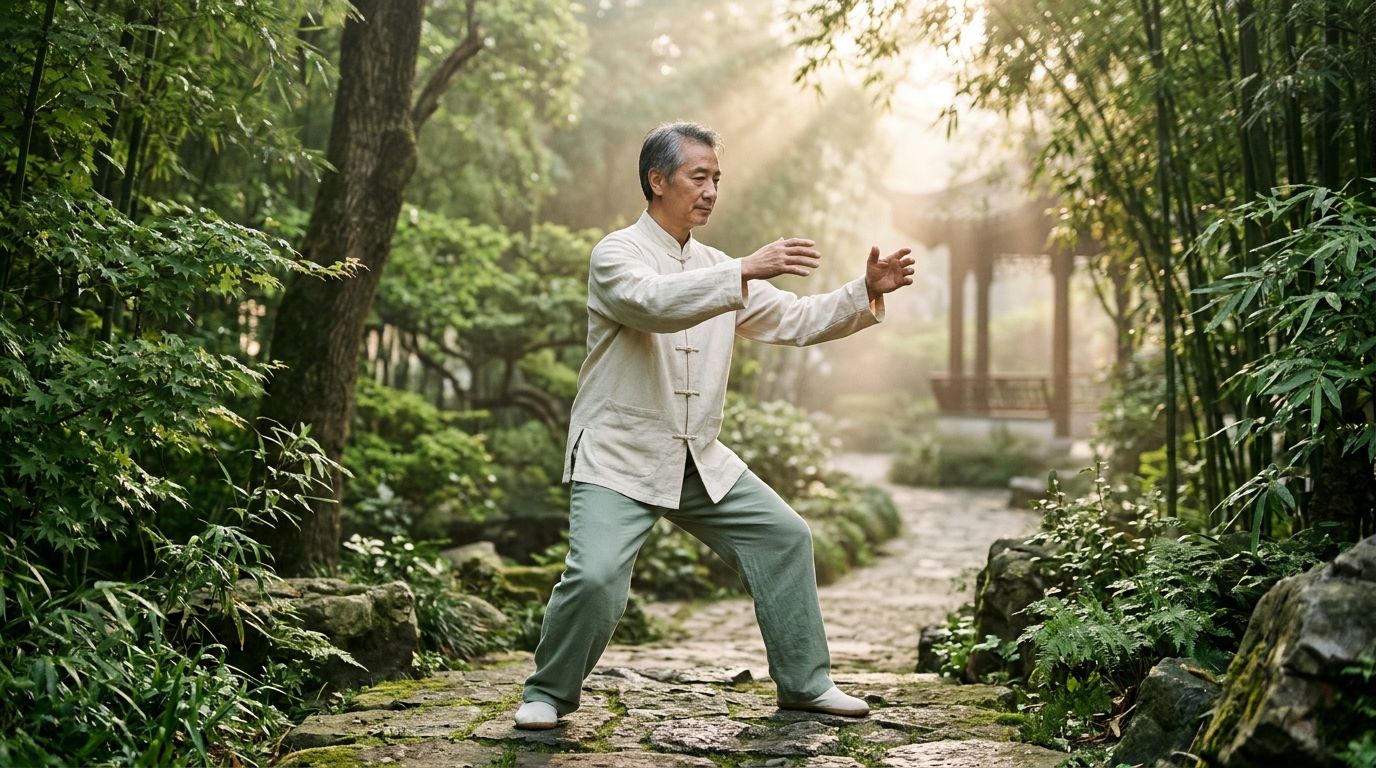
A systematic review and meta-analysis published in Health Science Reports indicates that traditional Chinese fitness methods, specifically Taijiquan and Baduanjin, may help alleviate depressive symptoms and improve glycaemic control among patients diagnosed with type 2 diabetes mellitus and comorbid depression. Integrating data across eight randomised controlled trials encompassing 487 participants, the quantitative investigation identified statistically significant reductions in depression rating scale scores alongside favourable decreases in glycated haemoglobin and fasting plasma glucose concentrations. However, the study authors emphasize that these positive findings must be approached with considerable caution, as the overall certainty of the evidence was rated from low to moderate due to substantial statistical heterogeneity, pervasive methodological weaknesses, and an absence of trials conducted outside of China. Rather than providing definitive proof of clinical efficacy, the researchers characterize the current evidence base as exploratory and hypothesis-generating, demonstrating promising therapeutic potential while highlighting an urgent necessity for larger, methodologically rigorous multicentre trials to verify both safety and clinical applicability.
Type 2 diabetes mellitus has become an escalating global public health challenge, with adult prevalence in China documented at 11.2 percent, where type 2 diabetes accounts for more than 90 percent of all diagnosed cases. Managing the metabolic condition demands rigorous long-term adherence to pharmacological regimens and strict dietary adjustments, factors that frequently generate persistent psychological distress and predispose affected individuals to clinical depression. Worldwide epidemiological estimates indicate that between 10 percent and 30 percent of patients with type 2 diabetes experience comorbid depression, representing a prevalence approximately two-fold higher than that observed in individuals without diabetes. Depression significantly disrupts essential self-management behaviours, impairing lifestyle adherence and accelerating diabetes progression, which in turn leads to poorer overall prognoses. Contemporary biomedical research recognizes a bidirectional, self-perpetuating metabolic and psychological cycle connecting the two conditions, mediated by neuroendocrine dysregulation, chronic systemic inflammation, and behavioural alterations, creating a compelling clinical rationale for interventions that can simultaneously address both psychological mood disorders and metabolic regulation.
Among non-pharmacological lifestyle strategies, Traditional Chinese Fitness Methods, or TCFMs, have garnered widespread attention as holistic mind-body disciplines originating from traditional health cultivation practices. These modalities systematically integrate gentle, controlled bodily movements with regulated breathing techniques and focused meditative awareness. Although traditional theories frame these practices around the regulation of bodily energy, breath control, and the harmonious balance of Yin and Yang, modern scientific frameworks seek to explain their biological actions through distinct neuropsychological and metabolic pathways. From a biomedical standpoint, gentle rhythmic muscle contractions and mindful movement may stimulate the release of neurotransmitters such as dopamine and endorphins, reduce circulating cortisol, and modulate autonomic nervous system activity by enhancing vagal tone and dampening hypothalamic-pituitary-adrenal axis hyperactivity. Concurrently, regular physical engagement stimulates peripheral glucose uptake, modulates insulin secretion, enhances insulin sensitivity, and mitigates systemic inflammation. While various traditional disciplines exist, including Wuqinxi and Liuzijue, only Taijiquan and Baduanjin were evaluated in the eligible randomised controlled trials identified by the investigators.
To rigorously examine the clinical impact of these traditional exercises, the review team executed a comprehensive systematic search conforming to the Cochrane Handbook for Systematic Reviews of Interventions and prospectively registered their protocol on the PROSPERO platform. Two independent investigators interrogated ten international and Chinese electronic literature databases, including PubMed, EMBASE, Cochrane Central Register of Controlled Trials, Web of Science, ProQuest, Wiley Online Library, China Biology Medicine Database, China National Knowledge Infrastructure, VIP Journal Integration Platform, and the Wanfang Data Knowledge Service Platform, tracking records from database inception through 3 January 2026. The search strategy incorporated subject headings and free-text terms in English and Chinese covering diabetes, depression, and traditional fitness practices, while also retrieving relevant doctoral and master’s dissertations to capture unpublished academic research. Eligibility criteria were strictly limited to randomised controlled trials involving adult patients with type 2 diabetes and confirmed comorbid depression identified through validated assessment instruments, where experimental groups engaged in traditional fitness practices alongside standard care and control cohorts received identical co-interventions without exercise training.
Following the screening of 2,505 initial citations, eight randomised controlled trials met all predefined inclusion criteria, comprising a collective sample of 487 participants with individual trial cohorts ranging from 20 to 105 patients. All included studies were conducted by Chinese research institutions, with five published in domestic Chinese academic journals and three appearing as academic dissertations. Across the trial sample, participant mean ages ranged from approximately 46 to 66 years. Six trials evaluated Baduanjin, a traditional Daoyin Qigong form comprising eight distinct movements, while two examined 24-action Taijiquan, a sequence derived from martial arts. Total intervention durations spanned from 4 weeks to 6 months, typically scheduling exercise sessions of 30 to 60 minutes conducted across 3 to 7 days weekly. Depressive symptoms were evaluated using validated clinical instruments, including the Self-rating Depression Scale, Hamilton Depression Scale, Patient Health Questionnaire-9, and the Montgomery-Asberg Depression Rating Scale, while metabolic evaluations tracked glycated haemoglobin, fasting plasma glucose, and 2-hour postprandial blood glucose levels.
In the primary meta-analysis of depression outcomes across all eight trials and 487 patients, traditional fitness methods produced a statistically significant reduction in depression scores compared to control interventions, yielding a pooled standardized mean difference of minus 1.39, with a 95 percent confidence interval from minus 2.22 to minus 0.57 and a p-value of 0.001. However, statistical heterogeneity across the pooled studies was exceptionally high, demonstrated by an I-squared value of 93 percent and a between-study variance tau-squared of 1.30. The calculated 95 percent prediction interval for the true effect in a future study was extraordinarily wide, extending from minus 4.99 to positive 2.20, indicating that while average outcomes were strongly positive, the intervention effect could conceivably cross the null in different clinical environments. Supplementary sensitivity analysis employing the Hartung-Knapp-Sidik-Jonkman method yielded a consistent point estimate of minus 1.35, with a 95 percent confidence interval between minus 2.41 and minus 0.29, confirming that statistical significance remained robust despite model adjustments.
Regarding secondary metabolic outcomes, quantitative pooling confirmed favourable changes in multiple glycaemic indices among patients practicing Taijiquan or Baduanjin alongside standard medical care. Seven trials evaluating glycated haemoglobin among 419 participants revealed a statistically significant mean difference of minus 0.82 percent, with a 95 percent confidence interval extending from minus 1.18 percent to minus 0.45 percent and a p-value below 0.0001. This reduction approached the established minimal clinically important difference of 0.5 to 1.0 percent, carrying meaningful implications for reducing microvascular diabetic complications. Moderate statistical heterogeneity was observed for glycated haemoglobin, with an I-squared of 55 percent and a prediction interval ranging from minus 0.93 to minus 0.28 percent. Analysis of fasting plasma glucose across six trials comprising 313 patients likewise demonstrated a statistically significant pooled mean difference of minus 0.70 millimoles per litre, with a 95 percent confidence interval of minus 0.97 to minus 0.42 millimoles per litre, displaying complete statistical consistency with an I-squared of 0 percent.
To investigate potential drivers of the pronounced statistical variability observed in the primary depression outcome and the moderate variability in glycated haemoglobin, the researchers conducted prespecified subgroup analyses stratified by intervention duration, practice frequency, and study sample size. When examining depression scores by intervention length, trials exceeding three months displayed a smaller pooled effect size of minus 0.76 with an I-squared of 0 percent across three studies, whereas trials lasting three months or less exhibited a larger effect of minus 1.83 but severe heterogeneity at 96 percent; however, the interaction test revealed no statistically significant subgroup difference, showing a p-value of 0.12. Similarly, dividing trials by practice frequency greater or less than five sessions per week, or by sample sizes above or below 60 participants, yielded statistically significant improvements within each stratum but failed to demonstrate significant interaction differences. Subgroup analyses for glycated haemoglobin likewise showed no statistically significant effect modification across duration, frequency, or cohort size, suggesting that these study-level parameters could not independently account for between-study variance.
A rigorous methodological appraisal using the Cochrane Risk of Bias 2 tool revealed pervasive quality limitations across the evidence base. Six of the eight included trials were judged to carry a high overall risk of bias, while the remaining two studies were rated as having some concerns, leaving no trial classified as low risk. The high risk of bias arose predominantly from deviations from intended interventions, as blinding of participants and exercising personnel is inherently impossible in lifestyle physical training, creating unavoidable risks of performance bias. Additional vulnerabilities included inadequate blinding of subjective outcome assessors during depression scale evaluations, selective reporting concerns stemming from the absence of pre-registered trial protocols, and substantial participant dropouts. Consequently, the certainty of evidence assessed through the GRADE approach was downgraded to low for depression scores due to serious risk of bias and unexplained high heterogeneity, moderate for glycated haemoglobin and fasting glucose, and very low for postprandial glucose.
The study authors detailed critical evidence limitations that preclude translating these findings directly into definitive clinical guidelines at the present stage. Notably, none of the eight included clinical trials systematically recorded adverse events, preventing any objective evaluation of the safety profile, tolerability, or physical injury risks associated with these exercises in compromised patients. Important implementation dimensions, including patient adherence, feasibility, economic costs, accessibility, and long-term behavioural sustainability, were completely omitted from published reports. Furthermore, the restriction of available studies to Chinese populations limits the generalisability of the findings to international cohorts with differing cultural backgrounds and baseline health habits. Future research must prioritize adequately powered, multicentre randomised controlled trials featuring standardized exercise protocols, verified outcome blinding, and extended follow-up durations. Incorporating biomarker measurements and neuroimaging will be essential to delineate whether the contemplative and meditative elements of traditional Chinese exercises confer unique therapeutic mechanisms beyond conventional aerobic physical activity.
Subject of Research: Effects of Taijiquan and Baduanjin on depression and glycaemic indices in patients with type 2 diabetes and comorbid depression
Article Title: Effectiveness of Traditional Chinese Fitness Methods on Depressive Symptoms and Glycaemic Control in Patients With Type 2 Diabetes and Comorbid Depression: A Systematic Review and Meta‐Analysis of Taijiquan and Baduanjin
Article References: Tian, X., Wei, Y., Bo, J., Lin, K., Shen, Y., & Liu, Y. (2026). Effectiveness of Traditional Chinese Fitness Methods on Depressive Symptoms and Glycaemic Control in Patients With Type 2 Diabetes and Comorbid Depression: A Systematic Review and Meta‐Analysis of Taijiquan and Baduanjin. Endocrinology, Diabetes & Metabolism, 9(6), Article e70356. https://doi.org/10.1002/edm2.70356
Image Credits: AI Generated
DOI: 10.1002/edm2.70356
Keywords: Type 2 Diabetes, Depression, Taijiquan, Baduanjin, Mind-Body Exercise, Glycaemic Control, Meta-Analysis, Systematic Review, Psychological Well-Being, Traditional Chinese Fitness Methods, Effectiveness, Traditional
News Source: Glenn Wilkins. (November 6, 2026). Meta-Analysis Examines Traditional Chinese Mind-Body Exercises for Diabetes and Depression. Scienmag.