Artificial intelligence is rapidly reshaping how researchers detect antimicrobial resistance, but a new narrative review argues that laboratory promise alone cannot justify clinical deployment. Writing in Frontiers in Medical Technology, a team of regulatory scientists and microbiologists maps how AI-driven biosensor technologies for antimicrobial resistance (AMR) monitoring should be validated, authorized, and maintained across their entire operational life. The central message is stark: a diagnostic claim is only as strong as the evidence matched to its specific intended use, and isolated prototype performance should never be extrapolated to real-world patients.
The review, led by authors affiliated with Medtronic MiniMed, the University of Maryland, and regulatory consulting and academic institutions, synthesizes biosensor research, AI analytics, and device oversight through a regulatory-scientific lifecycle lens. It distinguishes electrochemical and optical transduction from microfluidic sample handling and nanomaterial enhancement, then compares pathogen identification, resistance-gene detection, phenotypic antimicrobial susceptibility testing (AST), minimum inhibitory concentration (MIC) prediction, and population surveillance by output, reference standard, and validation requirement. The authors stress that these categories are complementary design dimensions rather than mutually exclusive competitors, since a single device may be optical, microfluidic, and nanomaterial-enabled simultaneously.
The stakes are considerable. Bacterial AMR was estimated to cause 1.27 million attributable deaths and to be associated with 4.95 million deaths globally in 2019, figures the review notes must not be added together because one is included in the other. Resistant infections undermine treatment, increase healthcare costs, and threaten procedures that depend on effective infection prevention. Historical projections of cumulative economic losses approaching USD 100 trillion by 2050 are scenario-based estimates rather than measured contemporary costs. Conventional AST relies on validated, culture-based reference methods such as broth microdilution and disk diffusion established by the Clinical and Laboratory Standards Institute and the European Committee on Antimicrobial Susceptibility Testing, which serve as the diagnostic gold standard but require turnaround times typically ranging from 24 to 72 hours, centralized laboratory infrastructure, and specialized personnel.
Those delays often lead to prolonged empirical antibiotic treatments, driving selective resistance pressure and increasing patient mortality risks in acute conditions like sepsis. The review explains that resistance emerges through both intrinsic and acquired mechanisms: structural characteristics such as the outer membrane permeability barrier in Gram-negative bacteria or constitutive multidrug efflux pumps, alongside spontaneous genetic mutations or horizontal gene transfer mediated by plasmids, transposons, and integrons. Beyond stable genetic markers, bacterial populations exhibit adaptive phenotypic survival strategies, including biofilms that restrict drug penetration and dormant persister cells that can survive bactericidal concentrations without genetic alterations, causing chronic recurrences.
Representative studies illustrate both analytical promise and limitations in independent clinical validation. In one Raman spectroscopy study, a residual convolutional neural network classified single-cell spectra from 30 reference isolate classes with 82.2 ± 0.3 percent accuracy and achieved 89.1 ± 0.1 percent for MRSA/MSSA classification on reference test samples. Clinical evaluation involved two cohorts of 25 patient isolates each, with patient-held-out fine-tuning. Clinical treatment-group identification reached 99.7 ± 1.1 percent in the second cohort, but clinical MRSA/MSSA classification dropped to 65.4 ± 6.3 percent after fine-tuning in the first cohort. The review emphasizes that the 99.7 percent result is not a universal AST accuracy, and that local fine-tuning is not equivalent to a locked multicenter external test. The ± values are reported standard deviations, not confidence intervals.
A second study applied random forests to preprocessed single-cell Raman spectra for pathogen identification and resistance classification in Acinetobacter baumannii. Species training used 3,982 spectra across 12 species, with 80 cells per species from separate batches for testing, yielding reported species accuracy of 90.73 ± 9.72 percent. The resistance model used 523 training spectra and 1,255 test spectra from six A. baumannii strains, one reference and five clinical, with resistance labels from VITEK 2 and reported resistance classification of 99.92 ± 0.06 percent. Yet the review cautions that no multicenter, new-isolate external validation was established, that the same limited strain set contributed independent batches, and that strain or lineage recognition may inflate resistance prediction. Multiple spectra from the same isolate do not constitute multiple independent patients, and exceptionally high spectral accuracy can coexist with limited biological diversity.
A third study, an optical fluidic chip with automated microcolony image analysis, tested 21 cultured clinical isolates of E. coli, K. pneumoniae, and S. aureus against defined antibiotic gradients, comparing growth-derived MIC and susceptibility categories with broth microdilution. Overall categorical agreement was 85.6 percent, with stable readouts generally 2 to 4 hours after measurement begins. The review notes this was a small isolate pilot, not direct specimen testing, and that preparation and culture precede acquisition. Automated image analysis alone does not establish a trained machine learning model. A fourth study used silver nanoparticle–invertase complexes with a glucose meter readout in E. coli and S. aureus suspensions recovered from spiked tap water, reporting calculated limits of detection of 3 CFU/mL for E. coli and 7.59 × 10² CFU/mL for S. aureus. The review stresses these LODs are experiment-specific, not confirmed clinical detection probabilities, and should not be generalized to clinical specimens.
To translate such findings safely, the authors propose a five-phase lifecycle framework adapting established total-product-lifecycle, quality-management, and risk-management principles to AMR-specific challenges, including emerging resistance mechanisms, breakpoint revisions, specimen shifts, and algorithm changes. Phase 1 defines intended use and feasibility, specifying target organisms, specimen types, users, setting, output, and clinical action before choosing evidence. Phase 2 establishes controlled design and analytical validation, covering matrix interference, cross-reactivity, precision, lot and site reproducibility, software verification, and leakage prevention, then freezes the assay, model, preprocessing, and thresholds before confirmatory evaluation. Phase 3 generates clinical evidence against a locked specimen-to-result system and a claim-specific comparator, prespecifying sample size, organism and drug strata, uncertainty, and safety-critical error acceptance criteria. Phase 4 covers deployment and site acceptance, verifying operator training, quality control, result transmission, model version identity, calibration, access governance, and downtime procedures. Phase 5 monitors performance and manages controlled change, tracking complaints, invalid or no-call rates, comparator-confirmed errors, subgroup performance, prevalence shifts, and security events.
The framework is explicitly a conceptual implementation tool, not a new regulatory pathway or an empirically validated model, and it has not undergone prospective evaluation. The authors also map these requirements to US and European device pathways, noting that a system examining human specimens to provide infection or susceptibility information is generally an in vitro diagnostic, that embedded AI does not automatically create a separate software-as-a-medical-device or combination product, and that FDA’s predetermined change control plan guidance describes a Description of Modifications, Modification Protocol, and Impact Assessment, which is not blanket permission for autonomous learning or unrestricted model replacement. They further address interoperability through FHIR, LOINC, and SNOMED CT, cybersecurity through threat modeling and secure updates, and data governance through HIPAA and GDPR applicability. Safe translation, the review concludes, requires claim-specific validation and controlled updates rather than extrapolation from isolated prototype performance, with false-susceptible results deserving particular attention because they may support the selection of ineffective therapy.
Subject of Research: Regulatory and scientific validation frameworks for AI-driven biosensors in antimicrobial resistance diagnostics
Article Title: Regulatory and scientific frameworks for AI-driven biosensor technologies in antimicrobial resistance monitoring
Article References: Murali, A., Thakor, P., Shah, S., Singh, M., & Singh, O. V. (2026). Regulatory and scientific frameworks for AI-driven biosensor technologies in antimicrobial resistance monitoring. Frontiers in Medical Technology, 8, Article 1833912. https://doi.org/10.3389/fmedt.2026.1833912
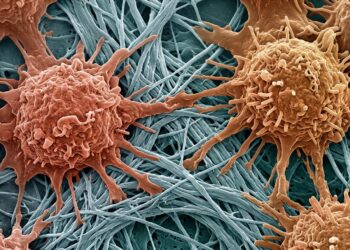
Image Credits: AI Generated
DOI: 10.3389/fmedt.2026.1833912
Keywords: antimicrobial resistance, biosensors, artificial intelligence, machine learning, diagnostics, regulatory science, microfluidics, Raman spectroscopy, antimicrobial susceptibility testing, lifecycle framework, nanomaterials, point-of-care diagnostics
News Source: Naomi Webster. (November 6, 2026). AI biosensors for antimicrobial resistance need claim-specific validation, review warns. Scienmag.