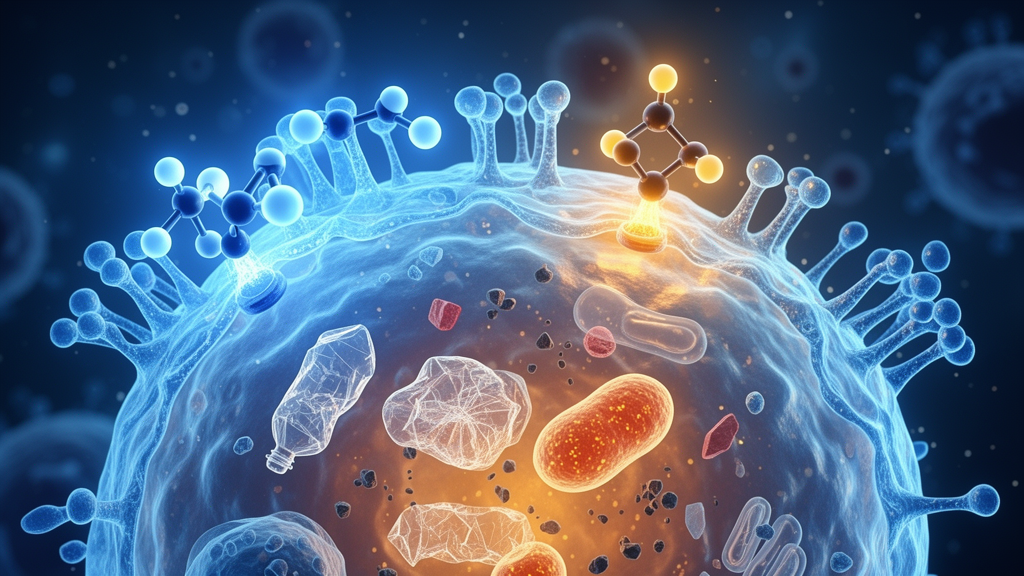
Emerging contaminants, ranging from endocrine-disrupting chemicals and microplastics to various pharmacological toxicants, represent an increasing concern for environmental health. These diverse substances, including pesticides and metals, are known to disrupt fundamental biological processes, such as redox homeostasis, inflammatory signaling, and mitochondrial function. A new review published in Cell Biology and Toxicology synthesizes existing evidence to explore whether melatonin, a rhythmically secreted indoleamine, can protect against the toxic effects induced by these environmental stressors.
Researchers synthesized experimental findings from various in vitro and animal studies, noting that exogenous melatonin exhibits established antioxidant, anti-inflammatory, and cytoprotective properties. The review highlights that melatonin treatment has been reported to attenuate oxidative stress, inflammation, and mitochondrial dysfunction across these models. Furthermore, the substance appears to influence pathways associated with programmed cell death, including apoptosis, autophagy, and ferroptosis, with potential involvement of signaling pathways such as Nrf2-associated antioxidant responses, NF-κB, and PI3K/AKT.
Beyond general cellular protection, the study examines the complex relationship between environmental contaminant exposure and circadian rhythms. Evidence suggests that contaminants may alter circadian-associated molecular, metabolic, and behavioral processes.
Based on these observations, the authors propose a “Chrono-Melatonin” framework as a hypothesis-generating model. This framework seeks to link the timing and nature of contaminant exposure with circadian states, melatonin availability, and subsequent tissue-specific stress responses.
Despite these findings, the authors emphasize that the current body of evidence is primarily preclinical. Many of the observed protective effects were documented using pharmacological or supraphysiological doses of melatonin, which may not translate directly to real-world scenarios.
Future research will be essential to establish whether this framework holds translational potential. To determine the causal links between melatonin, circadian regulation, and contaminant protection, studies must move toward using environmentally relevant exposure conditions.
Subject of Research: Melatonin-mediated protection against environmental contaminant toxicity and circadian regulation.
Article Title: Melatonin-mediated protection against emerging contaminant toxicity: circadian regulation and a proposed Chrono-Melatonin framework
Article References: Wang, Y., Wang, T., Li, Y., Wu, B., Yan, D., Wang, J., Liu, W., Zhao, C., Yang, H., Sun, X., & Liu, Y. (2026). Melatonin-mediated protection against emerging contaminant toxicity: circadian regulation and a proposed Chrono-Melatonin framework. Cell Biology and Toxicology. https://doi.org/10.1007/s10565-026-10334-5
Image Credits: AI Generated
DOI: 10.1007/s10565-026-10334-5
Keywords: Melatonin, Emerging contaminants, Circadian rhythms, Environmental toxicology, Oxidative stress, Inflammation, Mitochondrial function, Cell biology, Endocrine disruptors, Ferroptosis, Autophagy, Nrf2 signaling, Chrono-Melatonin framework, Preclinical models, Toxicology
News Source: Drew Townsend. (November 18, 2026). Melatonin May Mitigate Health Risks From Emerging Environmental Contaminants. Scienmag.