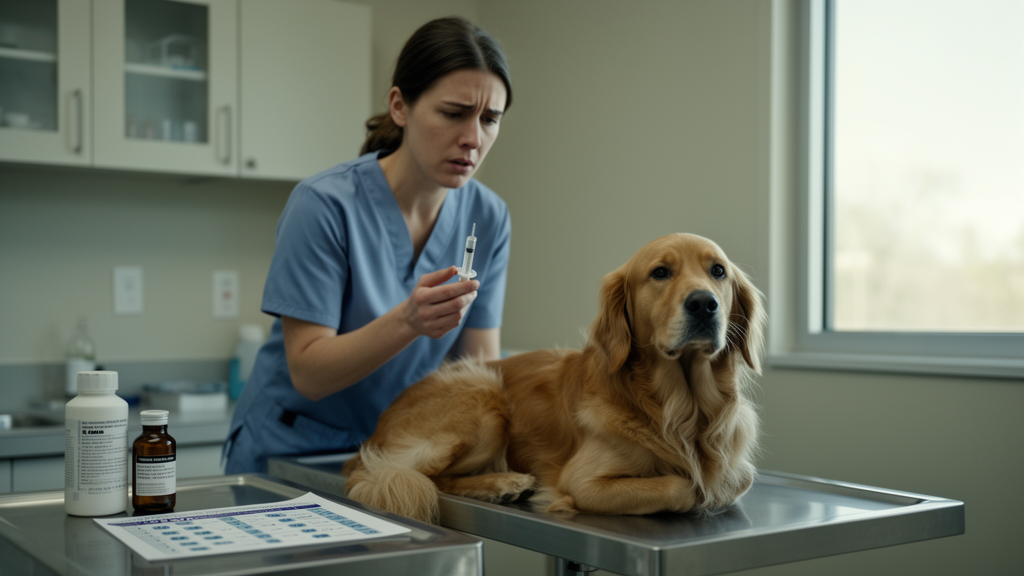
Researchers analyzing ten years of national malpractice claims found that medication errors linked to adverse events in veterinary care were fatal in more than one in five cases, and that an equal share of cases involved severe harm such as injury, prolonged hospitalization, or other life-threatening conditions. The findings, published in Acta Veterinaria Scandinavica, point to the decision-making phase of the medication process as the single most error-prone stage, and to a familiar group of drugs, including anti-inflammatory agents, antibiotics, and anesthetics, as the medications most often implicated.
The study was a retrospective document analysis of claims cases reviewed by the Assessment Board for Damages in Veterinary Practice, a body operating under the Finnish Food Authority that evaluates whether a veterinarian committed a medical error and whether a causal link exists between the error and the resulting harm. Between 2014 and 2023, the board reviewed 250 cases, and the researchers examined all 256 claims cases from that period. Of these, 87 cases met the inclusion criteria because they involved at least one medication error, representing 34.8 percent of all cases reviewed during the decade. Because each medication error within a case was treated as a separate incident, the final dataset comprised 148 individual errors.
Dogs dominated the dataset, appearing in 57 of the 148 errors, or 65.5 percent, followed by horses at 12 errors, or 13.8 percent. Cats and other mammalian species each accounted for 10.3 percent of the 87 cases. Most errors occurred in veterinary clinics and animal hospitals, and the majority, 62.8 percent, took place in the private sector, with 37.2 percent in the public sector. Female animals made up 56.3 percent of the cases and males 40.2 percent, with sex unreported in three cases.
The most common error type was omission of medication administration, accounting for 16.9 percent of all errors, at 25 of 148. The second most frequent category was inadequate monitoring of medication by the veterinarian, at 20 errors or 13.5 percent, a group that often included animals discharged prematurely while still markedly sedated, or deficiencies in monitoring medications administered at home. Fatal outcomes occurred in 21.8 percent of cases, or 19 of 87, and an identical proportion, another 19 of 87, involved severe adverse events resulting in injury, prolonged hospitalization, or other life-threatening conditions.
In total, 223 medications were involved in the reported errors. Classified according to the Anatomical Therapeutic Chemical system, antibacterials for systemic use were the most frequently implicated class at 33 of 223 medications, or 14.8 percent, followed by anti-inflammatory and antirheumatic products at 32 medications, or 14.3 percent, and anesthetics at 19 medications, or 8.5 percent. Meloxicam was the most commonly reported individual drug. The oral route of administration was the most frequent, at 73 of 223 medications or 32.7 percent, with intravenous administration also among the most common routes.
Perhaps the most consequential finding concerns where in the medication process the errors arose. Most medication errors, 85 of 148 or 57.4 percent, occurred during the decision-making phase of treatment, with the monitoring phase also heavily represented. The authors note that this aligns with previous findings in large animals, where more than half of errors occurred during the treatment decision process, and with a World Health Organization systematic review showing that medication errors in human healthcare most often arise during the ordering or prescribing phase. In veterinary contexts, decision-phase failures may manifest when dosing instructions are unclear or ambiguous, leading pet owners to administer medication incorrectly, or as prescriber-related human error resulting in incorrect dosing.
The prominence of anesthetic agents, including sedatives and opioids, carries particular weight because anesthesia-related errors often result in severe incidents and even death in dogs and cats. The researchers caution that anesthetic agents may be overrepresented in their dataset given its focus on veterinary clinics and animal hospitals, but they emphasize that anesthesia remains a challenging and high-risk aspect of medication management. Published estimates place the mortality rate associated with general anesthesia at around 0.11 percent in cats and approximately 0.05 percent in dogs, with the risk of general anesthesia or sedative-related death among dogs undergoing at least one such event at roughly 0.10 to 0.14 percent, and lower among dogs undergoing routine or elective procedures. For horses undergoing general anesthesia, the overall death rate is 1.2 percent.
The study’s authors argue that targeted measures to strengthen the decision-making phase of the veterinary medication process are warranted. Potential safeguards include clinical decision support systems such as medication dose range calculation for different species, checklists for anesthesia, clear labeling of drugs and syringes, standardized arrangement of medications, and verification procedures, all of which have been shown to reduce anesthesia-related errors by staff. For intravenous administration, safety in human healthcare has been improved through pharmacist- or industry-prepared prefilled syringes and anesthesia medication templates. The authors also suggest that pharmacist-led programs, ranging from clinic-based medication safety risk identification to pet owner medication counselling, could support veterinary medication safety, and that a standardized protocol to ensure sufficient post-anesthesia and sedation monitoring would be advisable, while acknowledging that no simple, generally applicable instructions can be given because patient status and procedure severity vary.
Important limitations shape how these findings should be read. The dataset comes exclusively from owner-initiated claims, which likely overrepresents preventable or potentially preventable incidents and reflects only a subset of medication-related incidents, since not all adverse events prompt formal complaints. The cases predominantly highlight errors attributed to veterinarians, as owners are unlikely to report their own mistakes, and limited information was available about owner-administered medication errors. Case descriptions were often insufficiently detailed to permit analysis of contributing factors, and the classification of monitoring-related incidents as medication errors may affect comparability with previous research. The authors stress that the study does not provide a comprehensive overview of all veterinary medication errors in Finland but offers a focused analysis of selected error types and involved medications.
Despite these constraints, the researchers conclude that medication-related decision-making and inadequate treatment monitoring are critical risk points for errors associated with adverse events in veterinary practice, with NSAIDs, systemic antibacterial agents, and sedative and anaesthetic medications constituting the highest-risk medication classes. They call for system-based risk management strategies, including the development of treatment guidelines, implementation of electronic clinical decision support systems, training programs on medication risk management, and ensuring adequate care resources within clinical environments. Establishing systematic and standardized data collection on veterinary medication errors, they argue, would enable better safety monitoring and learning at both organizational and national levels, and further research is needed to better identify and prevent medication errors, particularly those associated with severe adverse events.
Subject of Research: Medication errors associated with adverse events in veterinary practice in Finland
Article Title: When good intentions go wrong: medication errors associated with adverse events in veterinary practice
Article References: Järvinen, A., Kiiski, A., Raekallio, M., & Holmström, A.-R. (2026). When good intentions go wrong: medication errors associated with adverse events in veterinary practice. Acta Veterinaria Scandinavica, 68(1), Article 45. https://doi.org/10.1186/s13028-026-00885-2
Image Credits: AI Generated
DOI: 10.1186/s13028-026-00885-2
Keywords: veterinary medicine, medication errors, adverse events, patient safety, malpractice claims, anesthesia, NSAIDs, antibacterials, decision-making phase, medication monitoring, dogs, Finland
News Source: William Thompson. (October 28, 2026). Medication errors in Finnish veterinary claims often prove fatal, decade-long review finds. Scienmag.