• HOME
  • NEWS
  • EXPLORE
    • CAREER
      • Companies
      • Jobs
    • EVENTS
    • iGEM
      • News
      • Team
    • PHOTOS
    • VIDEO
    • WIKI
  • BLOG
  • COMMUNITY
    • FACEBOOK
    • INSTAGRAM
    • TWITTER
Tuesday, October 20, 2026
BIOENGINEER.ORG
No Result
View All Result
  • Login
  • HOME
  • NEWS
  • EXPLORE
    • CAREER
      • Companies
      • Jobs
        • Lecturer
        • PhD Studentship
        • Postdoc
        • Research Assistant
    • EVENTS
    • iGEM
      • News
      • Team
    • PHOTOS
    • VIDEO
    • WIKI
  • BLOG
  • COMMUNITY
    • FACEBOOK
    • INSTAGRAM
    • TWITTER
No Result
View All Result
Bioengineer.org
No Result
View All Result
Home NEWS Science News Biology

Mechanisms by which programmed cell death mediates immune evasion and antitumour immunity in oropharyngeal cancer

by
October 20, 2026
in Biology
Reading Time: 2 mins read
0
Mechanisms by which programmed cell death mediates immune evasion and antitumour immunity in oropharyngeal cancer

Mechanisms by which programmed cell death mediates immune evasion and antitumour immunity in oropharyngeal cancer

Share on FacebookShare on TwitterShare on LinkedinShare on RedditShare on Telegram

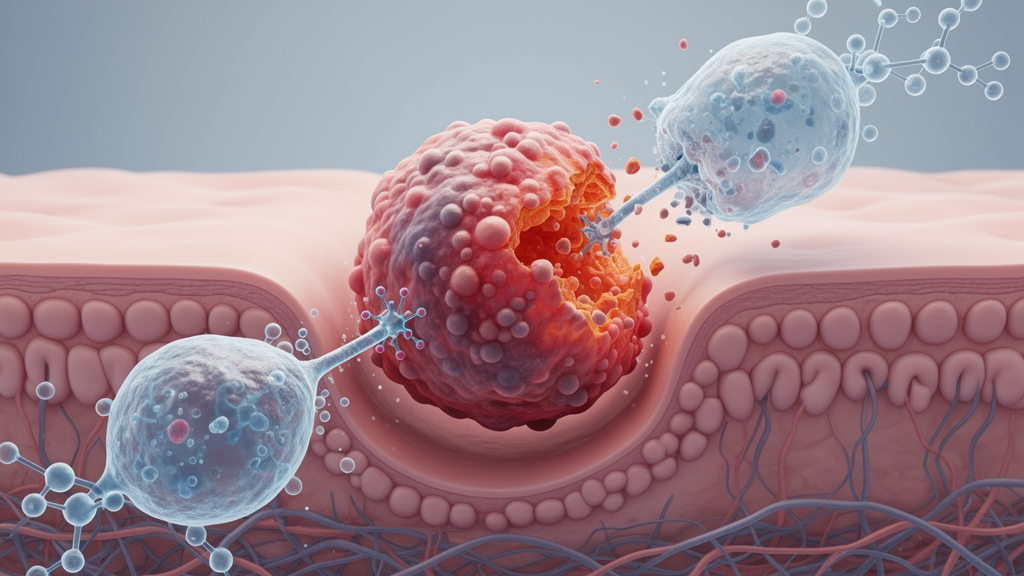
A review of oropharyngeal squamous cell carcinoma concludes that programmed cell death can either promote immune evasion or support antitumour immunity, depending on the pathway involved and the tumour context. The analysis examines apoptosis, ferroptosis, pyroptosis and autophagy, while also identifying necroptosis and cuproptosis as emerging areas of interest. It emphasizes that the immune consequences of tumour-cell death are not predetermined by the mode of death alone.

Immunologically silent cell death can dampen antitumour processes by reducing tumour immunogenicity, impairing antigen processing and presentation, and limiting T-cell recognition. In contrast, immunogenic cell death can release damage-associated molecular patterns, improve antigen presentation and activate adaptive immune responses. These contrasting effects help explain how programmed cell death may contribute both to immune escape and to immune control of oropharyngeal cancer.

The review also examines differences between human papillomavirus-positive and HPV-negative oropharyngeal squamous cell carcinoma. These subgroups can differ in tumour-cell-intrinsic characteristics, remodelling of the tumour immune microenvironment, immune-checkpoint activation and treatment resistance. The authors discuss the translational relevance of these distinctions for precision immunotherapy, as well as for subgroup-based combination approaches intended to improve radiosensitization or chemosensitization. These are proposed directions for further research rather than demonstrated clinical benefits.

Evidence specific to oropharyngeal cancer is limited for several of the emerging cell-death pathways, so the review also draws mechanistic context from studies of head and neck squamous cell carcinoma more broadly. The work is a narrative review rather than a new clinical trial or experimental study, and it does not establish that targeting any single programmed-cell-death pathway improves patient outcomes. Its contribution is a framework for understanding how cell death, antigen visibility, immunostimulatory signals and immune-cell activity interact in oropharyngeal cancer, while identifying the need for more OPC-specific evidence.

Subject of Research: Programmed cell death and antitumour immunity in oropharyngeal squamous cell carcinoma

Article Title: Mechanisms by which programmed cell death mediates immune evasion and antitumour immunity in oropharyngeal cancer

Article References: Yang, S., & Zhou, P. (2026). Mechanisms by which programmed cell death mediates immune evasion and antitumour immunity in oropharyngeal cancer. Frontiers in Cell and Developmental Biology, 14, Article 1966827. https://doi.org/10.3389/fcell.2026.1966827

Image Credits: AI Generated

DOI: 10.3389/fcell.2026.1966827

Keywords: oropharyngeal cancer, programmed cell death, antitumour immunity, immune evasion, immunogenic cell death, HPV-positive cancer, tumour microenvironment, immunotherapy, apoptosis, ferroptosis, Mechanisms, programmed

News Source: Nathaniel Bowman. (October 20, 2026). Mechanisms by which programmed cell death mediates immune evasion and antitumour immunity in oropharyngeal cancer. Scienmag.


Tags: antitumour immunityApoptosisferroptosisHPV-positive cancerimmune evasionimmunogenic cell deathimmunotherapymechanismsoropharyngeal cancerprogrammedprogrammed cell deathtumour microenvironment
Share12Tweet7Share2ShareShareShare1

Related Posts

Rare Alpine hoverflies use mountaintops for mating above 3,000 metres

Rare Alpine hoverflies use mountaintops for mating above 3,000 metres

October 20, 2026
Research report: Anatomy-preserving sequential management of vulvar Buschke–Löwenstein tumor using immunomodulation and ultrasonic ablation: A case report

Research report: Anatomy-preserving sequential management of vulvar Buschke–Löwenstein tumor using immunomodulation and ultrasonic ablation: A case report

October 20, 2026

Mathematical model predicts mobile-element competition shapes microbial defense evolution

October 20, 2026

Research report: A community-level view of Wolbachia DNA positivity across mosquito assemblages in eastern China

October 20, 2026

POPULAR NEWS

  • Autoencoder clustering boosts federated sentiment analysis under label skew

    Autoencoder clustering boosts federated sentiment analysis under label skew

    29 shares
    Share 12 Tweet 7
  • Ultrasound speeds synthesis of theophylline hybrids with antibacterial activity

    29 shares
    Share 12 Tweet 7
  • Piper betle leaf oil shows cell cytotoxicity and antioxidant activity in vitro

    29 shares
    Share 12 Tweet 7
  • Rare Alpine hoverflies use mountaintops for mating above 3,000 metres

    29 shares
    Share 12 Tweet 7

About

We bring you the latest biotechnology news from best research centers and universities around the world. Check our website.

Follow us

Recent News

Autoencoder clustering boosts federated sentiment analysis under label skew

Ultrasound speeds synthesis of theophylline hybrids with antibacterial activity

Piper betle leaf oil shows cell cytotoxicity and antioxidant activity in vitro

Subscribe to Blog via Email

Enter your email address to subscribe to this blog and receive notifications of new posts by email.

Join 85 other subscribers
  • Contact Us

Bioengineer.org © Copyright 2023 All Rights Reserved.

Welcome Back!

Login to your account below

Forgotten Password?

Retrieve your password

Please enter your username or email address to reset your password.

Log In
No Result
View All Result
  • Homepages
    • Home Page 1
    • Home Page 2
  • News
  • National
  • Business
  • Health
  • Lifestyle
  • Science

Bioengineer.org © Copyright 2023 All Rights Reserved.