

• HOME
  • NEWS
  • EXPLORE
    • CAREER
      • Companies
      • Jobs
    • EVENTS
    • iGEM
      • News
      • Team
    • PHOTOS
    • VIDEO
    • WIKI
  • BLOG
  • COMMUNITY
    • FACEBOOK
    • INSTAGRAM
    • TWITTER
Monday, August 17, 2026
BIOENGINEER.ORG
No Result
View All Result
  • Login
  • HOME
  • NEWS
  • EXPLORE
    • CAREER
      • Companies
      • Jobs
        • Lecturer
        • PhD Studentship
        • Postdoc
        • Research Assistant
    • EVENTS
    • iGEM
      • News
      • Team
    • PHOTOS
    • VIDEO
    • WIKI
  • BLOG
  • COMMUNITY
    • FACEBOOK
    • INSTAGRAM
    • TWITTER
  • HOME
  • NEWS
  • EXPLORE
    • CAREER
      • Companies
      • Jobs
        • Lecturer
        • PhD Studentship
        • Postdoc
        • Research Assistant
    • EVENTS
    • iGEM
      • News
      • Team
    • PHOTOS
    • VIDEO
    • WIKI
  • BLOG
  • COMMUNITY
    • FACEBOOK
    • INSTAGRAM
    • TWITTER
No Result
View All Result
Bioengineer.org
No Result
View All Result
Home NEWS Science News Health

Mechanisms and Regulation of Necroptosis: Clinical Relevance Explored

Bioengineer by Bioengineer
July 26, 2026
in Health
Reading Time: 2 mins read
0
Share on FacebookShare on TwitterShare on LinkedinShare on RedditShare on Telegram

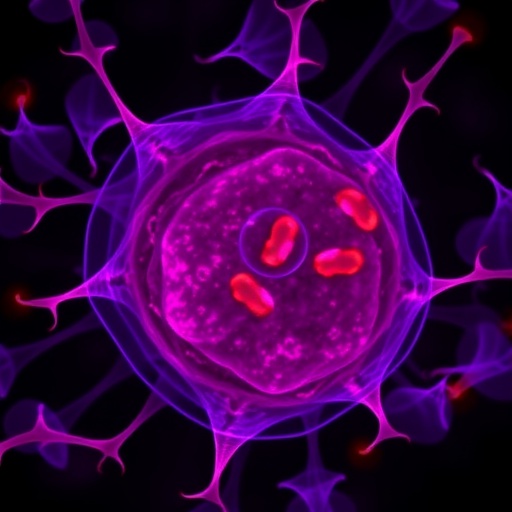
Necroptosis—an inflammatory, programmed form of lytic cell death—has moved closer to the center of modern biomedical research. Executed by MLKL (mixed lineage kinase domain-like protein), the pathway culminates in plasma membrane disruption, converting cellular stress signals into an organized demise that can reshape tissue inflammation during both health and disease.

In a new Science news-style update, researchers propose a clean framework for mammalian necroptosis: two subtypes that differ in how they detect danger and how signals are integrated inside cells. The first, extrinsic necroptosis, is triggered by receptor systems embedded at the cell surface and within endosomal compartments.

Extrinsic necroptosis begins when membrane-bound receptors sense extracellular cues. Tumour necrosis factor receptor 1 (TNFR1) and Toll-like receptor 4 (TLR4) represent classic surface sensors that can assemble signaling platforms, funneling upstream information toward the necroptotic machinery. Endosomal receptors broaden the input space as well; for instance, TLR3 detects nucleic-acid–related signals and can promote necroptosis through compartment-specific signaling logic.

The second subtype—intrinsic necroptosis—starts inside the cell. Rather than relying primarily on receptor-triggered sensing from outside the plasma membrane, intrinsic necroptosis relies on cytosolic surveillance. A key example is Z-DNA-binding protein 1 (ZBP1), which detects cytosolic Z-nucleic acids. This internal detection allows cells to convert intracellular nucleic-acid signatures into an MLKL-dependent death program.

What unifies both subtypes is the need for tight regulation. Necroptosis must be potent enough to eliminate harmful cells and alert the immune system, yet restrained to prevent chronic damage. The review emphasizes complex regulatory networks that coordinate trigger sensing, signal amplification, and execution pacing before MLKL-mediated membrane rupture.

Beyond mechanism, the work highlights why necroptosis is increasingly relevant clinically. Because it can drive inflammation and tissue injury—or sometimes contribute to protective immunity—therapeutically targeting necroptotic nodes may offer a lever to modulate disease outcomes.

As researchers map these pathways with greater precision, necroptosis appears less like a single route and more like an adaptable signaling framework. Understanding how extrinsic and intrinsic circuits converge on execution could accelerate rational drug development for inflammatory disorders, infection-related pathology, and other human conditions where cell death and immunity intersect.

Subject of Research: Necroptosis (mechanisms, regulation, clinical relevance)

Article Title: Mechanisms, regulation and clinical relevance of necroptosis

Article References:

Yang, Y., Jiao, H. & Xu, D. Mechanisms, regulation and clinical relevance of necroptosis.
Nat Rev Mol Cell Biol (2026). https://doi.org/10.1038/s41580-026-01002-x

Image Credits: AI Generated

DOI: 10.1038/s41580-026-01002-x

Keywords: Necroptosis; MLKL; TNFR1; TLR4; TLR3; ZBP1; Z-nucleic acids; inflammation; programmed lytic cell death; intrinsic necroptosis; extrinsic necroptosis

Tags: and tissue remodelinginflammationNecroptosisprogrammed cell death involving plasma membrane rupturewith mechanisms mediated by MLKL; extrinsic pathways triggered by surface receptors like TNFR1 and TLR4
Share12Tweet7Share2ShareShareShare1

Related Posts

PARP1 Drives Neuropathic Pain Through GPX4-Dependent Ferroptosis in Injured Mice’s Sensory Neurons

August 15, 2026

Genome-wide skin pQTL map reveals genetic regulators and mechanisms underlying skin disorders

August 15, 2026

Levistilide A Drives Ferroptosis via RNF40-HSP90α Axis, Suppressing Colorectal Cancer Lung Metastasis

August 15, 2026

Sintilimab, IBI305, and Chemotherapy Show Promise in First-Line Advanced Gastric and GEJ Adenocarcinoma

August 15, 2026

POPULAR NEWS

  • KAIST develops semiconductor neuron that harnesses noise to selectively process signals

    29 shares
    Share 12 Tweet 7
  • Imagining natural and extra robotic thumbs together strengthens kinesthetic sensorimotor networks

    29 shares
    Share 12 Tweet 7
  • PARP1 Drives Neuropathic Pain Through GPX4-Dependent Ferroptosis in Injured Mice’s Sensory Neurons

    29 shares
    Share 12 Tweet 7
  • Strubbelig–NHL3 Receptor Complex Helps Arabidopsis Respond to Cellulose Deficiency

    29 shares
    Share 12 Tweet 7

About

We bring you the latest biotechnology news from best research centers and universities around the world. Check our website.

Follow us

Recent News

KAIST develops semiconductor neuron that harnesses noise to selectively process signals

Imagining natural and extra robotic thumbs together strengthens kinesthetic sensorimotor networks

PARP1 Drives Neuropathic Pain Through GPX4-Dependent Ferroptosis in Injured Mice’s Sensory Neurons

Subscribe to Blog via Email

Success! An email was just sent to confirm your subscription. Please find the email now and click 'Confirm' to start subscribing.

Join 85 other subscribers
  • Contact Us

Bioengineer.org © Copyright 2023 All Rights Reserved.

Welcome Back!

Login to your account below

Forgotten Password?

Retrieve your password

Please enter your username or email address to reset your password.

Log In
No Result
View All Result
  • Homepages
    • Home Page 1
    • Home Page 2
  • News
  • National
  • Business
  • Health
  • Lifestyle
  • Science

Bioengineer.org © Copyright 2023 All Rights Reserved.