• HOME
  • NEWS
  • EXPLORE
    • CAREER
      • Companies
      • Jobs
    • EVENTS
    • iGEM
      • News
      • Team
    • PHOTOS
    • VIDEO
    • WIKI
  • BLOG
  • COMMUNITY
    • FACEBOOK
    • INSTAGRAM
    • TWITTER
Wednesday, June 24, 2026
BIOENGINEER.ORG
No Result
View All Result
  • Login
  • HOME
  • NEWS
  • EXPLORE
    • CAREER
      • Companies
      • Jobs
        • Lecturer
        • PhD Studentship
        • Postdoc
        • Research Assistant
    • EVENTS
    • iGEM
      • News
      • Team
    • PHOTOS
    • VIDEO
    • WIKI
  • BLOG
  • COMMUNITY
    • FACEBOOK
    • INSTAGRAM
    • TWITTER
  • HOME
  • NEWS
  • EXPLORE
    • CAREER
      • Companies
      • Jobs
        • Lecturer
        • PhD Studentship
        • Postdoc
        • Research Assistant
    • EVENTS
    • iGEM
      • News
      • Team
    • PHOTOS
    • VIDEO
    • WIKI
  • BLOG
  • COMMUNITY
    • FACEBOOK
    • INSTAGRAM
    • TWITTER
No Result
View All Result
Bioengineer.org
No Result
View All Result
Home NEWS Science News Health

Material hardship taking a mental and physical toll on young adults during pandemic

Bioengineer by Bioengineer
February 22, 2021
in Health
Reading Time: 2 mins read
0
IMAGE
Share on FacebookShare on TwitterShare on LinkedinShare on RedditShare on Telegram

IMAGE

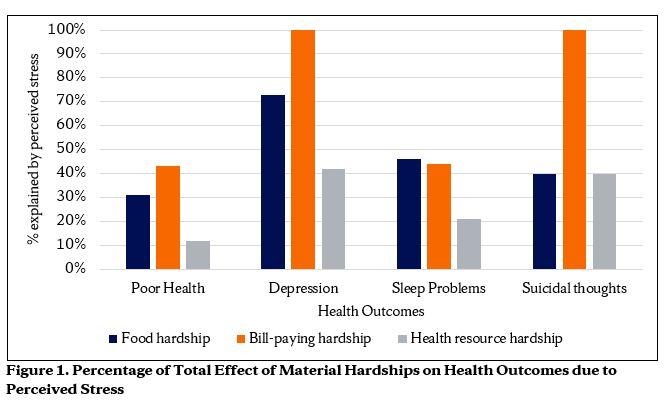
Credit: Data Source: National Longitudinal Survey of Adolescent to Adult Health (Add Health) Wave IV (2007-2008) N=13,313 U.S. adults ages 24-32.

Syracuse, N.Y. – As the United States approaches the one-year anniversary of the start of COVID-19 lockdowns, a new study by researchers from Syracuse University and the University of Texas at San Antonio shows that material hardship – difficulty paying for food, bills and healthcare – is taking a toll on the mental and physical health of young adults.

In the study, “Material hardship, perceived stress, and health in early adulthood,” the researchers found that young adults ages 24-32 who are struggling to meet their basic needs are more likely to report poor health, depression, sleep problems and suicidal thoughts.

According to the Urban Institute’s Health Reform Monitoring Survey, one in three adults have reported experiencing material hardship during the pandemic. For this recent study, material hardship was measured by asking more than 13,300 young adults if they had difficulty paying for food, bills and health care, and to report their stress levels.

“Specifically, they were asked if they worried about running out of food before they had money to get more; had trouble paying utility, phone and rent/mortgage bills; and lacked health insurance or thought they should get medical care but did not,” said Syracuse University professor and research team member Colleen Heflin. “Using this information, we analyzed how hardship and stress levels impact health outcomes, including self-rated health, depression, sleep problems and suicidal thoughts.”

The study was published recently by ScienceDirect’s Annals of Epidemiology and is summarized in this research brief from the Lerner Center for Public Health Promotion and Center for Aging and Policy Studies at Syracuse University. Here are the key findings:

  • The likelihood of reporting poor health, depression, sleep problems, and suicidal thoughts is higher for young adults (ages 24-32) who struggle to meet their basic needs than for those who do not.
  • The link between poor health outcomes among young adults and difficulty meeting basic needs is largely explained by increased stress levels.
  • The relationship between unmet needs and health outcomes in young adulthood remains strong after accounting for background, income, education level, employment status and other factors.

The researchers say policymakers can improve the health of young adults by strengthening social programs that provide access to affordable and quality health care, food and housing.

“Providing short-term emergency assistance and expanding affordable housing could be highly effective methods of reducing stress and improving the health of young adults, especially as the COVID-19 pandemic has left millions of Americans out of work and struggling to meet their basic needs,” Heflin said.

The research team includes Heflin, a professor of public administration and international affairs at Syracuse University’s Maxwell School of Citizenship and Public Affairs and senior research associate in the Maxwell School’s Center for Policy Research; Ying Huang, an assistant professor of demography at the University of Texas at San Antonio; and Asiya Validova, a graduate research assistant in the demography department at the University of Texas at San Antonio.

###

Media Contact
Matthew Michael
[email protected]

Tags: Coping/PhobiasDepression/AngerHealth CareHealth Care Systems/ServicesInfectious/Emerging DiseasesMedicine/HealthMental HealthNormalcyPublic HealthStress/Anxiety
Share13Tweet8Share2ShareShareShare2

Related Posts

Unfinished Care, Burnout, and Managerial Support in Nursing Homes

June 24, 2026

Yeast Enables Precise Megabase Human DNA Transfer

June 24, 2026

Antler Stem Cells Relieve Cerebral Ischemic Injury

June 24, 2026

Increase in Adolescent Suicidality Following State-Level Total Abortion Bans

June 24, 2026
Please login to join discussion

POPULAR NEWS

  • Saying Goodbye to PGY-6: Pediatric Fellowship Realities

    103 shares
    Share 41 Tweet 26
  • Multi-Hospital Study Reveals Long Covid Burden Is Twice as High as Current Estimates

    92 shares
    Share 36 Tweet 23
  • Detection of EDCs in Breast Milk and Infant Urine Up to Six Months Highlights Early Exposure Risks

    77 shares
    Share 31 Tweet 19
  • New Drug Candidate Developed at McMaster Shows Potential for Treating Brain Cancer

    58 shares
    Share 23 Tweet 15

About

We bring you the latest biotechnology news from best research centers and universities around the world. Check our website.

Follow us

Recent News

Robotic Hand That “Feels” Motion: International Study Uncovers How the Brain Detects Movement

Unveiling the Impact of TP53 Mutations in Oral Cancer: Molecular Insights and Prognostic Significance

Electric Field and Oxygen Spillover Collaborate to Control Electrode Migration in SOECs

Subscribe to Blog via Email

Enter your email address to subscribe to this blog and receive notifications of new posts by email.

Join 82 other subscribers
  • Contact Us

Bioengineer.org © Copyright 2023 All Rights Reserved.

Welcome Back!

Login to your account below

Forgotten Password?

Retrieve your password

Please enter your username or email address to reset your password.

Log In
No Result
View All Result
  • Homepages
    • Home Page 1
    • Home Page 2
  • News
  • National
  • Business
  • Health
  • Lifestyle
  • Science

Bioengineer.org © Copyright 2023 All Rights Reserved.