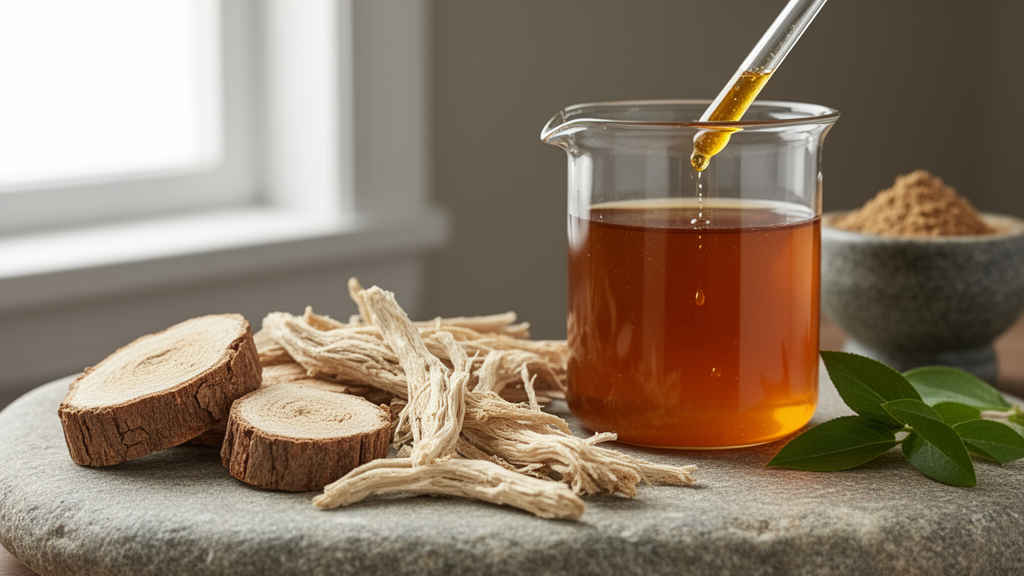
Marshmallow, Althaea officinalis, has been a staple of herbal medicine cabinets for centuries, soothing sore throats, dry coughs, stomach ulcers, and slow-healing wounds. A comprehensive review published in the journal Pharmacia now brings together the plant’s chemical inventory and its modern pharmacological evidence, offering one of the most detailed portraits yet of why this unassuming member of the Malvaceae family has endured as both a folk remedy and a subject of laboratory scrutiny. The review, based on a systematic search of databases including Scopus, PubMed, ScienceDirect, and Google Scholar, screened preclinical studies, in vivo and in vitro experiments, randomized controlled trials, and cohort studies to assemble a coherent picture of the plant’s bioactive arsenal.
Botanically, Althaea officinalis is a perennial herb native to Western Asia and Europe, favoring humid soils, with stems that can reach 1.5 meters in height and diameters of up to 5 centimeters. Today it is cultivated worldwide not only for medicine but also for food and dietary supplements, and its vivid flowers make it a popular ornamental. Its roots and leaves appear in teas and salads and are valued for sedative and emollient qualities, while pharmaceutical raw materials are drawn from the roots and leaves. Historically, the root has been applied to skin burns, insect bites, catarrh, ulcers, abscesses, constipation, diarrhea, dry cough, mild gastritis, and irritation of the mouth and throat mucosa.
The chemical analysis is where the review becomes particularly striking. Researchers have isolated and identified 46 distinct compounds from various parts of the plant, with flavonoids dominating the list at 17 specific molecules, including quercetin, kaempferol, hypolaetin glycosides, and astragalin. The roots have yielded three coumarins, and steroids and triterpenoids such as beta-sitosterol and lanosterol have been isolated from roots and seeds. Perhaps most significant are the polysaccharides: the mucilage content varies between 5 and 11.6 percent depending on seasonal growth conditions and includes acidic arabinogalactans, galacturonic rhamnans, arabans, and glucans. Phenolic acids such as caffeic, ferulic, chlorogenic, vanillic, and salicylic acid round out the profile. The authors caution that the chemical makeup shifts with cultivar, flower and leaf color, climate, drying method, and storage conditions, a variability that complicates standardization but helps explain inconsistent results across studies.
Antioxidant activity has been tested extensively, with instructive nuances. In one study, water extracts of the root showed no antioxidative activity, whereas ethanol-water mixtures performed well, and lower ethanol concentrations (50:50 and 70:30) outperformed higher ones in scavenging ABTS radicals and hypochlorite ions, correlating with higher phenolic and flavonoid content. Polysaccharides isolated from the plant showed dose-dependent DPPH radical scavenging between 0.25 and 4 milligrams per milliliter, though their IC50 of 1.53 milligrams per milliliter was higher, meaning less potent, than vitamin C. Other work found polysaccharides stabilizing 28 to 57 percent of DPPH compounds in the 1.0 to 5.0 milligram per milliliter range. Notably, a petroleum ether fraction achieved 94.8 percent hydroxyl radical scavenging at 20 milligrams per milliliter, exceeding ascorbic acid’s 81.6 percent at the same concentration, an effect attributed to the uronic acid content of the root. Optimized extraction conditions, including a temperature of 55.51 degrees Celsius and a 12.11-hour duration, pushed polysaccharide antioxidant activity to 84.94 percent, although prolonged extraction and elevated temperatures degraded activity.
The antibacterial evidence spans both Gram-positive and Gram-negative organisms. A methanol extract inhibited Klebsiella aerogenes, Streptococcus pneumoniae, Staphylococcus aureus, and Pseudomonas aeruginosa, with minimum inhibitory concentrations of 50 to 100 milligrams per milliliter. Against antibiotic-resistant Staphylococcus aureus strains isolated from patients, an ethanolic extract showed MIC and MBC values of 3.2 and 6.5 milligrams per milliliter. In one of the more remarkable findings, a methanol extract outperformed the antibiotic gentamicin against Klebsiella pneumoniae across all tested concentrations, with inhibition zones reaching 21.2 millimeters, and matched ciprofloxacin’s effectiveness against Escherichia coli, Klebsiella pneumoniae, and Shigella dysenteriae. The authors of that study uniquely identified triterpenoids such as lanosterol and fatty acids as the active antibacterial components, noting that chain length determines the spectrum: shorter chains inhibit Gram-negative bacteria, longer chains Gram-positive species, and chains of 10 to 12 carbons inhibit yeasts.
The mechanisms behind these effects are multifaceted. Flavonoids inhibit nucleic acid synthesis, disrupt cytoplasmic membranes, interfere with energy metabolism, prevent bacterial adhesion, and block biofilm formation. Phenolic compounds modify membrane permeability by accumulating hydrophobic groups in the phospholipid bilayer and bind essential enzymes involved in protein, DNA, and RNA synthesis. Against Gram-positive bacteria specifically, the extract appears to adhere to N-acetylglucosamine in the bacterial cell wall, and polyphenols may generate hydrogen peroxide that suppresses bacterial growth. However, the review also documents limits: hydroethanolic extracts were ineffective against Gram-negative bacteria in some studies, and the extract performed less well than penicillin and 0.2 percent chlorhexidine against Streptococcus mutans and Lactobacillus acidophilus, even though it showed stronger activity against S. mutans than L. acidophilus.
Anti-inflammatory research provides some of the most mechanistically detailed results. In human macrophage models, an ethanol root extract protected cells from hydrogen peroxide-induced cytotoxicity and reactive oxygen species production, and inhibited the release of the inflammatory cytokines TNF-alpha and interleukin-6 to the same degree as diclofenac, without impairing mitochondrial membrane potential. In endothelial cells, the extract reduced interleukin-6 release by up to 24 percent and reactive oxygen species by 16 to 18 percent, while improving wound closure by 10 to 13.5 percent in a six-hour migration assay. The polysaccharides appear to form a protective film on inflamed mucous membranes, and high-molecular-weight hyaluronic acid in the extract may stimulate leukocyte movement and epithelial growth factors, promoting tissue regeneration. In a rat model of chemically induced liver damage, the extract alone improved cytokine levels without statistical significance, but combined with the standard hepatoprotective drug silymarin it significantly reduced all pro-inflammatory cytokines and raised interleukin-10, apparently modulating the Bax/Bcl-2/p53 and PI3K/Akt/mTOR signaling pathways.
Wound-healing studies reinforce the plant’s traditional use. A polyherbal ointment combining Althaea officinalis with Rosa damascena and Lavandula angustifolia essential oils achieved a healing percentage of 99.07 in grade III skin wounds, with histology confirming complete re-epithelialization, healthy granulation tissue, enhanced angiogenesis, and reduced scarring. In rats, a water-ethanol gel significantly increased collagen volume density and fibroblast populations, effects linked to N-phenylpropenoyl-L-amino acids that stimulate keratinocytes. A 15 percent ointment of the flower mucilage shortened healing time with no adverse effects, performing comparably to phenytoin ointment. The mucilage components, pectin, tannin, and polysaccharides, each contribute: tannic acid promotes angiogenesis and raises vascular endothelial growth factor, pectin maintains wound moisture and oxygen availability, and polysaccharides support new epithelial cell formation.
The antitussive evidence is the most clinically advanced. In a trial of 822 patients with dry cough and throat irritation, both lozenge and syrup forms of an aqueous root extract provided relief within 10 minutes, with only three minor adverse events. Among 63 patients with cough induced by angiotensin-converting enzyme inhibitor drugs, cough severity scores fell from 2.66 to 1.23 with the extract versus 2.7 to 2.33 with placebo, though lung function measures were unchanged. A post-marketing study of 313 children aged 0 to 12 reported high effectiveness in 84.3 percent of cases and 97 percent tolerability, while a retrospective study of 599 children found positive results in 90 percent of cases with no adverse effects. In comparative trials, a herbal solution containing Althaea officinalis and Zataria multiflora improved cough symptoms by 65.5 percent versus 39.4 percent for dextromethorphan.
Safety data are broadly reassuring. Hemolytic activity testing showed a hemolysis rate of just 2.6 percent, the acute oral toxicity in mice exceeded 5,000 milligrams per kilogram, and the plant is considered safe during pregnancy and lactation, though it may delay absorption of other medications. The review’s authors conclude that while the existing evidence supports the therapeutic applications of Althaea officinalis, further clinical trials using disease models are necessary to fully establish its ethnopharmacological profile. For a plant that has straddled the boundary between kitchen and pharmacy for millennia, the message is clear: its mucilage, flavonoids, and phenolic acids are not folklore but measurable pharmacology, now awaiting the rigorous clinical validation that modern medicine demands.
Subject of Research: Phytochemistry and pharmacological activities of the medicinal plant Althaea officinalis
Article Title: Pharmacological effects and phytochemical profile of Althaea officinalis
Article References: Sadanov, A., Baimakhanova, G., Orasymbet, S., Ratnikova, I., Baimakhanova, B., Smirnova, I., Kantureyeva, A., Zhakipbekov, K., Tolenova, K., & Turgumbayeva, A. (2026). Pharmacological effects and phytochemical profile of Althaea officinalis. Pharmacia, 73, Article e196211. https://doi.org/10.3897/pharmacia.73.e196211
Image Credits: AI Generated
DOI: 10.3897/pharmacia.73.e196211
Keywords: Althaea officinalis, marshmallow root, phytochemistry, flavonoids, polysaccharides, antitussive, anti-inflammatory, antioxidant, antibacterial, wound healing, herbal medicine, mucilage
News Source: Bethany Barker. (October 18, 2026). Marshmallow Root’s Chemistry Revealed: The Science Behind an Ancient Cough Remedy. Scienmag.