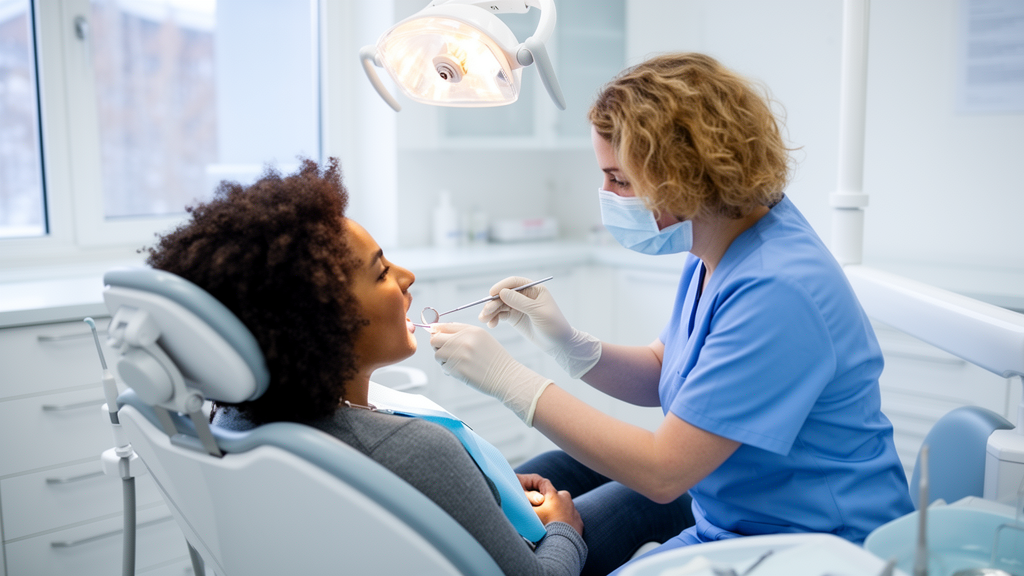
When it comes to oral health, the assumption that migrants inevitably fare worse than their host-country peers is being challenged by new research from Western Norway. A study published in BMC Public Health has found that being a migrant was not a significant predictor of how parents rated their own oral health. Instead, the strongest factors were strikingly universal: whether people actually went to the dentist, and how much education they had. The findings, drawn from a survey of 600 parents, suggest that public health strategies targeting migrant status alone may be looking in the wrong place.
The research, led by Dixie Brea Larios of the Oral Health Centre of Expertise in Western Norway, together with Anne N. Åstrøm of the University of Bergen and Manal Mustafa of the University of Bergen and the Oral Health Centre of Expertise, set out to examine the oral health practices of parents with and without a migrant background. The motivation is grounded in a well-documented problem: the migration process itself often pushes oral health down the list of priorities, and the consequences can persist for years after resettlement. Dental problems accumulate quietly, and by the time they surface, they can affect nutrition, speech, employment, and self-confidence.
To capture a representative picture, the team used a cross-sectional survey of parents with children in either kindergarten or elementary school. The sample comprised 600 participants, evenly split between 300 migrants and 300 Norwegian-born parents. Respondents answered questions about how they perceived their own oral health, their sociodemographic circumstances, their history of dental visits, and their dietary habits. The mean age of participants was 39.11 years, with a standard deviation of 6.45 years, and women made up 62 percent of the study population. Self-rated oral health, the study’s central outcome measure, is a deceptively simple question with considerable scientific weight: decades of epidemiological work have shown that how people rate their own mouths correlates with clinically measured disease, dental attendance patterns, and even broader quality of life.
The statistical analysis yielded a result that cuts against common assumptions. Migrant status was not a significant predictor of self-reported oral health, with an odds ratio of 0.93 and a p-value of 0.667, meaning the difference between migrants and non-migrants could easily have arisen by chance. In plain terms, knowing whether a parent was a migrant told the researchers almost nothing about how that parent rated their teeth and gums. What did matter were two variables that applied to everyone in the sample. Participants who attended dental check-ups had dramatically lower odds of reporting poor oral health, with an odds ratio of 0.25 and a p-value below 0.001, translating to a 75 percent reduction in the odds of worse self-rated oral health compared with those who did not attend. Educational attainment also played a significant role, with an odds ratio of 1.64 and a p-value of 0.001, indicating that more educated parents were substantially more likely to report better oral health.
One subgroup finding added nuance to the picture. Participants originating from Asian regions had 57 percent lower odds of reporting worse oral health than the reference group. This kind of regional variation within the migrant population is itself instructive, because it demonstrates that migrants are not a homogeneous block. Aggregating all migrant groups into a single category can obscure real differences in oral health profiles, dietary patterns, and experiences with dental services. The Norwegian study’s ability to detect such variation reflects both its sample size and its analytical approach, which modeled multiple sociodemographic and behavioral factors simultaneously rather than examining migrant status in isolation.
The strength of the dental attendance association deserves particular attention. An odds ratio of 0.25 is a large effect by the standards of public health epidemiology, where behavioral predictors often hover near 1.0 and are celebrated when they reach 1.2 or 1.5. Regular dental visits are associated with early detection of caries, professional cleaning, fluoride application, and preventive counseling, all of which interrupt the trajectory of oral disease before it becomes painful or irreversible. Conversely, people who avoid dental care tend to present only when problems are acute, reinforcing negative experiences and deepening avoidance. The study’s cross-sectional design means the direction of this relationship cannot be definitively established, since people with healthy mouths may simply have less reason to visit the dentist, but the association aligns with a large body of clinical evidence on the benefits of consistent preventive care.
Education, the other strong predictor, operates through several plausible mechanisms. Higher educational attainment is consistently linked with greater oral health literacy, better understanding of preventive recommendations, more stable incomes that make dental fees manageable, and workplaces that accommodate time off for appointments. In Norway, where the public dental health service provides free care to children but adults generally pay out of pocket for treatment, the educational gradient in adult oral health reflects both knowledge and economic access. The finding that education mattered equally across migrant and Norwegian parents suggests that these mechanisms are not specific to any cultural group but are structural features of how societies distribute health resources.
The authors are careful about what their results do and do not imply. They do not claim that migration is irrelevant to oral health; rather, they conclude that being a migrant is not the primary factor affecting oral health outcomes in this population. Instead, it is the interplay of sociodemographic factors, health behaviors, and access to dental care that plays the significant role. This distinction matters for policy. Interventions designed around migrant status as the central risk factor may miss the levers that actually move outcomes, such as reducing barriers to dental attendance and addressing educational inequalities. At the same time, the researchers acknowledge that various barriers can influence parental oral health behaviors during the migration process, and that prioritizing oral health and access to dental services remains essential for everyone.
The study forms part of a broader research effort in Norway to build an evidence base for improving oral health services, oral health literacy, and responsiveness to migrant needs. It was conducted within the COP study, Caries and Obesity Prevention in Children with a Migrant Background, financed by the Norwegian Research Council under grant number 331782. The survey data came from the Folkehelseundersøkelse i Vestland 2022, the national public health survey in Vestland county, accessed through the Norwegian health data infrastructure. Ethical approval for data access and handling was obtained from the Regional Committee for Medical and Health Research Ethics and the Norwegian Agency for Shared Services in Education and Research. The work also received support from the Research Department at the Oral Health Centre of Expertise in Western Norway.
The practical implications reach beyond Norway’s fjords. Migrant populations across Europe and North America are growing, and health systems everywhere are grappling with how to serve them equitably. This study offers a deceptively simple lesson: the path to better oral health may run through the same channels for everyone, namely affordable and consistent dental care and the education that helps people value and navigate it. The authors recommend that health authorities strengthen family- and community-based strategies embedded within broader health promotion and preventive programs, and they call for further research measuring oral health behaviors and oral health literacy to illuminate the mechanisms at play. If the goal is to reduce disparities, the evidence from Western Norway suggests that the starting point is not where people come from, but whether they can and do get to a dental chair.
Subject of Research: Associations between sociodemographic factors, dental care utilization, dietary habits and self-rated oral health among parents with and without a migrant background in Western Norway
Article Title: Self-rated oral health among parents with and without a migrant background in Western Norway: associations with sociodemographic factors, dental care utilization, and dietary habits
Article References: Brea Larios, D., Åstrøm, A. N., & Mustafa, M. (2026). Self-rated oral health among parents with and without a migrant background in Western Norway: associations with sociodemographic factors, dental care utilization, and dietary habits. BMC Public Health. https://doi.org/10.1186/s12889-026-29789-6
Image Credits: AI Generated
DOI: 10.1186/s12889-026-29789-6
Keywords: oral health, self-rated health, migrant health, dental attendance, dental care utilization, health inequalities, public health, Norway, parents, sociodemographic factors, dietary habits, dental epidemiology
News Source: Phoebe Ingram. (October 18, 2026). Dental Visits, Not Migration Status, Drive Oral Health Gaps Among Norwegian Parents. Scienmag.