• HOME
  • NEWS
  • EXPLORE
    • CAREER
      • Companies
      • Jobs
    • EVENTS
    • iGEM
      • News
      • Team
    • PHOTOS
    • VIDEO
    • WIKI
  • BLOG
  • COMMUNITY
    • FACEBOOK
    • INSTAGRAM
    • TWITTER
Monday, May 11, 2026
BIOENGINEER.ORG
No Result
View All Result
  • Login
  • HOME
  • NEWS
  • EXPLORE
    • CAREER
      • Companies
      • Jobs
        • Lecturer
        • PhD Studentship
        • Postdoc
        • Research Assistant
    • EVENTS
    • iGEM
      • News
      • Team
    • PHOTOS
    • VIDEO
    • WIKI
  • BLOG
  • COMMUNITY
    • FACEBOOK
    • INSTAGRAM
    • TWITTER
  • HOME
  • NEWS
  • EXPLORE
    • CAREER
      • Companies
      • Jobs
        • Lecturer
        • PhD Studentship
        • Postdoc
        • Research Assistant
    • EVENTS
    • iGEM
      • News
      • Team
    • PHOTOS
    • VIDEO
    • WIKI
  • BLOG
  • COMMUNITY
    • FACEBOOK
    • INSTAGRAM
    • TWITTER
No Result
View All Result
Bioengineer.org
No Result
View All Result
Home NEWS Science News Biology

Mangroves lock away carbon

Bioengineer by Bioengineer
December 14, 2020
in Biology
Reading Time: 2 mins read
0
IMAGE
Share on FacebookShare on TwitterShare on LinkedinShare on RedditShare on Telegram

IMAGE

Credit: © 2020 Morgan Bennett Smith

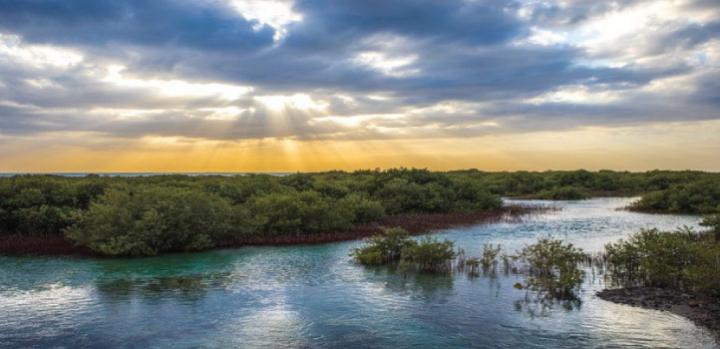
High levels of dissolved calcium carbonate present in their bedrock indicate that Red Sea mangroves are capable of removing more carbon than previously thought, KAUST researchers have found. The study’s findings highlight the need to consider calcium carbonate dissolution in mangroves growing on carbonate platforms as an important carbon storage mechanism.

Blue carbon ecosystems, such as mangroves, saltmarshes and seagrass beds, sequester large amounts of carbon dioxide (CO2) from the atmosphere in the form of organic carbon locked in their soils. In the Red Sea and much of the tropics, mangroves grow on calcium carbonate sediments formed by shells and skeletons of marine organisms dating back to the Pleistocene, about one hundred thousand years ago. The dissolution of calcium carbonate in seawater is a source of total alkalinity, which increases the ocean’s capacity to store CO2 from the atmosphere.

Previous research has found that the relatively small mangroves of the Red Sea bury ten times less organic carbon in their sediments than the global average for mangroves. These studies, however, did not examine dissolved calcium carbonate as a carbon sink — a concept that had been previously hypothesized but not quantified, until now.

“As the ocean becomes more acidic due to climate change, more calcium carbonate is dissolved in the oceans. This isn’t good news, because ocean acidification is a global threat to coral reefs,” says Vincent Saderne, a research scientist in KAUST. “But this dissolution also increases the ocean’s capacity to dissolve CO2, creating a feedback effect that helps mitigate climate warming. It’s quite understudied.”

Using incubation chambers, the team measured the total alkalinity emission rates present in a mangrove swamp in the central Red Sea, Saudi Arabia. They compared these measurements with those taken in a nearby lagoon that had no vegetation.

They found that total alkalinity was significantly higher in the mangrove swamp than in the lagoon, regardless of the season, time of day or the presence of root structures. The calculated alkalinity emission rates were also much higher than those reported by previous studies on mangroves in Australia. The alkalinity released displaces the equilibrium in seawater to permanently convert CO2 into bicarbonate.

The researchers also estimated that the mangrove site stores 13 tons of CO2 per hectare each year, a 23-fold increase on previous estimates that focused solely on organic carbon burial in soils.

“Our results now identify mangroves in the Red Sea, and possibly those in other carbonate basins, as a powerful solution to mitigate climate change,” says Carlos Duarte, professor of marine science and co-author of the study. “The findings contribute to the Circular Economy National Program of Saudi Arabia by identifying a significant option for removing CO2.”

###

Media Contact
Michael Cusack
[email protected]

Original Source

https://discovery.kaust.edu.sa/en/article/1071/mangroves-lock-away-carbon

Related Journal Article

http://dx.doi.org/10.1002/lol2.10170

Tags: Climate ChangeClimate ScienceEarth ScienceEcology/EnvironmentHydrology/Water ResourcesMarine/Freshwater BiologyPlant Sciences
Share12Tweet8Share2ShareShareShare2

Related Posts

Ancient Plant Populations Reveal Fresh Insights into Climate Resilience — Biology

Ancient Plant Populations Reveal Fresh Insights into Climate Resilience

May 8, 2026
Rare Brain Disorders in Children Linked to Mutations in Lesser-Known Protein Complex — Biology

Rare Brain Disorders in Children Linked to Mutations in Lesser-Known Protein Complex

May 8, 2026

From Odd Insect to Underwater Predator: The Remarkable Evolution of a Bloodthirsty Fruit Fly

May 8, 2026

SNU Professor Sangwoo Seo’s Team Develops Next-Generation CRISPR Biocontainment Technology to Control Microbial Survival Without DNA Cleavage

May 8, 2026
Please login to join discussion

POPULAR NEWS

  • Research Indicates Potential Connection Between Prenatal Medication Exposure and Elevated Autism Risk

    840 shares
    Share 336 Tweet 210
  • New Study Reveals Plants Can Detect the Sound of Rain

    727 shares
    Share 290 Tweet 181
  • Salmonella Haem Blocks Macrophages, Boosts Infection

    61 shares
    Share 24 Tweet 15
  • Breastmilk Balances E. coli and Beneficial Bacteria in Infant Gut Microbiomes

    57 shares
    Share 23 Tweet 14

About

We bring you the latest biotechnology news from best research centers and universities around the world. Check our website.

Follow us

Recent News

New Post-Hoc Analysis Explores Daily Oral Orforglipron Use in Adults Over 65 with Obesity, Regardless of Diabetes Status

Evaluating Digoxin Use in Patients with Symptomatic Rheumatic Heart Disease

Evaluating the Effectiveness and Safety of Digitalis Glycosides in Treating Heart Failure

Subscribe to Blog via Email

Enter your email address to subscribe to this blog and receive notifications of new posts by email.

Join 82 other subscribers
  • Contact Us

Bioengineer.org © Copyright 2023 All Rights Reserved.

Welcome Back!

Login to your account below

Forgotten Password?

Retrieve your password

Please enter your username or email address to reset your password.

Log In
No Result
View All Result
  • Homepages
    • Home Page 1
    • Home Page 2
  • News
  • National
  • Business
  • Health
  • Lifestyle
  • Science

Bioengineer.org © Copyright 2023 All Rights Reserved.