• HOME
  • NEWS
  • EXPLORE
    • CAREER
      • Companies
      • Jobs
    • EVENTS
    • iGEM
      • News
      • Team
    • PHOTOS
    • VIDEO
    • WIKI
  • BLOG
  • COMMUNITY
    • FACEBOOK
    • INSTAGRAM
    • TWITTER
Saturday, May 16, 2026
BIOENGINEER.ORG
No Result
View All Result
  • Login
  • HOME
  • NEWS
  • EXPLORE
    • CAREER
      • Companies
      • Jobs
        • Lecturer
        • PhD Studentship
        • Postdoc
        • Research Assistant
    • EVENTS
    • iGEM
      • News
      • Team
    • PHOTOS
    • VIDEO
    • WIKI
  • BLOG
  • COMMUNITY
    • FACEBOOK
    • INSTAGRAM
    • TWITTER
  • HOME
  • NEWS
  • EXPLORE
    • CAREER
      • Companies
      • Jobs
        • Lecturer
        • PhD Studentship
        • Postdoc
        • Research Assistant
    • EVENTS
    • iGEM
      • News
      • Team
    • PHOTOS
    • VIDEO
    • WIKI
  • BLOG
  • COMMUNITY
    • FACEBOOK
    • INSTAGRAM
    • TWITTER
No Result
View All Result
Bioengineer.org
No Result
View All Result
Home NEWS Science News Biology

Making conservation ‘contagious’

Bioengineer by Bioengineer
October 15, 2019
in Biology
Reading Time: 3 mins read
0
IMAGE
Share on FacebookShare on TwitterShare on LinkedinShare on RedditShare on Telegram

IMAGE

Credit: The University of Queensland

New research reveals conservation initiatives often spread like disease, a fact which can help scientists and policymakers design programs more likely to be taken up.

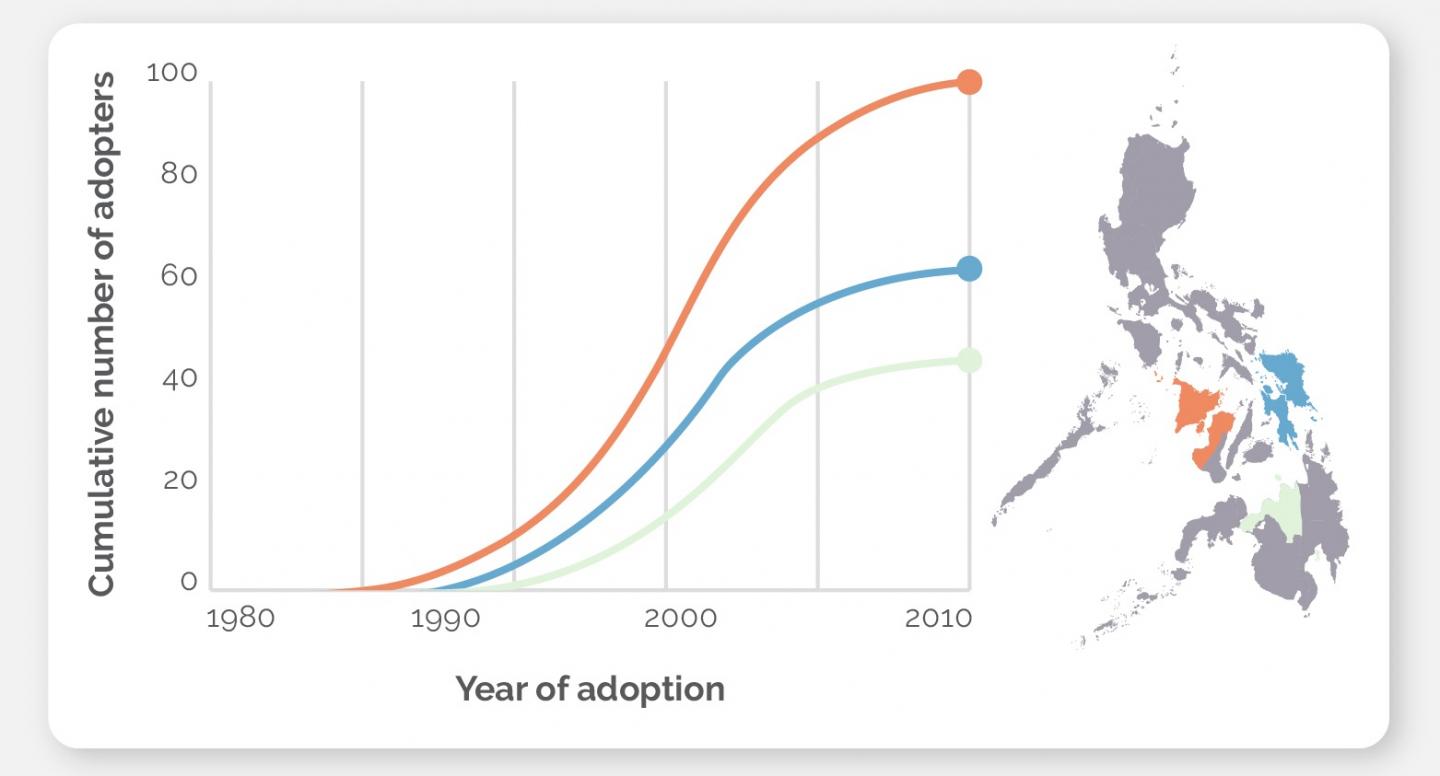
The study, including University of Queensland researchers, modelled how conservation initiatives are adopted until they reach “scale” – a level where they can have real impact on conserving or improving biodiversity.

UQ’s Professor Hugh Possingham said understanding the underlying factors that lead to initiatives reaching scale was critical to savings species and ecosystems globally.

“By understanding what makes conservation efforts contagious, we can redesign future initiatives to boost their uptake,” he said.

“The research suggests that one key factor is to facilitate contact between those who’ve already taken up a new initiative and those who might potentially adopt it.

“For example, one community that has established local marine protections talks about what they’ve done and what the benefits are to another community considering doing something similar.”

The research leader, Imperial College London’s Dr Morena Mills, said conservation initiatives – like managing fishing resources and offsetting land for nature – were critical for protecting biodiversity and the ecosystems that help provide us with clean water and air.

“We found that most of these initiatives spread like a disease, where they depend on a potential adopter catching the conservation ‘bug’ from an existing one,” she said.

“We hope our insights into how biodiversity conservation initiatives spread will allow practitioners to design them so that they reach scale, which is critical for enabling them to make a tangible, lasting impact.”

The research looked at 22 conservation initiatives of varying scales across the globe to see how they spread, and how fast.

“The initiatives ranged from villages introducing protections around local marine sites to governments designating areas as international World Heritage sites, including state and privately protected areas,” Professor Possingham said.

“We found that 83 per cent of the schemes followed a slow-fast-slow model, where initial adoption is slow as few people take it up, but then grows quickly as more early adopters connect with potential adopters.

“Finally, the rate slows again as all potential adopters have either taken up the scheme or refused it.”

The team said further insights were needed, as no initiative in the study had the desired properties of being taken up quickly, and being taken up by the majority of potential adopters.

Most initiatives had one of these properties, with more than half being adopted by fewer than 30 percent of potential adopters.

“We are seeking to understand more about how local context facilitates or hinders spread, to help more initiatives reach scale,” Dr Mills said.

###

The research has been published in Nature Sustainability (DOI: 10.1038/s41893-019-0384-1).

Media Contact
Hugh Possingham
[email protected]
61-434-079-061

Original Source

https://www.uq.edu.au/news/article/2019/10/making-conservation-contagious%E2%80%99

Related Journal Article

http://dx.doi.org/10.1038/s41893-019-0384-1

Tags: BiodiversityBiologyClimate ChangeEarth ScienceEcology/Environment
Share12Tweet8Share2ShareShareShare2

Related Posts

Single mother must adapt swiftly — the survival of her colony depends on it — Biology

Single mother must adapt swiftly — the survival of her colony depends on it

May 15, 2026
Why Are Nearly Everyone Right-Handed? It Might Be Linked to How We Learned to Walk — Biology

Why Are Nearly Everyone Right-Handed? It Might Be Linked to How We Learned to Walk

May 15, 2026

Excessive Neuronal Activity Initiates Severe Autoimmune Brain Disorder

May 15, 2026

Precision Anti-Aging Strategies Focus on Eliminating Harmful Senescent Cells While Preserving Beneficial Ones

May 15, 2026
Please login to join discussion

POPULAR NEWS

  • Research Indicates Potential Connection Between Prenatal Medication Exposure and Elevated Autism Risk

    843 shares
    Share 337 Tweet 211
  • New Study Reveals Plants Can Detect the Sound of Rain

    730 shares
    Share 291 Tweet 182
  • Salmonella Haem Blocks Macrophages, Boosts Infection

    62 shares
    Share 25 Tweet 16
  • Breastmilk Balances E. coli and Beneficial Bacteria in Infant Gut Microbiomes

    58 shares
    Share 23 Tweet 15

About

We bring you the latest biotechnology news from best research centers and universities around the world. Check our website.

Follow us

Recent News

Perinatal and Early Childhood Factors in PFAPA Persistence

New Actinomycin Derivatives Target Malaria More Selectively

Mobile App Enhances Exercise for Older Adults’ Cognition

Subscribe to Blog via Email

Enter your email address to subscribe to this blog and receive notifications of new posts by email.

Join 82 other subscribers
  • Contact Us

Bioengineer.org © Copyright 2023 All Rights Reserved.

Welcome Back!

Login to your account below

Forgotten Password?

Retrieve your password

Please enter your username or email address to reset your password.

Log In
No Result
View All Result
  • Homepages
    • Home Page 1
    • Home Page 2
  • News
  • National
  • Business
  • Health
  • Lifestyle
  • Science

Bioengineer.org © Copyright 2023 All Rights Reserved.