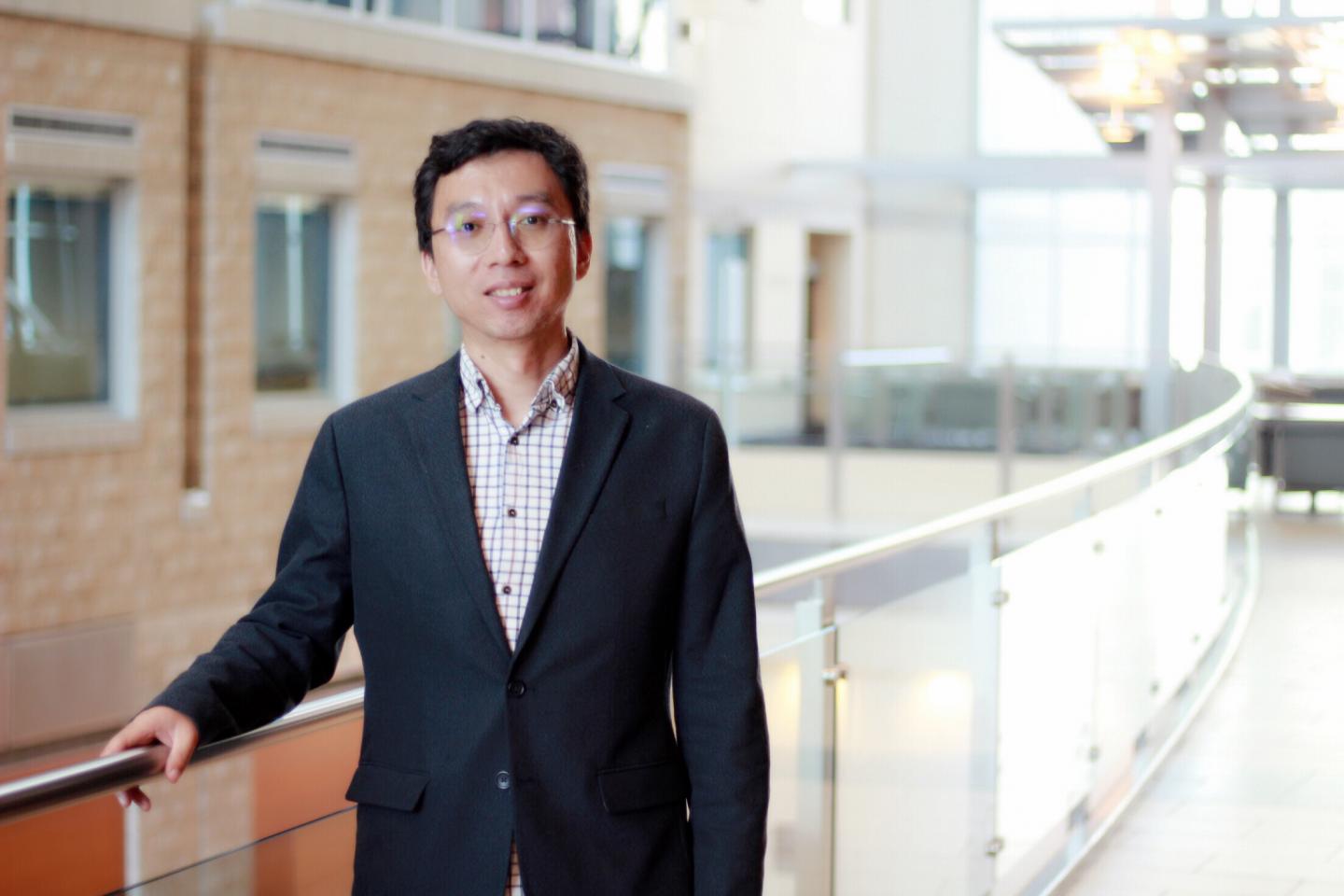
Credit: Ross Neitz
Could the diagnosis and treatment of mental health disorders one day be aided through the help of machine learning? New research from the University of Alberta is bringing us closer to that future through a study published in Molecular Psychiatry.
The research was led by Bo Cao at the U of A's Department of Psychiatry, with the collaboration of Xiang Yang Zhang at the University of Texas Health Science Center at Houston. They used a machine-learning algorithm to examine functional magnetic resonance imaging (MRI) images of both newly diagnosed, previously untreated schizophrenia patients and healthy subjects. By measuring the connections of a brain region called the superior temporal cortex to other regions of the brain, the algorithm successfully identified patients with schizophrenia at 78 per cent accuracy. It also predicted with 82 per cent accuracy whether or not a patient would respond positively to a specific antipsychotic treatment named risperidone.
"This is the first step, but ultimately we hope to find reliable biomarkers that can predict schizophrenia before the symptoms show up," said Cao, an assistant professor of psychiatry at the U of A. "We also want to use machine learning to optimize a patient's treatment plan. It wouldn't replace the doctor. In the future, with the help of machine learning, if the doctor can select the best medicine or procedure for a specific patient at the first visit, it would be a good step forward."
Approximately one in 100 people will be affected by schizophrenia at some point in their lives, a severe and disabling psychiatric disorder that comes with delusions, hallucinations and cognitive impairments. Most patients with schizophrenia develop the symptoms early in life and will struggle with them for decades.
According to Cao, early diagnosis of schizophrenia and many mental disorders is an ongoing challenge. Coming up with the personalized treatment strategy at the first visit with a patient is also a challenge for clinicians. Current treatment of schizophrenia is still often determined by a trial-and-error style. If a drug is not working properly, the patient may suffer prolonged symptoms and side effects, and miss the best time window to get the disease controlled and treated.
Cao hopes to expand the work to include other mental illness such as major depressive and bipolar disorders. While the initial results of schizophrenia diagnosis and treatment are encouraging, Cao says that further validations on large samples will be necessary and more refinement is needed to increase accuracy before the work can be translated into a useful tool in a clinical environment.
"It will be a joint effort of the patients, psychiatrists, neuroscientists, computer scientists and researchers in other disciplines to build better tools for precise mental health," said Cao. "We have a Computational Psychiatry group at U of A with a team of excellent clinicians and scientists to work collaboratively on this challenging problem."
###
The study was funded by the Brain and Behavior Research Foundation.
Cao's paper "Treatment response prediction and individualized identification of first-episode drug-naïve schizophrenia using brain functional connectivity" was published in Molecular Psychiatry on June 19, 2018.
Media Contact
Shelby Soke
[email protected]
403-988-4730
@ualberta_fomd
http://www.med.ualberta.ca
Related Journal Article
http://dx.doi.org/10.1038/s41380-018-0106-5