


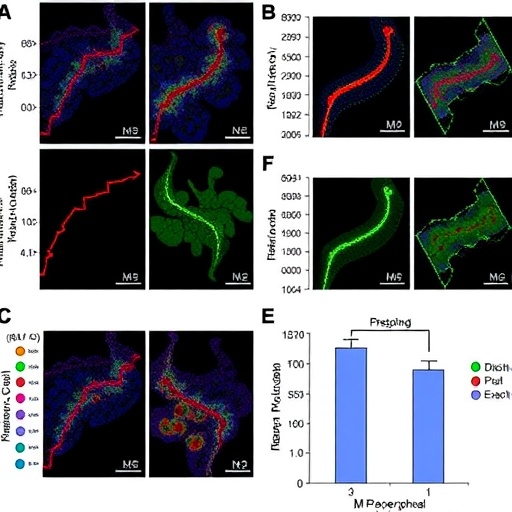
Recent advancements in cancer immunotherapy have highlighted the crucial role of tumor microenvironment components, particularly M2 macrophages, in shaping the immune response against malignancies. A groundbreaking study published in the Journal of Translational Medicine by Zhang et al. delves deep into the sophisticated mechanisms through which M2 macrophages influence the behavior of CD8+ CD101-TIM3+ T cells. This interaction not only elucidates the intricate regulatory networks within the immune system but also offers potential pathways for enhancing the efficacy of immunotherapeutic strategies in treating non-small cell lung cancer (NSCLC).
The research focuses on the SPP1-CD44 signaling pathway as a key mediator in the modulation of T cell differentiation. The study illustrates that M2 macrophages, known for their role in promoting tissue repair and suppressing inflammation, can significantly impact the immune landscape within tumors. By releasing specific cytokines and growth factors, M2 macrophages create an environment conducive to the survival and differentiation of CD8+ T cells endowed with various effector functions. This finding uncovers a previously underappreciated aspect of the tumor-immune interaction.
In the context of NSCLC, where traditional therapies often fall short, understanding how M2 macrophages influence T cell responses opens new avenues for therapeutic intervention. Zhang and colleagues meticulously dissect the mechanisms underlying the interaction between these immune cells. Their experimental design included co-culture systems that allowed for the direct observation of T cell behaviors in the presence of M2 macrophages. They documented substantial shifts in T cell differentiation, pointing towards a more suppressive phenotypic expression profile when exposed to M2 macrophages.
The study’s findings are particularly relevant given the rise of immune checkpoint inhibitors in cancer treatment. These therapies have revolutionized the landscape of oncology, yet their effectiveness is often limited by the pre-existing immunosuppressive microenvironment created by tumor-associated macrophages, including M2 phenotypes. Zhang et al. propose that targeting the SPP1-CD44 pathway might help dismantle this immunosuppressive barrier, thereby allowing for a more robust T cell response against tumors.
One of the standout revelations of this research is the dual role of M2 macrophages. While they are often conceptualized as tumor-promoting entities, their influence on T cell differentiation suggests a more nuanced role in the tumor microenvironment. The liberation of soluble factors from M2 macrophages appears to prepare CD8+ T cells for a transition into a state that is less conducive to tumor eradication. By uncovering the specific cytokines and molecular mechanisms involved, this study paves the way for novel therapeutic approaches that leverage and manipulate these interactions.
Furthermore, this research highlights the importance of the surrounding cellular context when considering T cell activation and differentiation. The SPP1-CD44 pathway offers a potential target for pharmacological intervention, wherein blocking this signaling axis could reverse the negative impact of M2 macrophages on T cell function. Future studies are needed to validate these findings in clinical settings and explore the therapeutic potential of such interventions.
The implications of these findings extend beyond NSCLC, as M2 macrophages are implicated in various cancer types. The knowledge gained from this study could be adapted to address the challenges posed by different malignancies characterized by similar immune evasion strategies. By translating these insights into clinical applications, it may be possible to enhance the efficacy of immunotherapies across a broader spectrum of cancer types.
In light of the advancements made in characterizing T cell plasticity within the tumor microenvironment, this research further underlines the necessity of multi-faceted therapeutic strategies. Integrating immunotherapy with agents that modify macrophage behavior might be essential for cultivating a more favorable immune environment. As the field moves toward precision medicine, understanding the role of specific immune cell types, such as M2 macrophages, becomes paramount in developing effective treatment regimens.
Overall, the study underscores the complexity of the tumor immune landscape, wherein supportive and suppressive interactions coexist. The results emphasize that a better understanding of these dynamics is crucial for the development of next-generation immunotherapies aimed at overcoming resistance mechanisms entrenched within the tumor milieu. As this research continues to gain traction, it is poised to influence both current therapeutic practices and the design of future clinical trials.
In conclusion, the work of Zhang et al. opens a crucial dialogue regarding the modulation of T cell responses by macrophages within the tumor microenvironment. With further validation and exploration, targeting the SPP1-CD44 pathway may become a cornerstone of strategies designed to optimize outcomes for patients with NSCLC and potentially other malignancies characterized by similar immune behaviors.
The rich interplay between M2 macrophages and T cells is now coming to light as a key determinant of therapeutic response. As the scientific community pivots towards integrative approaches in cancer treatment, the findings presented by Zhang and colleagues will likely spearhead innovative strategies aimed at leveraging the immune system more effectively against tumors.
Through the detailed elucidation of these pathways, this research could inspire a new wave of targeted therapies designed to interrupt the immunosuppressive signals released by M2 macrophages. With ongoing advancements in molecular biology and immunology, the future of cancer therapy could be one where empowering the immune system becomes a standard approach, diminishing the grip of malignancies that currently evade eradication.
As we look ahead, it is essential for researchers and clinicians alike to embrace the insights gained from such studies and to foster collaboration that bridges basic research with clinical application. This paradigm shift promises not only improved outcomes for patients but also a deeper understanding of the fundamental mechanisms at play in cancer immunology.
The journey of translating these discoveries into tangible therapeutic strategies will undoubtedly require interdisciplinary efforts, but the potential rewards are immense. By harnessing the power of the immune system and mitigating the suppressive effects of M2 macrophages, the vision of effective and durable cancer treatments may soon become a reality.
In summary, the findings presented by Zhang et al. signify a pivotal step forward in cancer immunotherapy, particularly in addressing the hurdles posed by tumor-associated macrophages. Their research not only enriches our comprehension of T cell biology but also sets the stage for future innovations that could transform the way we approach treatment for NSCLC and beyond.
Subject of Research: The role of M2 macrophages in modulating CD8+ T cell differentiation and their impact on immunotherapeutic responses in NSCLC.
Article Title: M2 macrophages modulate the differentiation of CD8 + CD101-TIM3 + T cells via the SPP1‒CD44 pathway, influencing the immunotherapeutic response in NSCLC.
Article References:
Zhang, G., Wu, Y., Qi, D. et al. M2 macrophages modulate the differentiation of CD8 + CD101-TIM3 + T cells via the SPP1‒CD44 pathway, influencing the immunotherapeutic response in NSCLC.
J Transl Med (2026). https://doi.org/10.1186/s12967-025-07662-1
Image Credits: AI Generated
DOI: 10.1186/s12967-025-07662-1
Keywords: M2 macrophages, CD8+ T cells, SPP1-CD44 signaling pathway, immunotherapy, non-small cell lung cancer, tumor microenvironment, immune response.
Tags: CD8+ T cell response in NSCLCcytokine influence on T cell differentiationenhancing immunotherapeutic strategiesimmune system regulatory networksM2 macrophages and tumor immune landscapeM2 macrophages in cancer immunotherapymacrophage-derived growth factorsnon-small cell lung cancer treatment advancementsSPP1-CD44 signaling pathwayT cell effector functions in tumorstherapeutic interventions in lung cancertumor microenvironment and immune regulation



