Credit: Mary Ann Liebert, Inc., publishers
New Rochelle, NY, April 20, 2020–A group of researchers with experience in treating high altitude pulmonary edema (HAPE) have written to correct the misconception in medical social media forums and elsewhere that the lung injury seen in COVID-19 is not like typical acute respiratory distress syndrome (ARDS) and is instead like HAPE. COVID-19 lung injury is not like HAPE, and treating it like HAPE could have adverse effects on patient outcomes, according to an article published in High Altitude Medicine & Biology, a peer-reviewed journal from Mary Ann Liebert, Inc., publishers. Click here to read the full-text article free on the High Altitude Medicine & Biology website through May 20, 2020.
The article entitled “COVID-19 Lung Injury Is Not High Altitude Pulmonary Edema” is coauthored by Andrew M. Luks, MD, University of Washington, Seattle, and colleagues from Himalayan Rescue Association, Intermountain Medical Center (Salt Lake City, UT), University of Utah, Salt Lake City, St. Mary’s Medical Center, San Francisco (CA), VA Puget Sound Health Care System, Seattle, and University of Colorado Anschutz Medical Campus (Aurora).
The researchers discuss the similarities between HAPE and ARDS, and also highlight the differences between them. ARDS in COVID-19 occurs as a result of an inflammatory response to the presence of the virus, whereas HAPE does not occur as a result of underlying inflammation, but rather as a result of excessive and uneven hypoxic pulmonary vasoconstriction. Understanding the different mechanisms of HAPE and ARDS is critical for patient management because the treatment for each will be quite different. Long-term supportive care including mechanical ventilation may be needed to overcome the underlying inflammation in COVID-19.
“It is vitally important to not equate these two diseases simply because they share some similarities in their radiologic appearance and cause hypoxemia (low blood oxygen content). This can be said for many other acute lung injuries. Any perceived link of HAPE to COVID-19 lung injury could have deleterious consequences if the same medications useful in HAPE were tried in those with COVID-19 related respiratory failure,” says Erik R. Swenson, MD, Editor-in-Chief of High Altitude Medicine & Biology and Professor of Medicine, University of Washington and Division of Pulmonary and Critical Care Medicine, Veterans Administration Puget Sound Healthcare System.
###
About the Journal
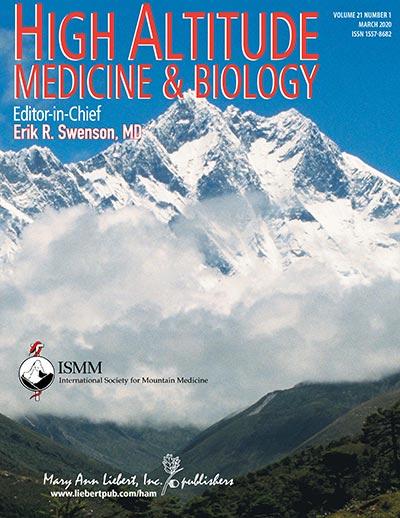
High Altitude Medicine & Biology the Official Journal of the International Society for Mountain Medicine, is published quarterly online. It is the only peer-reviewed journal dedicated exclusively to the latest advances in high altitude life sciences. The Journal presents findings on the effects of chronic hypoxia on lung and heart disease, pulmonary and cerebral edema, hypertension, dehydration, infertility, appetite and weight loss, and other diseases. Complete tables of content and a sample issue may be viewed on the High Altitude Medicine & Biology website.
About the Publisher
Mary Ann Liebert, Inc., publishers is a privately held, fully integrated media company known for establishing authoritative peer-reviewed journals in many promising areas of science and biomedical research, including Journal of Aerosol Medicine and Pulmonary Drug Delivery and Pediatric Allergy, Immunology, and Pulmonology. Its biotechnology trade magazine, GEN (Genetic Engineering & Biotechnology News), was the first in its field and is today the industry’s most widely read publication worldwide. A complete list of the firm’s 90 journals, books, and newsmagazines is available at the Mary Ann Liebert, Inc., publisher’s website.
Media Contact
Kathryn Ryan
[email protected]
Original Source
https:/
Related Journal Article
http://dx.