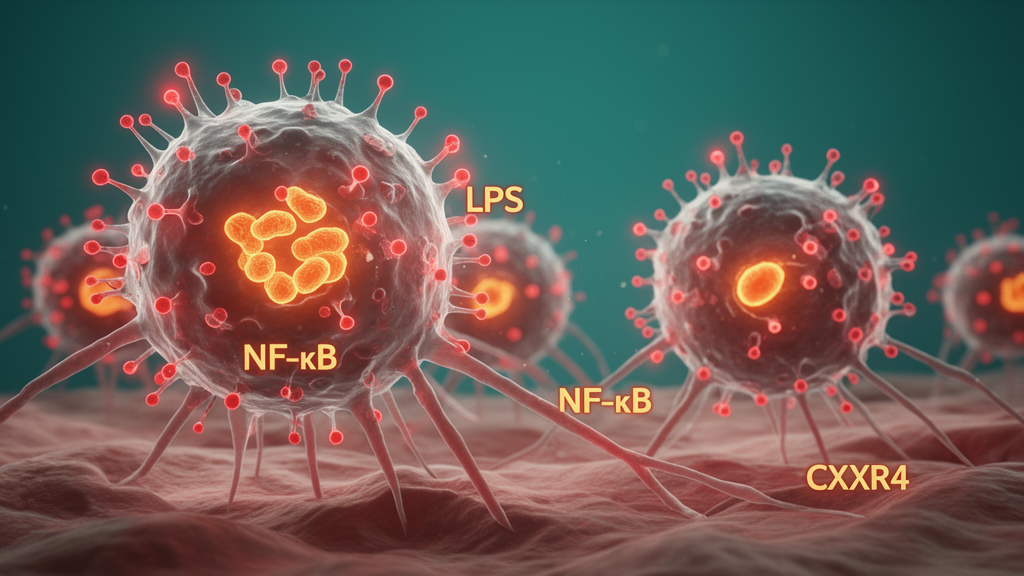
A new laboratory study reports that lipopolysaccharide (LPS), an inflammatory stimulus increasingly implicated in inflammation-related disease processes, can increase the migratory and invasive behavior of gallbladder cancer cells in culture. The work, published in Medical Oncology, also identifies a signaling route through which this happens: LPS appears to boost the activity of the transcription factor NF-κB, which then binds the promoter of the gene encoding CXCR4, a chemokine receptor that is markedly overexpressed in multiple malignancies, including gallbladder cancer. The authors propose this LPS/NF-κB/CXCR4 axis as a potential mechanistic link between chronic biliary inflammation and tumor progression, while stressing that the findings come from cell-based experiments and require further in vivo studies and clinical validation.
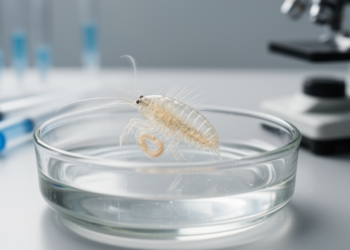
The evidence began in patient samples. Using a chromogenic Tachypleus amebocyte lysate assay, the researchers quantified LPS concentrations in bile from gallbladder cancer patients and found that elevated levels correlated with more advanced pT stage, a measure of how far the primary tumor has grown. Notably, LPS concentrations were positively associated with CXCR4 expression, which the team assessed using immunohistochemistry, quantitative real-time PCR, and luciferase reporter assays.
This set of complementary methods allowed the investigators to examine CXCR4 at the protein, mRNA, and promoter-activity levels rather than relying on a single readout. In vitro experiments then tested what LPS does to gallbladder cancer cells directly. When cells were stimulated with LPS, their migratory and invasive capacities increased robustly.
The study reports that this increase in motility was mediated by the upregulation of CXCR4 expression, meaning that when LPS raised CXCR4 levels, the cells became better at moving and invading through their surroundings in the culture system. Mechanistically, the researchers showed that NF-κB, a transcription factor central to inflammatory signaling, binds to the CXCR4 promoter to drive its expression, and that LPS potentiated this transcriptional activation. In other words, LPS did not simply raise CXCR4 levels as a side effect; it appeared to strengthen the NF-κB-driven transcription of the CXCR4 gene.
The authors frame these results as revealing a novel LPS/NF-κB/CXCR4 signaling axis that may contribute to the aggressive phenotype of gallbladder cancer in vitro. They are careful about scope: the correlation between biliary LPS and advanced pT stage is an association in patient samples, the migration and invasion findings are confined to cultured cells, and the paper explicitly states that further in vivo studies and clinical validation are warranted. No clinical recommendations follow from this work at this stage, and the findings should not be read as evidence that LPS exposure causes cancer progression in patients.
What the study does provide is a defined molecular pathway that connects a bacterial inflammatory stimulus to a pro-metastatic phenotype in gallbladder cancer cells, along with patient-sample data linking bile LPS levels to both tumor stage and CXCR4 expression. For now, the contribution is mechanistic: a candidate route by which inflammation-associated signals may promote the invasive behavior of this cancer in the laboratory.
Subject of Research: LPS-induced, NF-κB-mediated upregulation of CXCR4 promoting gallbladder cancer cell migration and invasion in vitro
Article Title: Lipopolysaccharide increases cell migration and invasion via NF-κB-mediated upregulation of CXCR4 in gallbladder cancer
Article References: Lin, B., Hong, H., & Zhang, Y. (2026). Lipopolysaccharide increases cell migration and invasion via NF-κB-mediated upregulation of CXCR4 in gallbladder cancer. Medical Oncology, 43(11), Article 359. https://doi.org/10.1007/s12032-026-03488-z
Image Credits: AI Generated
DOI: 10.1007/s12032-026-03488-z
Keywords: gallbladder cancer, lipopolysaccharide, CXCR4, NF-κB, cell migration, cell invasion, biliary inflammation, Medical Oncology, increases, cell, migration, invasion
News Source: Nathaniel Bowman. (October 26, 2026). LPS boosts gallbladder cancer cell migration and invasion via NF-κB–CXCR4 axis. Scienmag.