• HOME
  • NEWS
  • EXPLORE
    • CAREER
      • Companies
      • Jobs
    • EVENTS
    • iGEM
      • News
      • Team
    • PHOTOS
    • VIDEO
    • WIKI
  • BLOG
  • COMMUNITY
    • FACEBOOK
    • INSTAGRAM
    • TWITTER
Friday, June 5, 2026
BIOENGINEER.ORG
No Result
View All Result
  • Login
  • HOME
  • NEWS
  • EXPLORE
    • CAREER
      • Companies
      • Jobs
        • Lecturer
        • PhD Studentship
        • Postdoc
        • Research Assistant
    • EVENTS
    • iGEM
      • News
      • Team
    • PHOTOS
    • VIDEO
    • WIKI
  • BLOG
  • COMMUNITY
    • FACEBOOK
    • INSTAGRAM
    • TWITTER
  • HOME
  • NEWS
  • EXPLORE
    • CAREER
      • Companies
      • Jobs
        • Lecturer
        • PhD Studentship
        • Postdoc
        • Research Assistant
    • EVENTS
    • iGEM
      • News
      • Team
    • PHOTOS
    • VIDEO
    • WIKI
  • BLOG
  • COMMUNITY
    • FACEBOOK
    • INSTAGRAM
    • TWITTER
No Result
View All Result
Bioengineer.org
No Result
View All Result
Home NEWS Science News

Lorenzo now a more organized and powerful hurricane on NASA satellite imagery

Bioengineer by Bioengineer
September 26, 2019
in Science News
Reading Time: 2 mins read
0
IMAGE
Share on FacebookShare on TwitterShare on LinkedinShare on RedditShare on Telegram

IMAGE

Credit: Credit: NASA/NRL

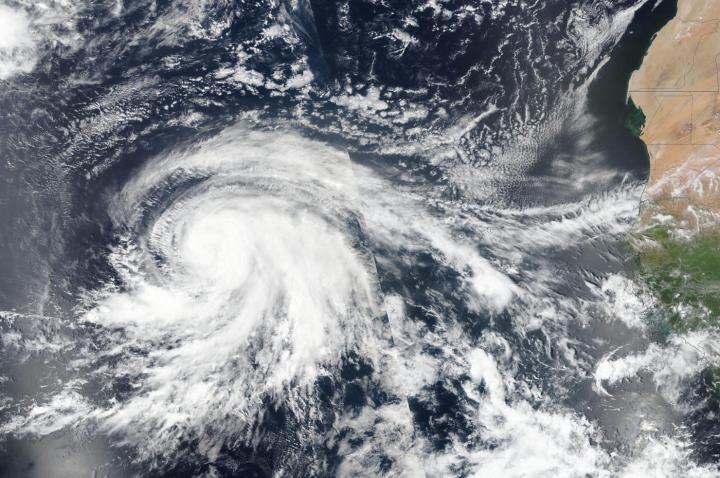
NASA-NOAA’s Suomi NPP satellite provided a full visible image of a strengthening Hurricane Lorenzo in the eastern North Atlantic Ocean. On Sept. 26, Lorenzo attained status as a major hurricane.

A major hurricane is one that is a Category 3 or higher on the Saffir-Simpson Hurricane Wind Scale.

The Visible Infrared Imaging Radiometer Suite (VIIRS) instrument aboard Suomi NPP provided a visible image of the storm on Sept. 25. The VIIRS image showed powerful thunderstorms circling the center of Lorenzo with thick bands of thunderstorms wrapping into the low-level center from the south and east of center. The satellite imagery revealed that Lorenzo was getting better organized as it was strengthening. By 11 p.m. EDT, infrared imagery showed a small eye had been appearing intermittently.

The shape of the storm is a clue to forecasters that a storm is either strengthening or weakening. If a storm takes on a more rounded shape it is getting more organized and strengthening. Conversely, if it becomes less rounded or elongated, it is a sign the storm is weakening.

On Sept. 26, shortly after 5 a.m. EDT (0900 UTC), the National Hurricane Center (NHC) said Lorenzo’s eye quickly and drastically became more apparent in conventional satellite imagery. The slightly ragged but clearing eye of the hurricane is surrounded by very cold cloud tops, and it has become clear that Lorenzo is rapidly intensifying.

By 6 a.m. EDT (1000 UTC), the center of Hurricane Lorenzo had maximum sustained winds have rapidly increased to near 125 mph (205 kph) with higher gusts.  Lorenzo is a category 3 hurricane on the Saffir-Simpson Hurricane Wind Scale.

Lorenzo was located near latitude 15.2 degrees north and longitude 39.3 degrees west. That puts Lorenzo’s eye about 995 miles (1,600 km) west of the southernmost Cabo Verde Islands.

The hurricane is moving toward the west-northwest near 15 mph (24 kph). Lorenzo is forecast to turn toward the northwest and begin moving at a slightly slower speed later today. A turn toward the north is then anticipated on Saturday, Sept. 28.

Additional strengthening is possible today. Hurricane-force winds extend outward up to 35 miles (55 km) from the center and tropical-storm-force winds extend outward up to 205 miles (335 km). The estimated minimum central pressure is 955 millibars.

Hurricanes are the most powerful weather event on Earth. NASA’s expertise in space and scientific exploration contributes to essential services provided to the American people by other federal agencies, such as hurricane weather forecasting.

###

For updated forecasts. visit: http://www.nhc.noaa.gov

By Rob Gutro 

NASA’s Goddard Space Flight Center

Media Contact
Rob Gutro
[email protected]

Original Source

https://blogs.nasa.gov/hurricanes/2019/09/26/lorenzo-atlantic-ocean-4/

Tags: Atmospheric ChemistryAtmospheric ScienceClimate ChangeClimate ScienceEarth ScienceMeteorologyTechnology/Engineering/Computer ScienceTemperature-Dependent PhenomenaWeather/Storms
Share13Tweet8Share2ShareShareShare2

Related Posts

Electrically Functionalized Skin Enables Deep-Tissue Bioelectrical Recording

June 5, 2026

Pegivirus Linked to Encephalitis Shows Broad Avian Neurotropism

June 5, 2026

Vagus Nerve Stimulation Shields Neonatal Rats from NEC

June 5, 2026

Immune Metabolite Itaconate Drives Still’s Disease Liver Damage

June 5, 2026
Please login to join discussion

POPULAR NEWS

  • ESMO 2025: mRNA COVID Vaccines Enhance Efficacy of Cancer Immunotherapy

    322 shares
    Share 129 Tweet 81
  • Multi-Hospital Study Reveals Long Covid Burden Is Twice as High as Current Estimates

    88 shares
    Share 35 Tweet 22
  • Saying Goodbye to PGY-6: Pediatric Fellowship Realities

    77 shares
    Share 31 Tweet 19
  • Common Food Preservatives Associated with Elevated Blood Pressure and Increased Heart Disease Risk

    57 shares
    Share 23 Tweet 14

About

We bring you the latest biotechnology news from best research centers and universities around the world. Check our website.

Follow us

Recent News

Electrically Functionalized Skin Enables Deep-Tissue Bioelectrical Recording

Pegivirus Linked to Encephalitis Shows Broad Avian Neurotropism

Vagus Nerve Stimulation Shields Neonatal Rats from NEC

Subscribe to Blog via Email

Enter your email address to subscribe to this blog and receive notifications of new posts by email.

Join 82 other subscribers
  • Contact Us

Bioengineer.org © Copyright 2023 All Rights Reserved.

Welcome Back!

Login to your account below

Forgotten Password?

Retrieve your password

Please enter your username or email address to reset your password.

Log In
No Result
View All Result
  • Homepages
    • Home Page 1
    • Home Page 2
  • News
  • National
  • Business
  • Health
  • Lifestyle
  • Science

Bioengineer.org © Copyright 2023 All Rights Reserved.