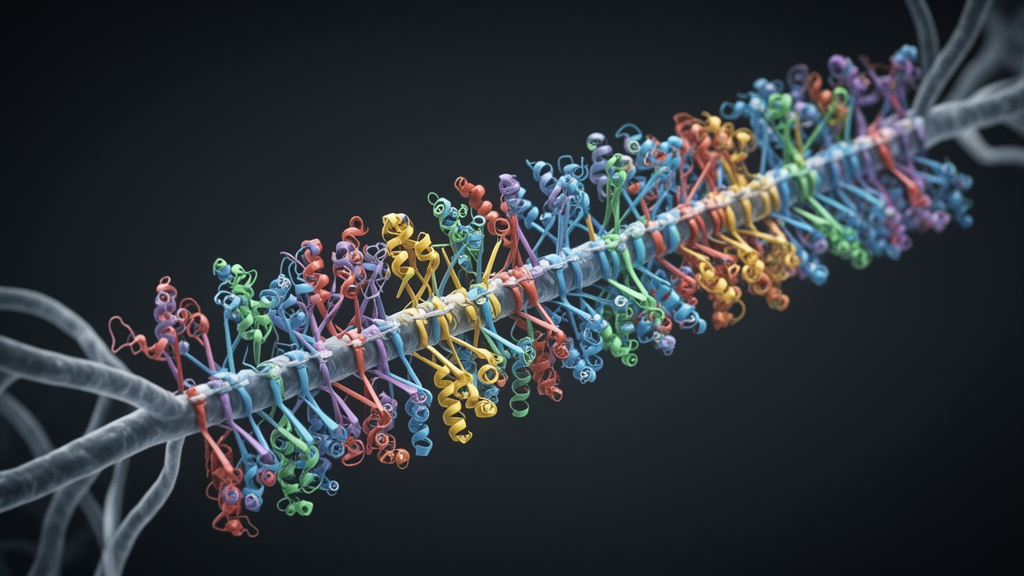
Researchers investigating the molecular architecture of psychiatric genetics have established a detailed map of alternative splicing in ANK3, a major susceptibility gene linked to bipolar disorder, by combining full-length long-read sequencing with cell-type-specific droplet digital polymerase chain reaction. Although large-scale genome-wide association studies have repeatedly tied ANK3 to bipolar disorder, schizophrenia, and several neurodevelopmental conditions, identifying the precise biological mechanisms driving these genetic associations has remained challenging because individual genes typically produce diverse transcript isoforms that operate differently across distinct brain cell populations. By deploying Oxford Nanopore sequencing on full-length complementary DNA libraries from both human and mouse brain tissue alongside fluorescence-activated sorting of neural nuclei, the study demonstrated that standard reference databases omit numerous functionally relevant splice variants. The resulting dataset confirmed at least twenty-six distinct transcript isoforms of ANK3, revealed strong evolutionary conservation between species, and demonstrated that several alternatively spliced exons exhibit pronounced cell-type specificity across neurons, oligodendrocytes, and astrocytes.
The protein encoded by ANK3, known as Ankyrin-G, serves as an essential scaffolding adapter that anchors diverse membrane proteins to the beta-spectrin and actin cytoskeleton within the central nervous system. In neuronal cells, Ankyrin-G acts as a master organizer of the axon initial segment and the nodes of Ranvier, where specialized giant isoforms of two hundred and seventy and four hundred and eighty kilodaltons coordinate the precise clustering of voltage-gated sodium channels required for action potential initiation and rapid electrical propagation. Beyond its primary role in axonal physiology, Ankyrin-G modulates the structural stability and synaptic signaling of dendritic spines, functioning as a perisynaptic barrier within the spine neck. In oligodendrocytes, Ankyrin-G interacts directly with contactin, contactin-associated protein, neurofascin, and protein 4.1B to establish and maintain the integrity of paranodal axoglial junctions. Deleterious de novo mutations, compound heterozygous disruptions, and regulatory single-nucleotide polymorphisms in ANK3 have been associated with cognitive impairment, autism spectrum disorder, and psychiatric illness, while mood-stabilizing lithium therapy has been shown to modulate Ankyrin-G activity.
A fundamental barrier in translating psychiatric association signals into therapeutic mechanisms has been the incompleteness of human transcriptomic databases regarding alternative splicing and cellular localization. While conventional genome-wide association studies map single-nucleotide polymorphisms to chromosomal loci, fine-mapping approaches frequently assume that gene-level summaries adequately represent the functional disease driver. However, cellular dysfunction in polygenic disorders typically arises from imbalances among specific transcript variants rather than bulk gene expression. Standard short-read single-cell RNA sequencing platforms often fail to resolve this complexity because they primarily measure high-abundance transcripts, capture only the terminal five-prime or three-prime ends of messenger RNA molecules, and cannot distinguish how distant alternative exons combine across full-length transcripts. Furthermore, curated repositories such as RefSeq have historically annotated only five ANK3 isoforms in humans and seven in mice, omitting many computationally predicted splice variants due to a lack of empirical verification in neural tissue. The research team sought to overcome this systematic blind spot through full-length sequencing and targeted digital quantification.
To capture the full spectrum of ANK3 transcripts regardless of length or basal abundance, the authors extracted total RNA from human corpus callosum and frontal lobe specimens, alongside matched cortical dissections from laboratory mice. Complementary DNA synthesis was performed using one microgram of total RNA per brain region with the SMARTer PCR cDNA synthesis protocol. To amplify exceptionally long transcripts without introducing truncation artifacts, the team implemented a specialized long-range amplification strategy comprising ten initial general cycles followed by twenty-eight ANK3-specific cycles with thirteen-minute extension intervals and twenty-second progressive extensions per subsequent cycle. Separate forward primer sets targeted transcription start site one and transcription start site two in conjunction with a shared reverse primer. Reaction products were screened on a bioanalyzer utilizing DNA 12000 chip kits and purified with magnetic beads at a forty-to-sixty ratio to deplete fragments smaller than three kilobases. The resulting human libraries were sequenced on an Oxford Nanopore MinION Mk1C device using R9.4.1 flow cells, while mouse libraries were processed on updated R10.4.1 flow cells.
Following high-accuracy basecalling with GPU-accelerated Guppy algorithms, sequence reads were filtered to retain only molecules possessing both intact primer sequences and a minimum length of three thousand nucleotides, before alignment against reference genomes using minimap2 software in long-read spliced mode. Bioinformatic evaluations combined systematic visual inspection in the Integrative Genomics Viewer with automated full-length transcript modeling via the FLAIR computational pipeline, which required customized reference adjustments to accommodate the repetitive sixteen-exon ankyrin-repeat cassette and the exceptionally large neuronal exon. The structural analysis identified ten distinct genomic regions undergoing alternative splicing across the ANK3 locus, including three constitutive exons that display alternative splice lengths differing by three, fifteen, and thirty-six nucleotides. Although theoretical combinations of these ten splice regions could yield thousands of distinct transcript species, empirical Nanopore measurements revealed that transcript diversity concentrated predominantly into twenty-six isoforms, dominated by a single primary transcript alongside five to ten moderately expressed variants and a minor cohort of low-frequency isoforms.
Because mature adult brain tissue features intricate, interwoven cellular processes that preclude gentle mechanical dissociation into viable single-cell suspensions, the investigators turned to nuclear isolation from adult male and female wild-type C57BL/6 mouse cerebral cortex. Cortical tissue samples ranging from fifty to one hundred milligrams were processed using a Singulator automated system with ribonuclease inhibitors, non-ionic detergents, and protease inhibitors to preserve nuclear envelope integrity and prevent enzymatic transcript degradation. Isolated nuclei were stained with DAPI for nucleic acid content and labeled with fluorophore-conjugated antibodies specific for established cell-type markers: anti-NeuN for neuronal nuclei, anti-Olig2 for oligodendrocytes, and anti-SOX9 for astrocytes. Fluorescence-activated cell sorting executed on a FACSMelody platform simultaneously separated these three distinct lineages alongside a double-negative control population. Purity assessments verified that sorted neuronal and oligodendrocyte fractions achieved greater than ninety-five percent purity, while the scarce astrocytic population demonstrated robust enrichment through a 3.3-fold upregulation of glial fibrillary acidic protein and a 5.0-fold enrichment of SOX9 transcripts.
Accurate quantification of lowly expressed splice variants required a methodology with greater dynamic range and precision than Nanopore read counts, which are inherently biased against the amplification of very long transcript isoforms. The team therefore turned to droplet digital PCR, an established benchmark for measuring nucleic acids present at minimal concentrations. Complementary DNA synthesized from nuclear RNA fractions was partitioned into thousands of nanoliter-sized aqueous droplets using an automated droplet generator and subjected to thermal cycling with fluorescently labeled hydrolysis probes. To establish an endogenous reference gene that matched the expression level and low variation of ANK3, the authors evaluated candidate housekeeping genes across public and in-house cortical datasets, identifying Top1 as the optimal calibrator. However, empirical measurements demonstrated that Top1 baseline expression differed systematically across distinct neural lineages. The investigators resolved this technical hurdle by deriving cell-type-specific adjustment factors from median Top1 expression within each cell population, ensuring rigorous, unbiased cross-cell-type comparisons of target transcript concentrations.
Quantitative ddPCR profiling established fundamental principles governing ANK3 regulation across brain cell types. Total ANK3 transcript abundance, measured by combining transcription start sites one and two, matched independent constitutive exon probe measurements, confirming that these two promoter sites account for the complete transcription initiation output in neural tissues. Total ANK3 expression was higher on average in oligodendrocytes than in neurons. Prominent promoter divergence emerged between lineages: transcription start site one predominated in neurons and astrocytes, whereas transcription start site two was overwhelmingly favored in oligodendrocytes. Most alternatively spliced internal exons remained skipped in the majority of transcripts, rendering them low-abundance variants, with the notable exception of region two. Nevertheless, despite overall low baseline inclusion rates, seven alternatively spliced regions—including the transcription start sites and regions one through five—exhibited statistically significant, multi-fold enrichment within specific cell populations, demonstrating that minor splice variants are tightly restricted to distinct neural cell types rather than randomly distributed.
The investigation also revealed surprising insights regarding the massive neuronal exon, an exceptionally large genomic sequence whose inclusion more than doubles the molecular weight of the resulting Ankyrin-G protein. Although historically regarded as entirely specific to neurons, transcripts containing the neuronal exon were detected across other neural cell types in mouse cortex, paralleling previous observations of its presence in cardiac tissue. Moreover, in contrast to human brain samples where the neuronal exon appears in a significant fraction of mature neuronal transcripts, the mouse cortical data revealed that only a small proportion of transcripts incorporated this sequence. Despite this difference in inclusion frequency, comparative genomic alignments across one hundred vertebrate species demonstrated that the nucleotide sequences of these alternatively spliced ANK3 exons are deeply conserved throughout vertebrate evolution. This remarkable conservation indicates that even though these alternative exons are expressed at low levels or deployed intermittently, they encode essential, evolutionarily preserved cellular functions.
The authors noted several technical caveats and experimental boundaries that contextualize their conclusions. The deliberate targeting of known transcription start sites during long-range amplification precluded the discovery of uncharacterized promoter regions, although constitutive probe concordances suggest no other major start sites operate in the adult cortex. Additionally, the yield of sorted astrocytic nuclei remained low due to epitope sensitivity and antibody binding constraints, restricting astrocyte measurements to four biological replicates compared to eight for neurons and oligodendrocytes. While the broad cell-type sorting successfully delineated neurons, astrocytes, and oligodendrocytes, it did not resolve discrete neuronal subtypes that may harbor unique microexon configurations.
Subject of Research: Alternative splicing and cell-type-specific transcript expression of the psychiatric risk gene ANK3
Article Title: Surveying alternative transcripts of disease-associated genes and their cell type specificity – a case study with ANK3
Article References: Falck, M., Reis de Assis, D., Holmgren, A., Aaløkken, R., Åsheim, S., Aass, H.-C., Dalen, K. T., Djurovic, S., & Hughes, T. (2026). Surveying alternative transcripts of disease-associated genes and their cell type specificity – a case study with ANK3. Translational Psychiatry, 16(1), Article 531. https://doi.org/10.1038/s41398-026-04412-9
Image Credits: AI Generated
DOI: 10.1038/s41398-026-04412-9
Keywords: ANK3, Ankyrin-G, Bipolar Disorder, Alternative Splicing, Oxford Nanopore Sequencing, Droplet Digital PCR, Brain Transcriptomics, Fluorescence-Activated Cell Sorting, Neurons, Oligodendrocytes, Astrocytes, Nodes of Ranvier, Axon Initial Segment, Neuropsychiatric Genetics, Gene Isoforms, Top1 Reference Gene, Evolutionary Conservation, Polygenic Disorders
News Source: Juliet Wilcox. (November 16, 2026). Long-Read Sequencing Maps Cell-Specific ANK3 Splicing Linked to Bipolar Disorder. Scienmag.