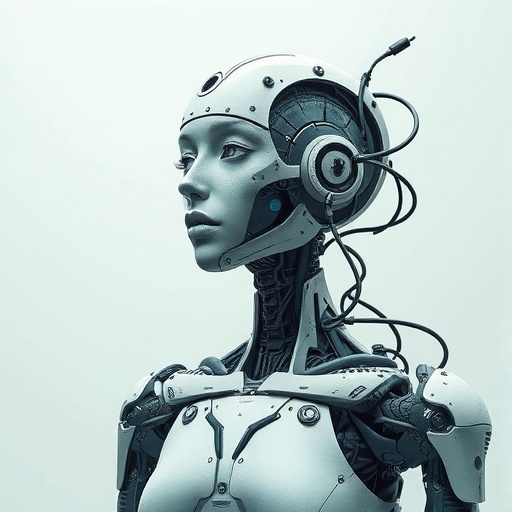
In a groundbreaking contribution to the discourse on technology, disability, and mortality, Candi K. Cann’s new book, augmented: life and death as a cyborg, published by The MIT Press in 2026, challenges readers to fundamentally rethink what it means to be human in our increasingly technologized world. This provocative text explores the intricate entanglement of human life with technology, urging us to embrace a broader, more inclusive understanding of disability, aging, and mortality through the lens of cyborg existence. By framing everyday medical and digital aids as augmentations, Cann illuminates the profound cultural, spiritual, and ethical transformations occurring in contemporary society.
Cann’s thesis rests on the conviction that humans have always been cyborgs—beings integrating technological elements into their biological realities. From cochlear implants to pacemakers and titanium joints, these devices are not mere tools but extensions of the body that modify and enhance human capabilities. This perspective challenges the conventional dichotomies that segregate the “natural” human body from the “artificial” technological object, dissolving boundaries that have historically marginalized disability and aging. Through this lens, technology is imbued with agency, framing devices as essential to human survival, flourishing, and even identity.
Drawing from her personal experience with hearing aids since childhood, Cann offers a deeply embodied understanding of how assistive technology shapes everyday life and reshapes the narrative of disability. Her account destabilizes societal stereotypes that equate technological dependence with loss or deficiency, instead positioning augmentation as a means of empowerment and reclamation. She critiques ableist assumptions that pathologize technological incorporation and argues for new frameworks that recognize integration with technology as a mode of being that is both inevitable and enriching.
One of the most compelling aspects of Cann’s inquiry is her exploration of death and dying through the prism of technological augmentation. As medical innovations extend lifespans and redefine the thresholds between life and death, she provocatively interrogates what it means to die in a cyborg world. Her analysis contends that technology not only prolongs life but reconfigures cultural understandings of mortality, grief, and the afterlife. By weaving cultural, religious, and ethical dimensions, Cann foregrounds how societies negotiate the boundaries of death in a technologically saturated environment, prompting urgent questions about agency, autonomy, and care in end-of-life contexts.
The book also traverses global perspectives, providing a rich comparative analysis of how divergent cultural attitudes shape relationships with technology and machines. Cann contrasts Western anxieties about human exceptionalism and mechanization with East Asian perspectives that perceive robots and AI as entities with spiritual potential. This animistic worldview, prevalent in countries like Japan and South Korea, envisions machines not as threats but as collaborators or even caretakers with quasi-spiritual significance—a contrast that highlights how cultural frameworks influence technological acceptance and integration.
Technological innovation, Cann argues, induces systemic societal shifts, influencing not only individual bodies but collective cultural landscapes. Her research underscores how augmentations—from wearable smart devices to advanced prosthetics—reshape social dynamics, accessibility paradigms, and definitions of normality. The notion of a “better life,” as articulated in her text, hinges on cultivating inclusive technologies that respect diverse embodiments and subvert ableist and death-phobic biases. This transformative approach calls for radical reimaginations of policy, design, and ethical engagement with technology.
Cann’s scholarship is situated at the nexus of disability studies, death studies, and science and technology studies, creating a multidisciplinary dialogue that opens new intellectual terrain. She highlights how disability has historically driven technological advancements, turning societal marginalization into innovation impetus. Augmented realities and virtual environments become sites of resistance and empowerment, enabling alternative modes of existence and communication for marginalized populations. Thus, technology serves as a bridge between difference and connectivity rather than as a divisive force.
The implications for aging populations are particularly significant. As life expectancy increases and more people live longer with chronic conditions or disabilities, understanding the role of augmentation technologies in enhancing autonomy and quality of life becomes crucial. Cann stresses that embracing cyborg identities offers a way to reconceptualize aging—not as decline but as a technologically supported continuum of human experience. This reframing challenges ageist and medicalized narratives by highlighting potentialities for enhanced well-being through thoughtful integration with technology.
Cann’s work also confronts the ethical complexities arising from artificial intelligence and emerging technologies. She warns against technoskepticism that dismisses innovations prematurely, advocating for nuanced engagements that critically assess impacts while exploring potentials. Ethical reflections on AI’s role in caregiving, surveillance, and decision-making reveal tensions between empowerment and control, autonomy and dependence. Her analysis encourages ongoing dialogue between technologists, ethicists, and communities to foster technologies that honor dignity, agency, and cultural diversity.
The cultural scrutiny in augmented extends to spiritual and metaphysical considerations, where machines are not mere instruments but entities imbued with animacy or soul-like qualities, depending on cultural contexts. This challenges secular Western paradigms dominant in technological discourse by introducing perspectives that see technology as woven into relational worlds of care, memory, and identity. Cann’s cross-cultural approach enriches debates on human-machine integration by foregrounding these alternative ontologies, expanding what is conceivable in the human-technology nexus.
Ultimately, augmented is a clarion call to reimagine our assumptions about bodies, mortality, and technology. Cann’s integrative approach synthesizes personal narrative, cultural analysis, and philosophical inquiry to propose a future where technology enhances human flourishing without eroding the fundamental values of care and meaning. For scientists, technologists, ethicists, and the general public alike, her book presents an urgent, visionary framework for living well in an age where humans are inseparably linked to their augmentations.
Subject of Research:
The intersection of death, technology, disability, and cultural perspectives on human augmentation.
Article Title:
Augmented Humanity: Rethinking Life, Death, and Disability in a Cyborg World
News Publication Date:
May 2026
Web References:
https://mitpress.mit.edu/9780262051118/augmented/
https://thereader.mitpress.mit.edu/what-america-could-learn-from-asias-robot-revolution/
Image Credits:
The MIT Press, 2026
Keywords
cyborg, augmentation, disability studies, death and dying, technology and culture, AI ethics, assistive technology, cultural perspectives on machines, human-machine integration, aging and technology, medical devices, animism and technology
Tags: aging and technology integrationcultural impact of medical technologycyborg identity and human augmentationdigital aids and human enhancementethical implications of cyborg existencehuman-machine boundary explorationinclusive perspectives on disability and agingmedical devices as body extensionsmortality and technological augmentationredefining disability through technologyspiritual transformations in cyborg lifetechnology and disability intersection