


Report on the life expectancy of captive chimpanzees in Japan
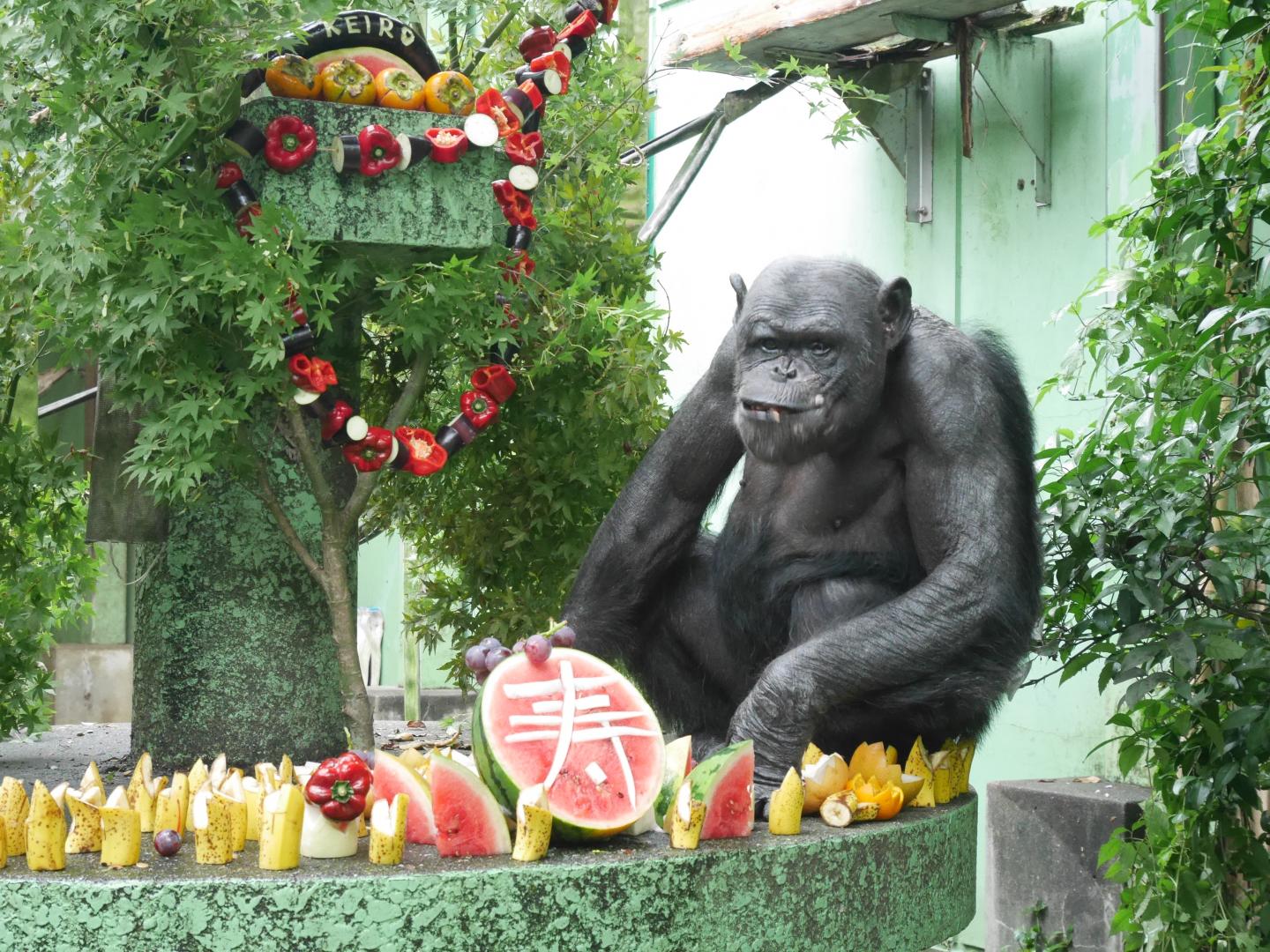
Credit: Kyoto University
Kyoto, Japan — We humans may consider a long-lived life to be anywhere from 60 to 100 years, depending on where we live. But what about chimpanzees, one of our closest living relatives?
Over the years, primatologists have reported on the life expectancies of wild chimpanzees in their native Africa, but few reports on their state in captivity exist.
In a new article published in the journal Primates, researchers report the average life expectancy of chimpanzees in captivity in Japan by utilizing a database spanning nearly 100 years, containing information on over 1,000 individuals.
Kristin Havercamp of Kyoto University’s Wildlife Research Center, and first author of the study, was surprised to learn that very little was known about the life history of chimpanzees in Japan, even though such a detailed database exists.
“Most nation-wide chimpanzee data are held in studbooks shared amongst zoo communities,” explains Havercamp. “And since prior studies are either small or outdated, our understanding of chimpanzee longevity under human care was limited. Thanks to the Great Ape Information Network we were able to explore this more extensively.”
The ‘Great Ape Information Network’, or GAIN, contains records of all great apes in Japan. The first chimpanzee entry dates back to 1921, and of the 1,017 entries on chimpanzees the team was able to utilize importation, birth, migration, and death data on 821 individuals.
The findings showed that the average life expectancy of a chimpanzee who reaches adulthood — reported as 12-years-old in the paper — is 40 years: 41.5 years for males and 39.2 years for females.
“These numbers change when the high infant mortality rate is considered,” states Havercamp. “Around one in every five chimpanzees born dies before reaching their first birthday, and this has a significant impact on overall average life expectancy. If calculated from birth, their life expectancy is 28.3 years.”
For the individuals who reach their first birthday, life expectancy is 34.6 years on average. However, averages do not indicate maximum lifespan. The oldest chimpanzee in Japan was a wild-born male, Jhonny, who died January 2019 at the ripe old age of 68.
The new results provide researchers with long overdue information on the life history patterns of captive chimpanzees. Further analysis is expected to allow scientists and caretakers alike to better understand the causes of mortality and the influence of certain life experiences on longevity.
Havercamp adds, “Decades ago, chimpanzees were captured and imported from Africa for various purposes such as entertainment and biomedical research. Considering their long lifespans, unique personalities, and high cognitive abilities, we have a responsibility to provide the best long-term care for them.”
Satoshi Hirata, who led the study, also highlights the importance of this data for the future of primatology in Japan and around the world.
“Chimpanzees are highly intelligent, long-lived creatures. Chimpanzees born today will be with us for the next 30-40 years or more, when researchers like us are at retirement age. It is vital to consider a future-oriented approach that transcends generations so we humans can fulfill our responsibilities to these chimpanzees.”
###
The paper “Longevity and mortality of captive chimpanzees in Japan from 1921 to 2018” appeared on October 3 2019 in Primates, with doi: 10.1007/s10329-019-00755-8
About Kyoto University
Kyoto University is one of Japan and Asia’s premier research institutions, founded in 1897 and responsible for producing numerous Nobel laureates and winners of other prestigious international prizes. A broad curriculum across the arts and sciences at both undergraduate and graduate levels is complemented by numerous research centers, as well as facilities and offices around Japan and the world. For more information please see: http://www.
Media Contact
Raymond Kunikane Terhune
[email protected]
Related Journal Article
http://dx.



