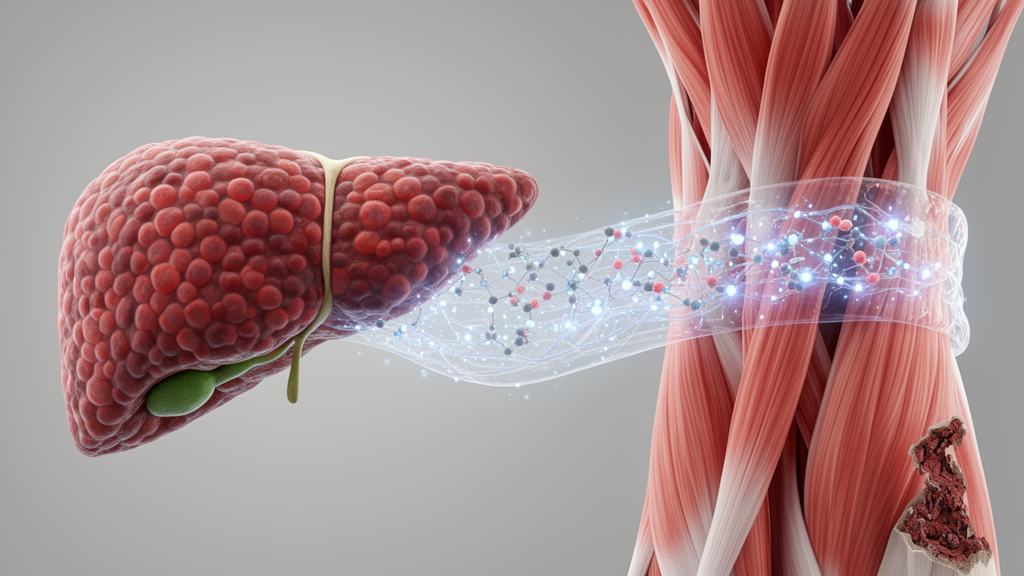
Led by Silvio Pires Gomes and colleagues from the University of São Paulo, the University of Marília, and the Federal University of Mato Grosso do Sul, the investigation integrates quantitative stereological data, experimental rodent models, and human clinical trials. The synthesis explores how protein deficiency alters liver morphology, how nutrient excess fuels metabolic dysfunction-associated steatotic liver disease, and how circulating cytokines, gut dysbiosis, and hyperammonemia collectively promote sarcopenia. While structural remodeling of the liver can be partially reversed through dietary rehabilitation, the authors stress that histological repair does not inherently guarantee complete metabolic recovery or reverse musculoskeletal deterioration.
The liver acts as the central metabolic clearinghouse of the body, governing glycogen storage, amino acid metabolism, protein synthesis, fatty acid oxidation, and ketogenesis, while supporting systemic inflammatory responses tracked through C-reactive protein. In healthy physiology, hepatic function is intimately intertwined with intestinal microbiota activity. Bile acids produced by hepatocytes shape the composition of the intestinal microbiome, while microbial fermentation products, including short-chain fatty acids and tryptophan-derived indoles, circulate back through the portal vein to regulate hepatic immunity and energy metabolism. Disruption of this reciprocal communication destabilizes systemic homeostasis. To characterize these multi-organ connections, the researchers evaluated studies published between January 2000 and November 2026 across PubMed, Scopus, Web of Science, and Google Scholar, using the six Scale for the Assessment of Narrative Review Articles domains to rigorously distinguish measured causal mechanisms from observational associations.
Clinical manifestations of severe protein malnutrition highlight the sensitivity of hepatic tissue to nutrient availability. Experimental animal research provides detailed quantitative parameters for this atrophy. In malnourished adult rats, dietary deprivation caused a 27 percent reduction in total liver mass along with decreases in hepatocyte volume and number. Stereological evaluations of adult male Swiss mice subjected to a 2 percent casein diet for five weeks revealed a 65 percent contraction in liver volume and a 46 percent reduction in individual hepatocyte volume, alongside a 90 percent surge in binucleated cells. Subsequent nutritional rehabilitation using a 12 percent casein diet for five weeks restored hepatocyte volume, increased mononucleated cells by 85 percent, and partially reversed organ atrophy, though key metabolic markers such as mitochondrial respiration and insulin sensitivity remained unmeasured.
The prevalence of binucleated hepatocytes under severe protein restriction reflects compensatory structural plasticity rather than confirmed genomic expansion. Binucleation typically arises from incomplete cytokinesis during cell division, serving as a physiological hallmark of liver maturation that also emerges following cellular injury. Although binucleation contributes to cellular polyploidization, the authors explain that cellular polyploidy must be distinguished from nuclear ploidy, which denotes the DNA content within individual nuclei. Increased binucleate frequency cannot verify altered nuclear ploidy or enhanced regenerative reserve without direct cell-cycle and genomic quantification. Furthermore, the structural resilience observed in mature adult mice cannot be directly equated with developmental programming models. Studies examining postnatal protein restriction in weanling mice and rats noted transient glucose intolerance following nutritional recovery without permanent increases in steatosis susceptibility, illustrating that developmental timing dictates the permanence of metabolic injury.
At the subcellular level, nutritional deprivation and nutrient excess provoke hepatic stress through distinct biochemical cascades. Protein malnutrition induces mitochondrial and peroxisomal impairment, disrupts fatty acid beta-oxidation, triggers endoplasmic reticulum stress, and alters mTORC1 signaling, which can be partially mitigated by rapamycin administration. Conversely, nutrient excess in metabolic dysfunction-associated steatotic liver disease triggers lipotoxicity and excessive reactive oxygen species production. Accumulated intrahepatic lipids stimulate inflammatory cascades governed by nuclear factor-kappa B, mitogen-activated protein kinase, and the NLRP3 inflammasome, leading to elevated secretion of interleukin-1 beta, interleukin-6, and tumor necrosis factor-alpha. These uncontained reactive oxygen species damage mitochondrial membranes and oxidize essential proteins, overwhelming baseline cytoprotective antioxidant defenses.
These hepatic oxidative and inflammatory signals propagate systemically to compromise skeletal muscle homeostasis. Within myocytes, elevated reactive oxygen species and inflammatory cytokines suppress anabolic signaling through the phosphoinositide 3-kinase, protein kinase B, and mTORC1 pathway. Simultaneously, oxidative stress stimulates forkhead box O transcription factors, which upregulate the muscle-specific E3 ubiquitin ligases MuRF1 and atrogin-1, also designated MAFbx. This enzymatic activation funnels myofibrillar proteins into the ubiquitin-proteasome system for degradation.
The clinical repercussions of muscle loss are especially prominent in chronic liver disease and cirrhosis, where malnutrition, muscle wasting, and physical frailty routinely intersect. Meta-analyses included in the review demonstrate the substantial epidemiological burden of this condition. An analysis of 22 clinical studies encompassing 6,965 cirrhotic patients determined a pooled sarcopenia prevalence of 37.5 percent and calculated an adjusted mortality hazard ratio of 2.30. A parallel meta-analysis evaluating 39 computed tomography-based investigations across 12,827 individuals identified a pooled sarcopenia prevalence of 44 percent, coupled with an adjusted mortality hazard ratio of 2.07, confirming that muscle wasting represents an independent negative prognostic indicator in end-stage hepatic disease.
Intestinal barrier breakdown compromises tight junction architecture, allowing lipopolysaccharide and diverse pathogen-associated molecular patterns to translocate into portal circulation. In the liver, these bacterial products engage Toll-like receptors on hepatocytes and Kupffer cells, amplifying fibrogenesis and cytokine release. Concurrently, intestinal dysbiosis alters the generation of short-chain fatty acids such as acetate, propionate, and butyrate, while disrupting microbial bile acid deconjugation via the farnesoid X receptor and Takeda G protein-coupled receptor 5.
Excess circulating ammonia enters myocytes, triggering nuclear factor-kappa B-dependent expression of the catabolic myokine myostatin, inhibiting mTORC1 signaling, and activating the general control nonderepressible 2 kinase and eukaryotic initiation factor 2-alpha stress pathway. Because the cirrhotic liver suffers from depleted glycogen reserves, patients enter a state of accelerated starvation during brief fasting periods. This catabolism is compounded by hepatic growth hormone resistance, marked by suppressed hepatic growth hormone receptor expression and diminished circulating insulin-like growth factor-1, which suppresses myogenic protein synthesis.
The review distinguishes between primary hepatocarcinogenesis and the systemic wasting syndrome of cancer-associated cachexia. Metabolic dysfunction, obesity, and type 2 diabetes heighten hepatocellular carcinoma risk through persistent lipotoxicity, oxidative stress, and oncogenic signaling involving aerobic glycolysis and pentose phosphate pathway activation. Genetic variants such as PNPLA3 rs738409 and TM6SF2 rs58542926 further modulate intrahepatic fat accumulation and disease severity. In contrast, cancer cachexia operates as an inflammatory, multi-organ wasting syndrome driven by extrahepatic or intrahepatic tumors. Tumor-derived and immune factors activate interleukin-6 and JAK-STAT3 acute-phase hepatic signaling, activin and myostatin-mediated muscle catabolism, and growth differentiation factor-15 signaling via the brainstem receptor GFRAL to suppress appetite, producing progressive muscle wasting that proves resistant to conventional nutritional support.
Managing liver disease and concomitant muscle deterioration necessitates stratified nutritional and physical interventions tailored to disease stage. In overweight individuals with metabolic dysfunction-associated steatotic liver disease, lifestyle modifications producing a weight loss of at least 5 percent reduce steatosis, 7 to 10 percent attenuate inflammation, and 10 percent or more promote fibrosis regression. However, aggressive caloric restriction carries the risk of exacerbating sarcopenic obesity. In patients treated with glucagon-like peptide-1 receptor agonists, documented declines in absolute lean mass underscore the necessity of concurrent resistance training. For patients with cirrhosis, guidelines recommend an energy intake of 30 to 35 kilocalories per kilogram daily and 1.2 to 1.5 grams of protein per kilogram daily, targeting the upper limit in malnourished or sarcopenic individuals, alongside late-evening snacks to avert prolonged fasting catabolism.
Adjunctive nutraceutical and targeted pharmacological strategies show varied clinical efficacy across liver-muscle pathologies. Meta-analytic evidence shows omega-3 fatty acids improve gamma-glutamyl transferase and ultrasonographic steatosis across 1,615 adults, but do not enhance skeletal muscle metrics. Supplemental polyphenols increased muscle mass with a standardized mean difference of 1.50 in a pooled analysis of 227 individuals, though muscle strength remained unchanged. In cirrhosis, branched-chain amino acids paired with vitamin D yielded selective functional gains, whereas a 12-week trial of beta-hydroxy-beta-methylbutyrate in 21 patients showed no significant improvement in muscle mass or handgrip strength. For cachexia, novel pharmacotherapies such as anamorelin and the anti-GDF-15 antibody ponsegromab improve lean mass and appetite, yet sustained functional recovery in hepatocellular carcinoma remains unproven, emphasizing the need for longitudinal trials combining multi-omics with personalized precision nutrition.
Subject of Research: Hepatic metabolic remodeling, gut microbiota crosstalk, and skeletal muscle wasting in liver disease
Article Title: Nutrition, malnutrition, and the liver-muscle axis: metabolic remodeling, oxidative stress, and sarcopenia
Article References: Gomes, S. P., de Oliveira, V. P. S., Rici, R. E. G., Júnior, J. R. K., & dos Anjos Silva, E. (2026). Nutrition, malnutrition, and the liver-muscle axis: metabolic remodeling, oxidative stress, and sarcopenia. Frontiers in Nutrition, 13, 2037128. https://doi.org/10.3389/fnut.2026.2037128
Image Credits: AI Generated
DOI: 10.3389/fnut.2026.2037128
Keywords: hepatic remodeling, sarcopenia, gut-liver-muscle axis, protein malnutrition, cirrhosis, cancer cachexia, steatotic liver disease, hyperammonemia, mitochondrial dysfunction, oxidative stress, short-chain fatty acids, bile acid signaling, intestinal permeability, branched-chain amino acids, myostatin, hepatocytes, nutritional rehabilitation, precision nutrition
News Source: Morgan Morrow. (November 26, 2026). Liver Remodeling and Muscle Breakdown Linked Through Complex Gut Microbiome Pathways. Scienmag.