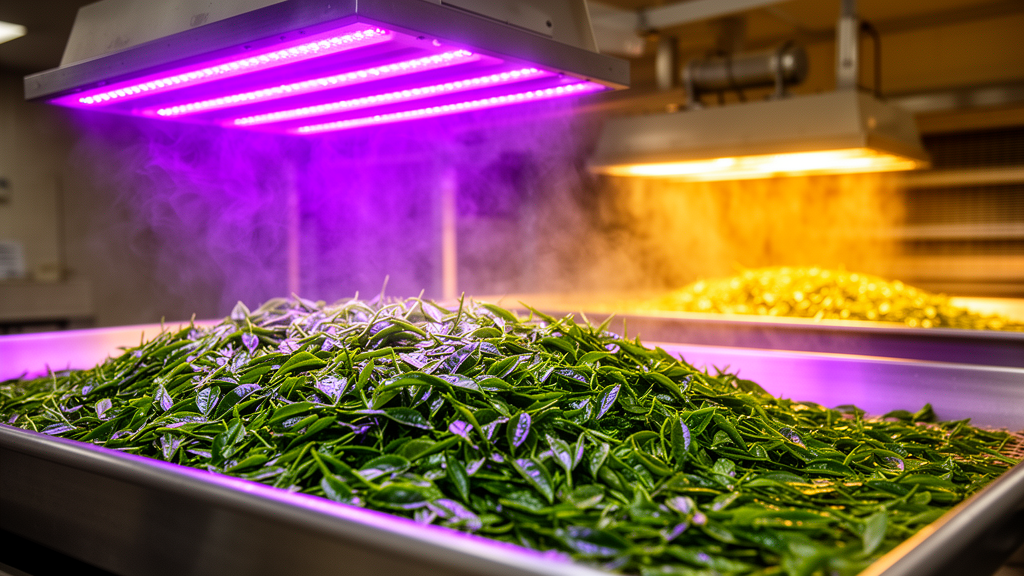
A study published in npj Science of Food reports that combining a light-vibration pretreatment during leaf spreading with drying at 75 °C significantly improved the aroma profile of machine-harvested, beverage-grade green tea. Under this optimized protocol, total volatile emission rose to 20301.17 μg/kg, a level the authors describe as significantly elevated compared with the conditions they tested, while offering a scalable and implementable technical solution for industrial production of high-aroma green tea.
The research team evaluated the treated tea using three complementary analytical techniques: quantitative descriptive analysis to characterize sensory attributes, headspace solid-phase microextraction coupled with gas chromatography-mass spectrometry to profile volatile compounds, and high-performance liquid chromatography to measure constituents. Beyond the sheer quantity of aroma compounds, the treatment changed their composition. The volatile profile shifted toward esters and terpenes, chemical classes identified as the primary contributors to the floral and fruity notes of green tea.
In total, 101 volatile compounds were identified across the samples, and from these the researchers screened out nine key aroma-active constituents. The central challenge the study addresses is a balancing act inherent to tea drying: low-boiling-point volatiles must be retained, yet thermal reactions that progress the flavor profile require sufficient heat. Drying at 75 °C, paired with the light-vibration spreading pretreatment, achieved this balance in the tested conditions.
The authors also report that their findings elucidate the metabolic pathways activated by the light-vibration synergy, positioning the protocol as a practical option for producing high-aroma, machine-harvested, beverage-grade green tea at industrial scale. The study’s published evidence centers on the compositional and sensory measurements of the treated teas, and the reported improvements apply to the experimental conditions described rather than to all tea production systems.
Subject of Research: Light-vibration pretreatment and drying temperature optimization for machine-harvested beverage-grade green tea aroma quality
Article Title: Light-vibration synergy during spreading and optimized drying temperature improve machine-harvested beverage-grade green tea quality
Article References: Xiao, Z., Wang, J., & Fan, Q. (2026). Light-vibration synergy during spreading and optimized drying temperature improve machine-harvested beverage-grade green tea quality. npj Science of Food. https://doi.org/10.1038/s41538-026-01199-3
Image Credits: AI Generated
DOI: 10.1038/s41538-026-01199-3
Keywords: green tea, machine harvesting, aroma compounds, volatiles, esters, terpenes, drying temperature, food science, HS-SPME-GC-MS, beverage quality, light-vibration synergy, Light-vibration
News Source: Alan Morgan. (October 23, 2026). Light-Vibration Pretreatment and 75 °C Drying Boost Aroma of Machine-Harvested Green Tea. Scienmag.