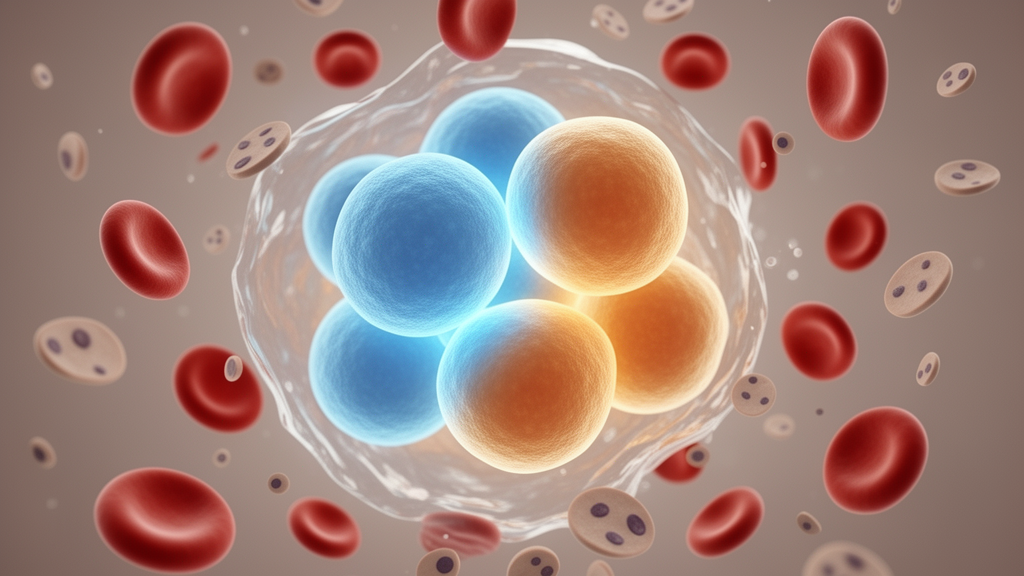
In the world of blood cancers, few entities are as perplexing as mixed phenotype acute leukemia, or MPAL. Unlike typical acute leukemias, which commit cleanly to either a myeloid or a lymphoid identity, MPAL blasts refuse to choose. They express markers of both lineages within the same cell population or across clonally related subpopulations, blurring the boundaries that pathologists have long relied upon to classify disease. A newly published review in Cancer Cell International by Yu Wang, Shuai Su, and Yi Xiao of Tongji Hospital, Huazhong University of Science and Technology, synthesizes the current state of MPAL research, tracing the disease from its classification controversies to its clonal biology and emerging precision therapies.
The authors argue that MPAL is not merely a diagnostic curiosity but a window into the fundamental biology of hematopoietic lineage commitment. The fifth edition of the World Health Organization classification (WHO-HEM5) and the International Consensus Classification (ICC) have refined lineage assignment criteria and genetic exclusions, yet uncertainty persists in cases with borderline myeloperoxidase expression, bilineal architecture, and treatment-associated lineage change. These borderline scenarios expose the limitations of phenotype-based classification systems that were never designed to accommodate cells straddling two developmental programs simultaneously.
Genomic and single-cell studies have revealed that similar immunophenotypes can arise from distinct clonal trajectories. Lesions such as BCR::ABL1 fusion, KMT2A rearrangements, BCL11B deregulation, and TP53 alterations shape developmental potential, prognosis, and therapeutic vulnerability in ways that immunophenotyping alone cannot capture. Two patients with identical blast surface markers may harbor fundamentally different founding clones, explaining why treatment responses can diverge so dramatically even among individuals who appear clinically comparable at diagnosis.
This clonal heterogeneity has direct therapeutic consequences. Retrospective evidence supports acute lymphoblastic leukemia-like induction for many children and fit younger adults with MPAL, whereas treatment in adults requires closer integration of age, fitness, adverse genetics, and early measurable residual disease response. The review emphasizes that MPAL management cannot rely on a single protocol; it must be adaptive, tracking the founding clone across phenotypic states through rapid genomic profiling, broad flow and molecular MRD assessment, and systematic reassessment at relapse.
The therapeutic landscape for MPAL has broadened considerably in recent years. Tyrosine kinase inhibitors targeting BCR::ABL1, venetoclax, menin inhibitors, bispecific antibodies, antibody-drug conjugates, and cellular therapies now offer multiple angles of attack. Yet these agents can also impose selective pressures that promote antigen loss or lineage switch, the very phenomena that make MPAL so difficult to eradicate. A therapy that clears blasts expressing one surface marker may simply enrich a subclone that has shed that marker or committed to the opposite lineage.
Measurable residual disease monitoring emerges as the critical connective tissue in the authors’ proposed framework. Rather than relying on a single flow cytometry gate or a single fusion transcript, MPAL management should employ broad flow and molecular MRD assessment capable of detecting the founding clone regardless of its current phenotypic costume. Early MRD response, the review argues, should inform treatment intensity decisions in adults, where the balance between aggressive induction and tolerability is most delicate.
The review also addresses treatment-associated lineage change, a phenomenon in which therapy itself drives leukemic cells to abandon their original identity. This plasticity is not random; it reflects the underlying developmental potential encoded in the founding clone’s genomic lesions. BCL11B deregulation, for instance, is associated with T-lymphoid identity, while KMT2A rearrangements can sustain both myeloid and lymphoid programs. Understanding which lesions confer which developmental potentials allows clinicians to anticipate where a clone might flee under therapeutic pressure.
The authors call for prospective international studies linking lineage architecture, genomic drivers, target distribution, and MRD kinetics to define durable treatment strategies for MPAL. Without such studies, the field remains dependent on retrospective evidence and extrapolation from ALL and AML trials, populations from which MPAL patients were often excluded precisely because of their ambiguous phenotype. The rarity of MPAL makes single-center prospective trials impractical, underscoring the need for coordinated international collaboration.
What makes this review particularly timely is the convergence of several technological advances: single-cell multiomics, broad molecular MRD platforms, and a growing arsenal of targeted agents. Together, these tools make it feasible, for the first time, to manage MPAL as a dynamic clonal disease rather than a static diagnostic category. The founding clone can be identified at diagnosis, tracked through treatment, and reassessed at relapse, with therapy adjusted in response to its evolutionary behavior.
The Tongji Hospital team’s synthesis, published open access under a Creative Commons license and funded by the National Natural Science Foundation of China, arrives as hematologists worldwide grapple with how to integrate these advances into clinical practice. For a disease that sits at the boundary of two classical categories, MPAL may ultimately prove to be the proving ground for a new paradigm in hematology: one in which lineage is not a fixed label but a moving target, and in which the founding clone, not the blast phenotype, is the true unit of disease.
Subject of Research: Mixed phenotype acute leukemia: classification, clonal biology, and precision therapy
Article Title: Mixed phenotype acute leukemia across lineage boundaries: from classification to clonal biology and precision therapy
Article References: Wang, Y., Su, S., & Xiao, Y. (2026). Mixed phenotype acute leukemia across lineage boundaries: from classification to clonal biology and precision therapy. Cancer Cell International. https://doi.org/10.1186/s12935-026-04486-x
Image Credits: AI Generated
DOI: 10.1186/s12935-026-04486-x
Keywords: mixed phenotype acute leukemia, MPAL, acute leukemia, lineage plasticity, measurable residual disease, precision medicine, hematology, WHO-HEM5, International Consensus Classification, BCR::ABL1, KMT2A, venetoclax
News Source: Nathaniel Bowman. (October 18, 2026). Leukemia That Refuses to Choose: The Science of Mixed Phenotype Acute Leukemia. Scienmag.