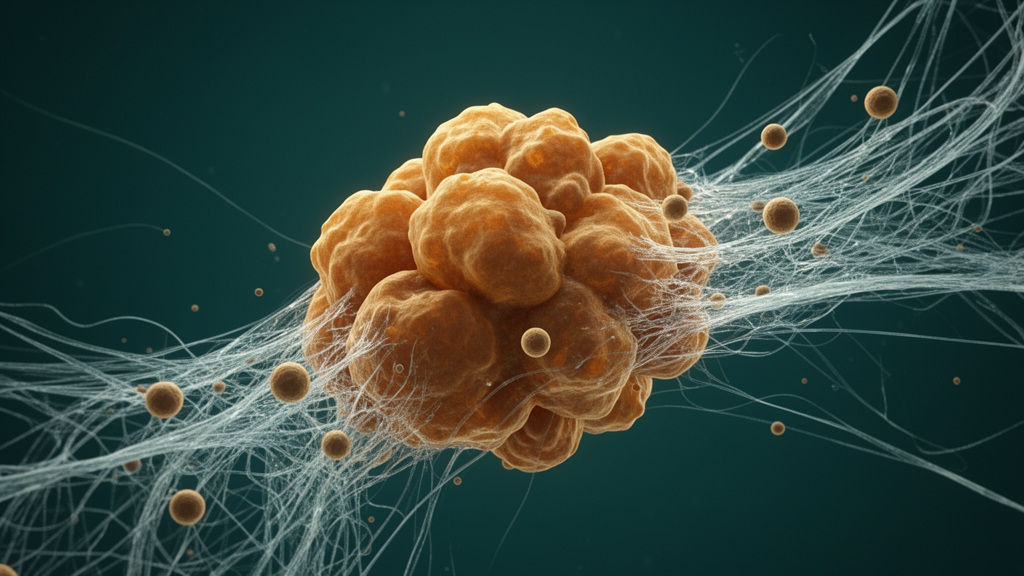
Neutrophils, the abundant white blood cells that form the first line of defense against bacteria, carry a hidden weapon that has fascinated immunologists for two decades. When activated, they can expel their own chromatin into the surrounding tissue, weaving sticky, web-like structures studded with antimicrobial proteins. These webs, known as neutrophil extracellular traps, or NETs, were originally described as a way to snare and kill pathogens. But researchers have since learned that the same chromatin-based structures can appear in tumors, where they promote inflammation, remodel the tumor microenvironment, and in some contexts drive cancer progression. A new study published in BMC Cancer now connects NET-related gene programs to immune regulation in hepatocellular carcinoma, the most common form of primary liver cancer, and identifies a specific inflammatory signaling axis that appears to help tumors evade immune attack.
The research, conducted by Lingling Guo of the Department of Ultrasound and Hui Guo of the Radiology department at the First Affiliated Hospital of Jinzhou Medical University in China, took an unusually integrative approach. Rather than focusing on a single gene or pathway, the team combined transcriptomics, radiogenomics, and laboratory experiments to trace how NET-associated gene programs shape the tumor immune landscape. Their central question was deceptively simple: if NET-related programs are active in liver tumors, what genes are they regulating, and what do those genes do to the immune cells patrolling the tumor?
To answer it, the researchers first turned to The Cancer Genome Atlas, analyzing transcriptomic and clinical data from the TCGA-LIHC liver cancer cohort. They compiled a set of NET-related genes drawn from the published literature and used single-sample gene set enrichment analysis, or ssGSEA, to calculate a NET enrichment score for each patient. This score essentially measures how strongly NET-related programs are expressed in a given tumor. When patients were stratified by this score, clear patterns emerged. NET-related genes were dysregulated in hepatocellular carcinoma, and patients fell into subgroups with distinct prognostic and immune microenvironmental features. Counterintuitively, a high NET score was associated with better prognosis, and it corresponded to an immune-inflamed tumor microenvironment characterized by higher immune and stromal scores, lower tumor purity, and increased enrichment of immune cells.
That finding raises an important technical point about how we interpret inflammation in tumors. An immune-inflamed microenvironment is not always good news for the patient. In some contexts, it means the immune system has mounted an effective anti-tumor response. In others, it reflects a tumor that has recruited immune cells only to co-opt them into suppressive programs. The Guo team’s next step was to determine which scenario applied here, and to identify the specific genes that NET-associated programs were regulating.
Using weighted gene co-expression network analysis, or WGCNA, the researchers identified co-expression modules associated with the NET score. They then integrated three separate gene lists to pinpoint candidate genes: genes differentially expressed between high- and low-NET score tumors, genes differentially expressed between tumor and normal tissue, and hub genes from the WGCNA co-expression modules. Among the candidates that emerged, HGF, the gene encoding hepatocyte growth factor, showed the highest diagnostic performance. HGF is a well-known growth factor involved in liver regeneration, but it has also been implicated in tumor progression and immune suppression in multiple cancers.
The team then took a step that few transcriptomic studies attempt: they built a radiogenomic model. Radiogenomics links gene expression patterns to features visible on medical imaging, such as computed tomography or magnetic resonance scans. Using HGF expression as the anchor, the researchers applied random forest and LASSO algorithms to construct an exploratory model that could predict HGF expression from imaging features. The model achieved moderate discriminatory performance, with an area under the curve of 0.751. While not yet ready for clinical deployment, this result suggests that imaging may one day serve as a non-invasive window into the molecular programs driving immune regulation in liver tumors.
But the most striking findings came from the laboratory. To test whether the candidate genes actually regulate immune cells, the researchers performed a series of functional experiments. They stimulated cells with lipopolysaccharide, a bacterial product that mimics inflammatory activation, and found that this stimulation was associated with activation of the NF-κB–Cathepsin C/HGF axis. NF-κB is a master transcription factor that controls inflammatory gene expression, and Cathepsin C is a protease that can activate other enzymes. The team then used tumor-bearing mouse models and co-culture systems to examine what happens when these genes are active in the presence of immune cells.
The results were telling. Cathepsin C was associated with reduced CD8-positive T-cell infiltration and impaired effector function, meaning the cytotoxic T cells that normally kill tumor cells were less abundant and less effective. At the same time, Cathepsin C was associated with increased infiltration of regulatory T cells, or Tregs, the immune cells that suppress anti-tumor responses. HGF, meanwhile, was associated with impaired dendritic cell maturation, meaning the antigen-presenting cells responsible for initiating T-cell responses were less able to mature and do their job. When the researchers knocked down NF-κB, these immunosuppressive effects were attenuated, confirming that NF-κB sits upstream of the axis and controls its downstream consequences.
Taken together, these findings identify a tumor-intrinsic inflammatory signaling axis involving NF-κB, Cathepsin C, and HGF that is associated with immune-regulatory features in hepatocellular carcinoma. The integrative transcriptomic, radiogenomic, and experimental analyses suggest that NET score-associated inflammatory and immunosuppressive programs may contribute to immune evasion in liver cancer, though the authors caution that direct therapeutic targeting of this axis requires further validation. The study was funded by the Natural Science Foundation of Liaoning Province and received ethics approval from the First Affiliated Hospital of Jinzhou Medical University.
The work adds to a growing body of research showing that NETs are far more than antimicrobial webs. In tumors, the gene programs they leave behind appear to shape the immune landscape in ways that can either support or suppress anti-tumor immunity. By combining computational analysis of large patient cohorts with laboratory experiments and imaging-based modeling, the Guo team has traced a specific molecular pathway that may help liver tumors escape immune destruction. Whether this pathway can be safely targeted with existing or future drugs remains an open question, but the study provides a clear roadmap for future investigations into how inflammatory programs in tumors regulate the immune cells that determine patient outcomes.
Subject of Research: Radiogenomic identification of NET score-associated immune regulatory candidates in hepatocellular carcinoma
Article Title: Radiogenomic identification of NET score-associated immune regulatory candidates in hepatocellular carcinoma
Article References: Guo, L., & Guo, H. (2026). Radiogenomic identification of NET score-associated immune regulatory candidates in hepatocellular carcinoma. BMC Cancer. https://doi.org/10.1186/s12885-026-16738-0
Image Credits: AI Generated
DOI: 10.1186/s12885-026-16738-0
Keywords: Radiogenomic, identification, score-associated, immune, regulatory, candidates, hepatocellular, carcinoma, scientific research
News Source: Nathaniel Bowman. (October 18, 2026). NET-linked gene score reveals immune evasion candidates in liver cancer. Scienmag.