A combination of land restoration activities can boost crop yields — in some cases as much as 170 percent — and soil carbon but increased runoff due to climate change and land-use change make degradation a continued threat
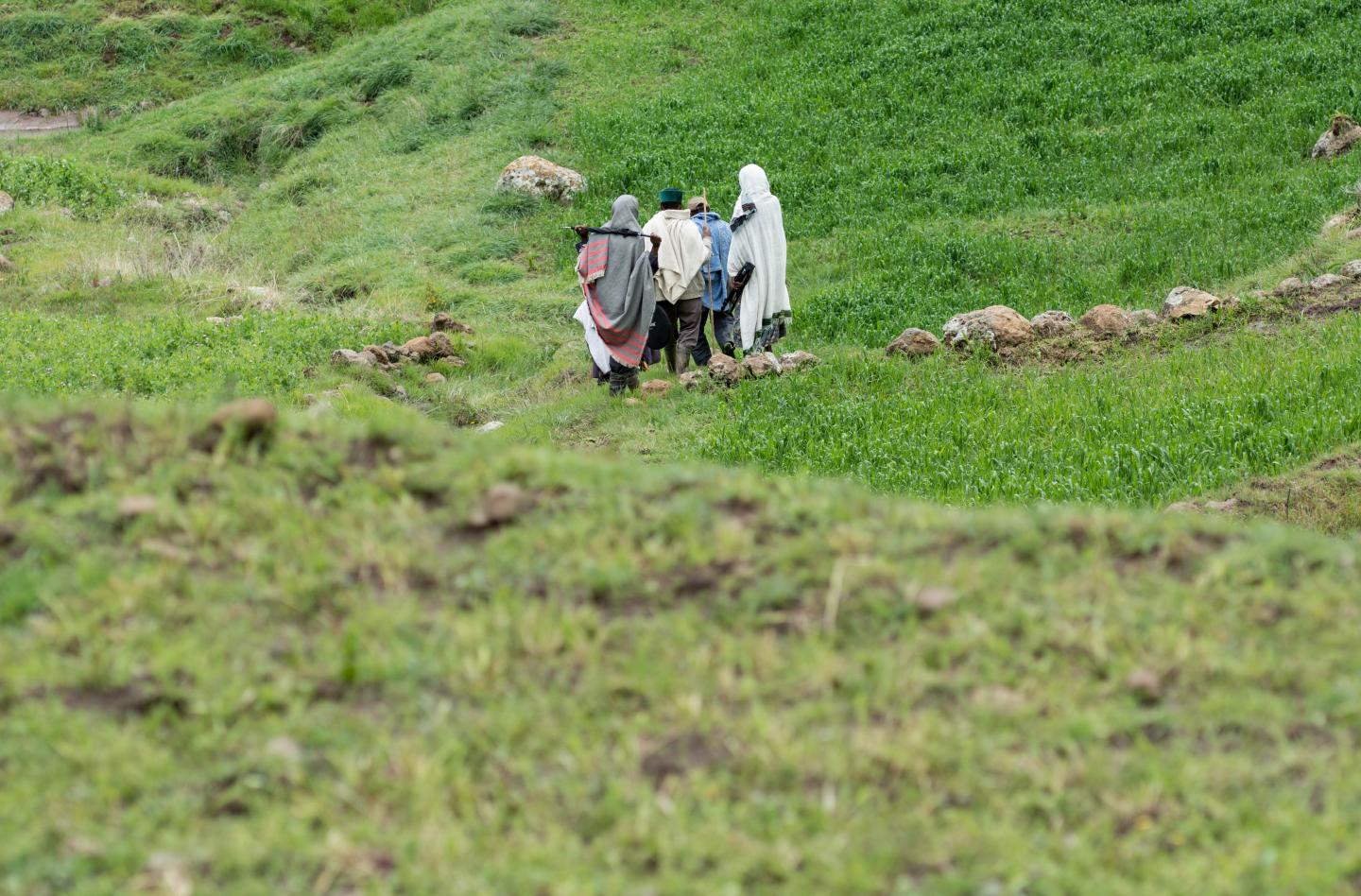
Credit: Georgina Smith / CIAT
In the last decade, Ethiopia has invested more than US$1.2 billion annually in restoring landscapes in several regions of the country. But despite its big restoration initiatives, Africa’s second-most populous country is still insufficiently tracking how projects have helped to recover and boost ecosystem services, a new study shows. Recent research led by the International Center for Tropical Agriculture (CIAT) takes stock of Ethiopia’s major restoration projects and investigates their impact on ecosystem services. Researchers say their work can help policymakers tailor future restoration actions to specific ecosystem needs.
Pressured by population increases and climate change, Ethiopia’s lands have experienced severe degradation. By some estimates, Ethiopia has the worst land degradation among sub-Saharan countries, which leads to about $4.3 billion in lost productivity per year. But restoration has been underway for decades, with most restoration projects focusing on reducing soil erosion and runoff, the study shows.
“Huge investment in land restoration in Ethiopia has provided a multitude of ecosystem service benefits,” said Wuletawu Abera, a scientist at CIAT and the study’s lead author. “Various land restoration practices and technologies provide various degrees of success, but they are site-specific. There is no-one-size-fits-all solution.”
Researchers looked at how specific restoration methods influenced ecosystem services. Conservation agriculture, soil and stone structures, and restricting areas for grazing and agriculture have dominated restoration efforts. Stone structures alongside biological interventions increased crop yields the most – by as much as 170 percent – while conservation agriculture did so by 18 percent. Separately, however, these methods did not have much impact, suggesting an integrated land management approach is needed to boost all ecosystem services.
Starting with securing food for vulnerable communities in the 1970s, projects went on to rehabilitate natural resources on a large scale in the mid to late 2000s. Since 2008, the Ethiopian Strategic Investment Framework (ESIF) has supported sustainable landscape management, leading to extensive soil and water conservation, and water harvesting projects. Communities have also planted hundreds of millions of trees in the Ethiopian highlands.
On average, the various land restoration practices have cut soil loss by a range of 45 to 80 percent, and runoff by 38 to 90 percent, while all methods have helped improve organic carbon stocks in the soils.
Monitoring project benefits remains insufficient, the study shows. Of the 24 agro-ecological zones with ongoing restoration projects, only 11 have been studied, mostly at plot level, without looking at the benefits for ecosystem services at landscape scale. This prevents policymakers from tailoring interventions to specific sites.
Restoration for water issues
Restoring soils is also critical for addressing Ethiopia’s water issues. Over the last 20 years, runoff at a national level has increased by about 80 mm/year on average, equally influenced by climate change and land transformation, another CIAT-led study found. Water availability in Ethiopia’s southeast has been mainly affected by decreasing rainfall and changing climate, while a mix of higher climate variability, extensive land use and degradation have undermined water resources in its central and western highlands.
“If a landscape tends to increase runoff, then its ability to store water in soils and vegetation is lower,” said Abera. “More runoff, less storage, and less evapotranspiration suggest the landscape is more degraded and vice versa. Looking at what happens with the hydrological cycles helps us understand land degradation and restoration impacts.
“One of the challenges is to design research that looks at how land restoration impacts on landscapes and ecosystems influence small farmers’ livelihoods. We need to actively engage businesses and investors in land restoration, as it is a way towards economic and environmental rehabilitation.”
###
Media Contact
Sean Mattson
[email protected]
57-311-784-7652
Related Journal Article
http://dx.