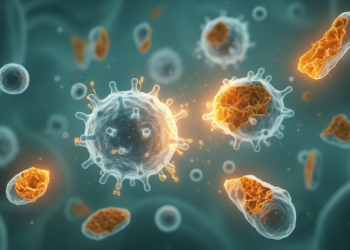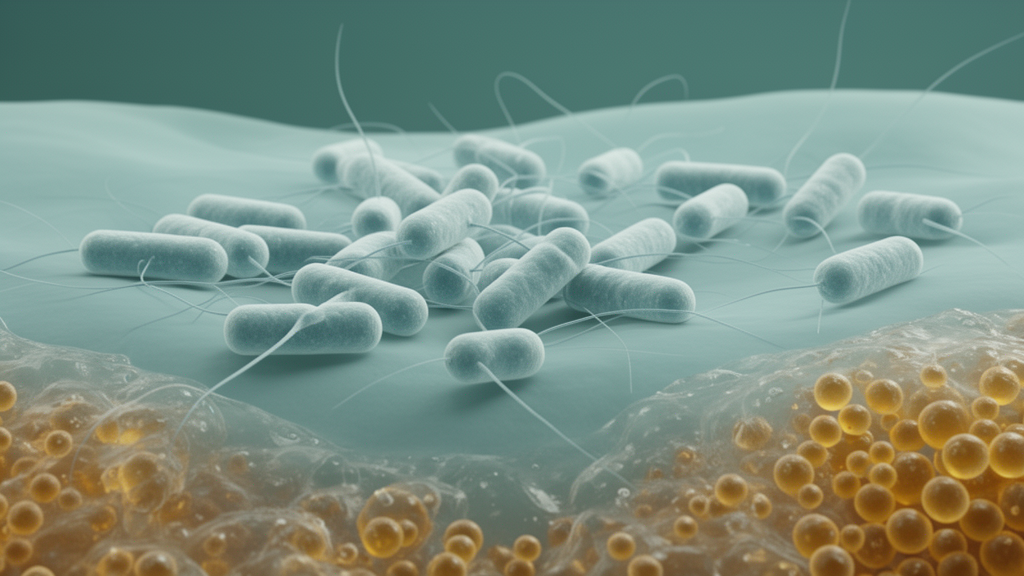
Lactic acid bacteria isolated from human milk and from the milk-exposed surfaces of infant feeding tubes can colonize mature biofilms of Staphylococcus aureus, one of the main causes of acute lactational mastitis, and progressively displace the pathogen from those communities, according to a study published on 26 October 2026 in Frontiers in Cellular and Infection Microbiology. Researchers at the Complutense University of Madrid and the University of Minho combined viable-count measurements, targeted quantitative PCR and RNA sequencing to show that the displacement is not a rapid bactericidal event but a time-dependent competitive transition, accompanied by extensive transcriptional reprogramming of the staphylococcal cells toward stress adaptation and away from virulence, matrix production and iron acquisition. The work provides one of the first global transcriptomic views of how mastitis-associated S. aureus responds to probiotic candidates inside an established biofilm, a state in which the pathogen is notoriously difficult to eradicate with antibiotics.
The clinical backdrop is significant. Lactational mastitis is a frequent and painful condition that can compromise breastfeeding, and clinical management still relies largely on empiric antibiotic therapy. Treatment failure and recurrence are often favored by the capacity of S. aureus to persist in biofilms, complex multicellular structures that protect the pathogen from host immune responses and reduce antimicrobial penetration. Within these structures, metabolic heterogeneity and stress-tolerant subpopulations such as persister cells and small colony variants can markedly reduce antibiotic efficacy even when free-floating cells appear susceptible. Antibiotic use during lactation also raises concerns about disruption of the infant’s developing microbiota and the broader selective pressure that drives antimicrobial resistance. Previous randomized clinical trials have shown that certain lactobacilli can reduce staphylococcal loads and improve symptoms, in some cases outperforming antibiotics, but the molecular pathways triggered in the pathogen during direct interaction with lactic acid bacteria in biofilms remained a critical knowledge gap.
The team evaluated three strains: Limosilactobacillus fermentum I7, isolated directly from human milk, and Limosilactobacillus reuteri 7SNG3–30 and Ligilactobacillus salivarius 22SNG3-30, recovered from biofilms colonizing the inner surfaces of nasogastric enteral feeding tubes used to deliver milk to preterm infants. The tube-derived isolates were chosen because their recovery from milk-exposed surface communities indicated an ability to colonize and persist within biofilms, a potentially advantageous trait for competing with mature staphylococcal structures. The targets were 24-hour-old biofilms formed by two S. aureus strains, SA4 and SA55, both isolated from the milk of women suffering from acute mastitis. At the moment of treatment, these biofilms contained approximately 2.4 × 10⁸ and 3.7 × 10⁸ attached cells per well, so the added LAB inocula of roughly 100,000 cells represented a numerical disadvantage of about 3.4 to 3.6 log10 units, a deliberately stringent competition model rather than a reproduction of an anticipated therapeutic dose.
The phenotypic results were striking. After 24 hours of exposure, the attached S. aureus population in SA4 biofilms fell by approximately 3.72 log10 units with L. fermentum I7, 3.05 log10 units with L. reuteri 7SNG3–30, and 5.19 log10 units with L. salivarius 22SNG3-30, the last being the most effective competitor. Against SA55, the three strains performed similarly, reducing the attached population by roughly 4.14 to 4.32 log10 units. In parallel, the LAB colonized the preformed biofilms and reached high densities, exceeding the residual staphylococcal population by approximately 3.28 to 5.68 log10 units depending on the strain. Time-course monitoring every four hours revealed the sequence of the takeover: LAB populations rose rapidly during the first four hours to densities comparable to those of S. aureus, the staphylococcal counts began to decline from around 12 to 16 hours onward, and the largest reductions appeared at the 24-hour endpoint, while untreated control biofilms remained stable at high levels throughout.
Targeted RT-qPCR of 13 S. aureus genes showed that this displacement was mirrored by a time-dependent transcriptional response. After four hours of LAB exposure, most genes remained close to baseline, with only isolated changes such as induction of sarA, icaA and uspA in SA4 exposed to L. reuteri 7SNG3–30. After 16 hours, the response broadened considerably. The stress and adaptation marker uspA was induced in every S. aureus–LAB combination, with log2 fold changes between 1.07 and 2.84. Meanwhile, genes tied to quorum sensing, virulence, matrix production and iron acquisition were repressed, particularly in SA4: sfaA, involved in staphyloferrin A export, dropped by 2.03 to 3.17 log2 units; agrB, the quorum-sensing signal gene, fell by 1.79 to 2.75; and icaA, hld and psmβ1, linked to biofilm matrix synthesis and phenol-soluble modulin toxins, were also consistently downregulated. SA55 showed a similar but weaker pattern, including repression of sfaA, hld, psmβ1 and clpP.
To capture the global picture, the researchers performed RNA sequencing on SA4 biofilms harvested after 16 hours of exposure, using competitive alignment against concatenated reference genomes to separate staphylococcal and LAB transcripts. The analysis revealed extensive remodeling of the S. aureus transcriptome: 776, 645 and 585 genes were upregulated after exposure to L. fermentum I7, L. reuteri 7SNG3–30 and L. salivarius 22SNG3-30 respectively, while 821, 712 and 716 genes were downregulated. A substantial core response was conserved across all three treatments, comprising 444 consistently upregulated and 588 consistently downregulated genes. The relative abundance of mapped reads also tracked the ecological shift, with S. aureus transcripts dominating biofilms exposed to L. fermentum I7 at 89 to 95 percent, but falling to roughly 16 to 20 percent in biofilms dominated by L. salivarius 22SNG3-30.
The shared staphylococcal response organized into coherent functional modules. Genes for transporting amino acids, peptides and preferred carbon sources were repressed, while phosphate transport and osmoprotection systems were induced; glycolytic and energy-conserving functions, including ATP synthase genes, were activated, and the arginine deiminase pathway, strongly associated with adaptation to acidic environments, was markedly upregulated. Surface-associated and matrix-related genes, including the ica operon responsible for the PNAG/PIA polysaccharide matrix and several canonical adhesins, were repressed, as were immune-evasion factors and a broad set of metal and iron acquisition genes, including staphylopine biosynthesis, heme uptake and ferric-chelate transport. Envelope biogenesis and cell division genes were broadly downregulated, whereas antioxidant defenses, thiol-redox genes, chaperones and proteostasis factors such as groL, dnaK and clpB were induced, along with DNA maintenance and repair functions. Regulatory reprogramming accompanied these shifts, with repression of colonization- and biofilm-associated regulators such as mgrA and induction of adaptive signaling components including agrA, saeS and codY.
Cross-validation between RT-qPCR and RNA-seq showed a high degree of agreement, especially for genes with larger changes such as icaA, sfaA and uspA, supporting the robustness of the 16-hour response. In contrast to the staphylococcal reaction, the LAB transcriptomic responses were more moderate and strain-dependent: L. fermentum I7 differentially expressed 103 upregulated and 151 downregulated genes, L. reuteri 7SNG3–30 showed the broadest response with 178 and 145, and L. salivarius 22SNG3-30 displayed only 19 upregulated and 39 downregulated genes. The authors caution that this limited response does not indicate low activity; because differential expression was calculated against single-species LAB biofilm controls, functions already active during LAB biofilm growth would not appear as interaction-specific changes. For L. salivarius 22SNG3-30, the pattern likely reflects a state of previous dominance, since it maintained the highest biofilm counts and the lowest residual S. aureus levels throughout the experiment, suggesting its main competitive response occurred before the 16-hour sampling point.
The authors also frame the findings within clear limitations. The study used a static in vitro biofilm model that does not reproduce the full complexity of the lactating mammary gland, including milk flow, immune factors and epithelial surfaces; RNA-seq covered only SA4 at a single 16-hour time point; read mapping relied on available reference genomes rather than strain-specific sequences; and transcriptomic changes alone do not demonstrate metabolite production or functional causality. Environmental acidification is a plausible contributor, since previous work with the same strains showed that 24-hour cell-free supernatants reached pH values of 3.76 to 4.17 and displayed antibiofilm activity against both mastitis isolates, but the relative contributions of acidification and other LAB-derived metabolites remain to be disentangled. The team proposes time-resolved transcriptomics, metabolomics, pH-controlled experiments and purified metabolites, followed by testing in human mammary epithelial cell cultures, animal models and well-controlled clinical studies. The in vitro findings do not demonstrate clinical efficacy, but they support further investigation of these strains as complementary tools to weaken S. aureus biofilm persistence in acute lactational mastitis.
Subject of Research: Transcriptomic responses of mastitis-associated Staphylococcus aureus biofilms during displacement by lactic acid bacteria
Article Title: Transcriptomic reprogramming and displacement of mastitis-associated Staphylococcus aureus biofilms by lactic acid bacteria
Article References: Jurado, R., França, A., Hernando, N., Aragón, A., Rodríguez, J. M., Fernández, L., & Orgaz, B. (2026). Transcriptomic reprogramming and displacement of mastitis-associated Staphylococcus aureus biofilms by lactic acid bacteria. Frontiers in Cellular and Infection Microbiology, 16, Article 1957508. https://doi.org/10.3389/fcimb.2026.1957508
Image Credits: AI Generated
DOI: 10.3389/fcimb.2026.1957508
Keywords: Staphylococcus aureus, lactic acid bacteria, mastitis, biofilms, probiotics, RNA-seq, RT-qPCR, quorum sensing, virulence, Limosilactobacillus fermentum, Limosilactobacillus reuteri, Ligilactobacillus salivarius
News Source: Drew Townsend. (October 26, 2026). Lactic Acid Bacteria Reprogram and Displace Mastitis-Associated Staphylococcus aureus Biofilms. Scienmag.