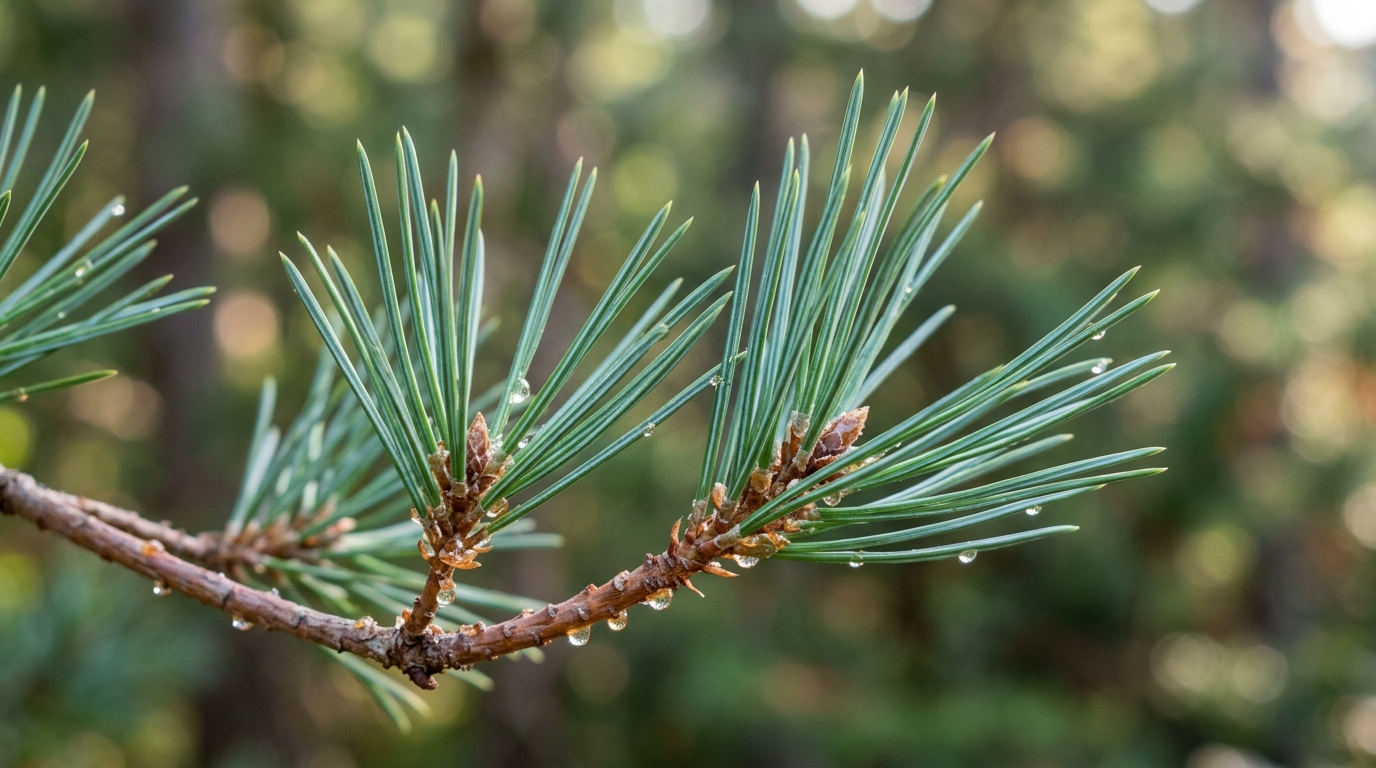
A standardized hot-water extract derived from the needles of the Korean pine, Pinus koraiensis, significantly reduced fat cell enlargement and liver lipid accumulation in an animal model of diet-induced obesity, according to an experimental investigation published in Innovations in Acupuncture and Medicine. Researchers evaluated the metabolic and histological impacts of oral administration of the botanical extract in male laboratory mice fed a high-fat diet over a twelve-week intervention period. Concurrently, the investigators deployed computational network pharmacology and transcriptomic reanalysis of human adipose data to map the multi-target regulatory architecture through which the botanical preparation operates. The experimental findings demonstrated that while conventional reference compounds produced distinct weight-loss outcomes, the pine needle extract was particularly effective at reversing pathological adipocyte hypertrophy, reducing average cell diameters more substantially than a commercial Garcinia extract. Integrated computational analyses further indicated that the biological actions of the extract converge on conserved protein-protein interaction networks and transcription factor hubs that govern inflammatory responses and regulated cell death.
Metabolic disorders driven by excessive adipose tissue expansion represent an escalating global health crisis, contributing substantially to secondary pathologies including insulin resistance, type 2 diabetes, non-alcoholic hepatic steatosis, and chronic cardiovascular disease. Although modern injectable anti-obesity therapies, notably glucagon-like peptide-1 receptor agonists, have demonstrated robust efficacy in clinical settings, their chronic utilization is frequently challenged by practical hurdles. Subcutaneous injection regimens can impair long-term patient compliance, while common adverse effects such as nausea, vomiting, and delayed gastrointestinal emptying lead to treatment discontinuation in sensitive cohorts. Furthermore, economic costs and emerging concerns regarding the loss of lean muscle mass underscore the necessity for safe, accessible, orally administrable interventions capable of modulating metabolic dysregulation across multiple cellular pathways. Complex natural products, which contain diverse phytochemical constituents capable of coordinating broader systemic networks rather than blocking single molecular targets, offer potential therapeutic alternatives for managing metabolic complications associated with obesity.
To investigate whether Korean pine needles could mitigate these metabolic alterations, researchers prepared a concentrated botanical extract from fresh plant material collected in Gapyeong, Republic of Korea. The plant needles underwent hot-water extraction under reflux for two hours utilizing a tenfold volume of distilled water, after which the resulting liquid was filtered, concentrated under reduced pressure via rotary evaporation, and freeze-dried into a dry powder, yielding an extraction efficiency of 8.7 percent by weight. Chemical constituent data for the botanical extract were obtained from a standardized national quality control research report supported by the Ministry of Agriculture, Food and Rural Affairs of Korea. These identified chemical compounds were cross-referenced against the Comparative Toxicogenomics Database to compile a comprehensive profile of compound-related target genes, which was subsequently intersected with verified obesity-associated human genes retrieved from the GeneCards database, establishing an initial pool of shared biological targets for downstream network modelling.
The in vivo therapeutic efficacy was evaluated using six-week-old male C57BL/6J mice randomly assigned to five distinct experimental groups containing seven animals each. A control cohort was maintained on a standard normal diet, whereas the remaining four cohorts were fed a high-fat diet continuously throughout the twelve-week protocol. Concurrently with high-fat feeding, treatment groups received once-daily oral administrations of their respective test regimens: the positive control drug orlistat at 20 milligrams per kilogram of body weight, Garcinia extract at 200 milligrams per kilogram, or the Pinus koraiensis needle extract at a calculated dose of 80 milligrams per kilogram. Mouse body weight was monitored on a weekly basis. At the conclusion of the twelve-week regimen, dual-energy X-ray absorptiometry was conducted under inhalation anesthesia to quantify whole-body fat accumulation, total fat mass distribution, and adipose tissue weight prior to tissue harvesting and histological preparation.
Body composition analyses via dual-energy X-ray absorptiometry revealed marked variations in systemic fat deposition among the experimental cohorts. Animals treated with orlistat displayed substantial physiological reductions compared to untreated high-fat diet controls, recording a 20.2 percent decrease in overall body weight, a 34.4 percent decline in total fat weight, an 18.4 percent reduction in body fat percentage, and a 46.0 percent decrease in epididymal adipose tissue weight. Mice administered Garcinia extract exhibited modest decreases of 1.8 percent in body weight and 6.4 percent in fat weight. In comparison, mice receiving the 80 milligram per kilogram dose of Pinus koraiensis needle extract demonstrated a 5.5 percent decrease in total body weight, a 3.4 percent reduction in fat weight, and a 6.4 percent decrease in epididymal adipose tissue weight, while exerting negligible effects on total fat percentage relative to the high-fat diet group.
Histological evaluation of hematoxylin and eosin-stained tissue sections provided deeper insight into structural cellular alterations within visceral adipose depots and hepatic parenchyma. Epididymal adipocytes in the high-fat diet control animals exhibited severe hypertrophy, expanding from a baseline mean diameter of 15.76 micrometers observed in lean control mice up to 64.00 micrometers. Daily oral intervention with orlistat reduced average adipocyte diameter down to 25.27 micrometers, while Garcinia treatment brought the average cell diameter to 46.99 micrometers. Notably, Pinus koraiensis needle extract reduced epididymal adipocyte diameter to 41.31 micrometers, achieving a statistically significant reduction compared to untreated high-fat diet controls and outperforming the structural cellular reduction observed in the Garcinia cohort. Microscopic examination of liver sections further showed dense accumulations of lipid droplets within hepatocytes from the untreated obese group, whereas liver sections from mice treated with the pine needle extract exhibited visibly attenuated hepatic lipid deposition.
To uncover the molecular mechanisms underlying these tissue-level improvements, computational investigators intersected the compound targets of the botanical extract with known obesity genes, identifying exactly 2619 shared target genes. These intersecting genes were subsequently cross-referenced with human transcriptomic profiles from the Gene Expression Omnibus dataset GDS3602, which comprises microarray data of abdominal subcutaneous adipocytes obtained from obese individuals. Differential expression screening applying strict thresholds of absolute log2 fold change greater than two and significance values under 0.05 revealed pronounced transcriptional dimorphism between sexes. In male samples, 218 shared genes were significantly downregulated, including PPARG and RASA1, while 61 genes were upregulated, including TPM1 and CREM. In female samples, 245 genes were downregulated, notably RALB and BMP1A, whereas 125 genes were upregulated, including CREM, PDIA3, and ITGAV, indicating that the obesity-associated transcriptional landscape varies considerably depending on biological sex.
The functional modularity of the 2619 intersecting genes was investigated by constructing a comprehensive protein-protein interaction network via the STRING database and analyzing topological metrics including betweenness centrality, closeness centrality, average shortest path length, and clustering coefficients. Following Z-score normalization of network variables, K-means clustering was executed, selecting a four-cluster model based on integrated evaluations of within-cluster sum of squared errors from the Elbow method and separation metrics from Silhouette coefficient analysis. Network robustness simulations, which sequentially eliminated nodes based on Min-Max scaled betweenness centrality over fifty iterative failure runs, established that Cluster 4 served as the critical architectural hub module. Targeted removal of Cluster 4 nodes produced the steepest cumulative loss of network influence across the entire system, demonstrating that this specific gene cluster is essential for maintaining topological stability within the obesity-associated molecular network.
Subsequent Gene Ontology and Kyoto Encyclopedia of Genes and Genomes pathway enrichment analyses performed on Cluster 4 genes using ShinyGO software highlighted specific biological processes related to inflammation and cellular survival. Significant biological process categories included response to cytokine, cellular response to cytokine stimulus, and the positive regulation of cell death, driven by key inflammatory signaling mediators including IL6, TNF, IL1B, NFKB1, and STAT3. Enriched cellular components encompassed the vesicle lumen, mitochondrion, and the RNA polymerase II transcription regulator complex, while molecular functions included protein domain-specific binding and transcription factor binding. Enriched disease pathways featured lipid and atherosclerosis, as well as several cancer-related signaling pathways incorporating central metabolic regulators such as PPARG, AKT1, EGFR, and MYC, corroborating the systemic multi-target potential of the extract.
Hierarchical transcription factor-target regulatory analysis using the TRRUST v2 database revealed sex-specific upstream regulatory networks governing downstream differential gene expression in Clusters 1, 2, and 3. In the male network, transcriptional regulation centered on factors including ILF3, HOXA10, and ATF2, each coordinating limited sets of target genes. Conversely, the predicted female network exhibited a complex architecture centered primarily on NR3C1 alongside JUN, HIF1A, and STAT1. The study authors highlighted several methodological limitations, noting that specific chemical profiling via liquid chromatography-mass spectrometry was not conducted on the exact experimental batch, and in vivo testing was confined to a single dose of 80 milligrams per kilogram in male mice. Consequently, dose-response relationships, safety margins, and physiological verification of the predicted female regulatory networks remain unconfirmed, requiring further multi-dose investigations and direct target validation in broader animal cohorts.
Subject of Research: Evaluation of Pinus koraiensis needle extract for metabolic and cellular alterations in diet-induced obese mice using network pharmacology
Article Title: Pinus koraiensis Needle Extract Attenuates Obesity-Associated Adipose and Hepatic Alterations Through Network Pharmacology
Article References: Choi, L. Y., Kim, M. H., Jin, S. C., & Yang, W. M. (2026). Pinus koraiensis Needle Extract Attenuates Obesity-Associated Adipose and Hepatic Alterations Through Network Pharmacology. Innovations in Acupuncture and Medicine, 19(1), Article 22. https://doi.org/10.1186/s44424-026-00066-y
Image Credits: AI Generated
DOI: 10.1186/s44424-026-00066-y
Keywords: Pinus koraiensis, Korean pine needle extract, diet-induced obesity, adipocyte hypertrophy, hepatic steatosis, network pharmacology, epididymal adipose tissue, high-fat diet, orlistat, Garcinia, protein-protein interaction, K-means clustering, Cluster 4 hub module, TRRUST database, transcription factors, NR3C1, ILF3, HOXA10, GDS3602 microarray
News Source: Daisy Hatcher. (November 17, 2026). Korean Pine Needle Extract Reduces Fat Cell Size in Obese Mice. Scienmag.