Credit: University of Konstanz
The Konstanz-based research in the area of cellular proteostasis will receive funding in the amount of approximately EUR ten million for another four years, at the end of which it will have reached its maximum funding period of twelve years. As part of the Collaborative Research Centre 969, biologists and chemists from the University of Konstanz work together using interdisciplinary chemical-biological approaches to unravel the complex and interconnected processes underlying cellular proteostasis.
Proteostasis comprises multiple highly conserved and interconnected processes that control the activity of individual proteins at the cellular level. These processes ensure that the proteome – i.e. the entirety of proteins inside a living organism – remains functional, able to continuously renew itself and to adapt to environmental changes. The mechanisms underlying proteostasis are crucial for ensuring that proteins become active at the right time and location inside the cell. As such, proteostasis is an essential prerequisite for the healthy development and viability of cells and organisms.
Among the main functions that proteostasis serves are protein biogenesis (including translation, folding, transport, and assembly), modulation of protein function, concentration and localization as well as protein quality control to recycle or remove misfolded or aggregated proteins. A decline in proteostasis during ageing or on account of extreme challenges can have a catastrophic impact on the overall organism. For instance, several neurodegenerative diseases such as Alzheimer’s, Huntington’s or even cancer have been linked to the misregulation of protein activity in the cell.
This is why research in this area is of such fundamental importance, explains Professor Elke Deuerling, speaker of the Collaborative Research Centre and Professor of Molecular Microbiology at the University of Konstanz’s Department of Biology. “In this CRC, we don’t just investigate the fundamental principles underlying proteostasis. We also develop entirely new techniques to make these processes visible and controllable. This is only possible because biologists and chemists work together closely across disciplinary boundaries – a unique approach that makes our work stand out internationally as well”, she continues. “The reviewers were extremely impressed by the outstanding research carried out by the members of our CRC, by our publication record and by our excellent early career researchers. Four out of a total of 19 project leaders are in the early stages of their academic careers, contributing their own highly relevant research projects to the overall research agenda”.
The researchers involved in CRC 969 regularly publish in internationally recognised journals such as Angewandte Chemie, JACS (Journal of the American Chemical Society), Molecular Cell and Science, making significant contributions to advancing and developing the field at the international level.
In a total of 18 projects planned for the next funding period – three of them new – the CRC will continue to carry out first-rate and medically relevant basic research by studying the complex processes and networks of proteostasis. The researchers will also further develop state-of-the-art chemical-biological techniques to make the processes underlying proteostasis visible and controllable.
DFG-funded Collaborative Research Centres are long-term university-based research institutions that are established for up to twelve years. Currently, three Collaborative Research Centres as well as one transregional CRC in collaboration with the University of Stuttgart and the Max Planck Institute of Biological Cybernetics are being funded at the University of Konstanz. The CRC/Transregio was approved for another funding period on 1 July 2019. The Collaborative Research Centre 969 “Chemical and Biological Principles of Cellular Proteostasis” has been funded by the German Research Foundation since 2012. Its recently approved third funding period starts 1 January 2020.
Facts:
- University of Konstanz’s Collaborative Research Centre 969 to receive additional funding from the German Research Foundation (DFG).
- Research in the area of chemical and biological principles of cellular proteostasis.
- The next funding period starts 1 January 2020.
- Funding period: Four years.
- Funding amount: Approximately EUR ten million.
- Speaker: Professor Elke Deuerling, Professor of Molecular Microbiology at the University of Konstanz’s Department of Biology.
- Vice-Speaker: Professor Valentin Wittmann, Professor of Organic and Bioorganic Chemistry at the University of Konstanz’s Department of Chemistry.
- For additional information, please visit: sfb969.de.
###
Note to editors:
You can download a selection of photos here:
Image 1: https:/
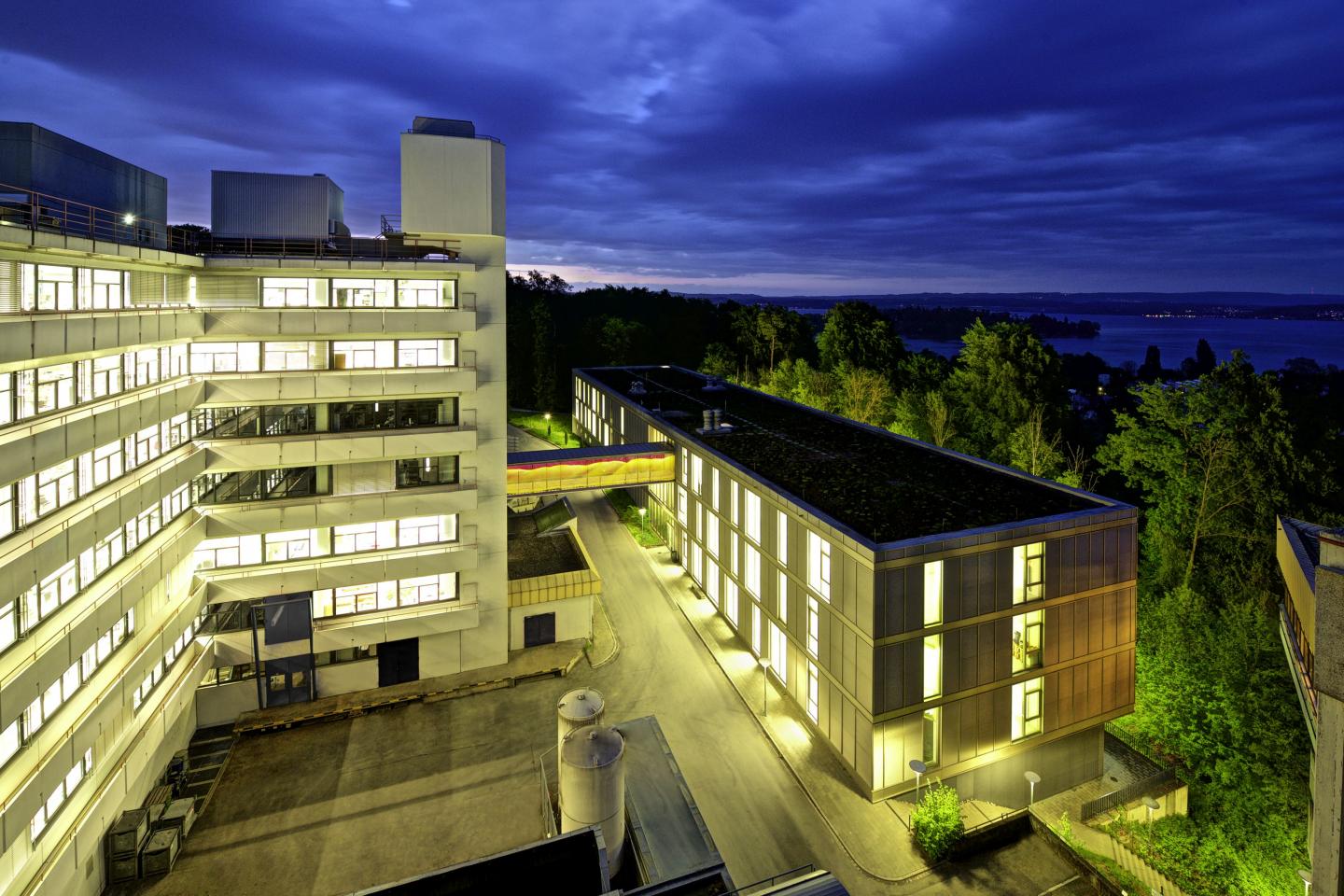
Caption: The University of Konstanz’s Centre for Chemical Biology. It enables researchers from the Departments of Biology and Chemistry to pursue interdisciplinary research avenues in a modern research and lab building. The Centre of Chemical Biology is also home to members of CRC 969.
Image: University of Konstanz
Image 2: https:/
Caption: Professor Elke Deuerling, Spokesperson of the Collaborative Research Centre 969 “Chemical and Biological Principles of Cellular Proteostasis”.
Image: University of Konstanz
Contact:
University of Konstanz
Communications and Marketing
Phone: +49 7531 88-3603
Email: [email protected]
– uni.kn/en
Media Contact
Julia Wandt
[email protected]
Original Source
https:/