Beta-carotene is one of the most celebrated pigments in the food world, the compound that gives carrots their glow and that our bodies convert into vitamin A. Yet for all its nutritional star power, it is notoriously fragile. Expose it to light, oxygen, heat, or acid, and it begins to fall apart, losing both its color and its health benefits before it ever reaches a consumer’s plate. A new study published in Food Chemistry: X offers a clever materials-science solution to this long-standing problem, using two humble food-grade polysaccharides to build a protective fortress around the delicate molecule.
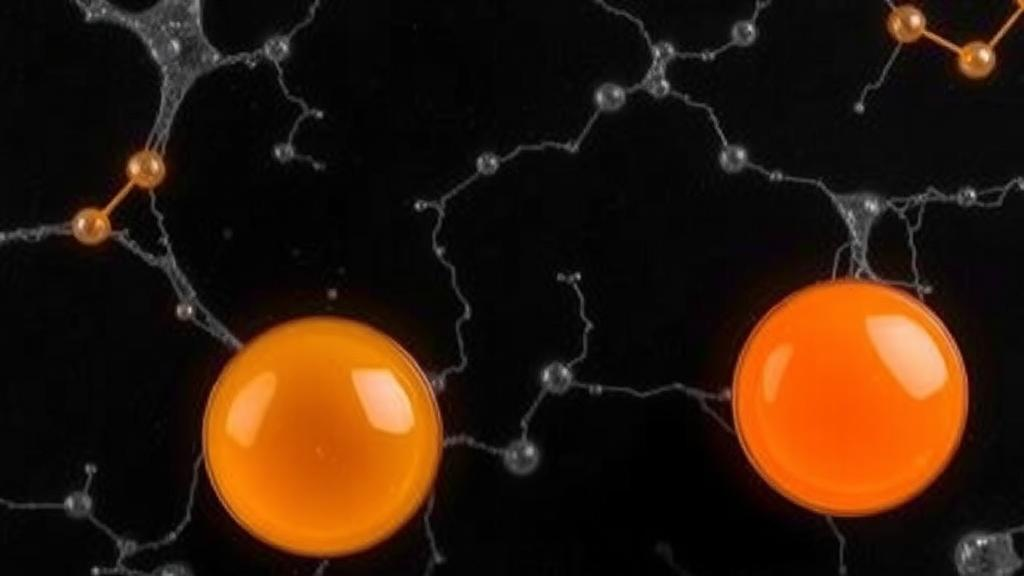
Researchers led by Lihua Zhang and Wei Xu of Xinyang Normal University set out to construct what food scientists call an emulsion gel, a semi-solid material in which tiny oil droplets are trapped inside a three-dimensional gel network. These hybrid materials combine the best of two worlds: like emulsions, they can carry fat-loving nutrients such as beta-carotene; like gels, they resist the gravitational separation, droplet coalescence, and Ostwald ripening that plague ordinary liquid emulsions. The team’s innovation lay in the specific combination of ingredients they chose to build the network: sodium caseinate, a milk protein prized for its emulsifying ability, reinforced by konjac glucomannan and kappa-carrageenan, two polysaccharides with complementary gelling personalities.
Sodium caseinate alone is a workhorse emulsifier in the food industry, but emulsions built solely from it wobble under stress. Shifts in pH, temperature swings, and changes in ionic strength can all destabilize them. Previous work had shown that pairing proteins with polysaccharides produces sturdier systems, because the two classes of molecules interact through hydrogen bonding and hydrophobic interactions, thickening the film that surrounds each oil droplet. Earlier comparisons of four polysaccharides had singled out konjac glucomannan as one of the most effective stabilizers for caseinate emulsions, and kappa-carrageenan had already proven its worth in gels delivering curcumin. What remained unclear was how the two polysaccharides would behave together in a caseinate-based system, and whether their synergy would translate into real protection for beta-carotene.
The fabrication process was deliberately simple, a virtue for any technology hoping to leave the laboratory. Konjac glucomannan was first dispersed in water and stirred for six hours, then sodium caseinate was dissolved into the solution. Camellia oil, a premium edible oil, was blended in at ten percent volume and homogenized at 10,000 rpm for three minutes, producing fine oil droplets coated in protein. Optical microscopy and confocal laser scanning microscopy revealed that the konjac glucomannan made an immediate difference: droplets in the polysaccharide-containing emulsions were smaller and more uniform, and the interfacial film surrounding them was visibly thicker. The added viscosity also slowed droplet movement, reducing the collisions that lead to aggregation.
The next step introduced kappa-carrageenan at four concentrations, from zero to two percent by weight, with the mixtures heated to seventy degrees Celsius to dissolve the polysaccharide and then cooled into gels. Without carrageenan, the system never achieved a solid structure at all, confirming that the protein and konjac alone could not lock the emulsion into place. With carrageenan, the mechanical properties climbed steadily. At the highest concentration, hardness rose by fifty-nine percent, springiness by twenty-seven percent, cohesiveness by seventeen percent, and chewiness more than doubled compared with the lowest carrageenan formulation. The explanation lies in the interpenetration of two networks: konjac glucomannan forms a ductile, flexible scaffold between droplets, while carrageenan contributes a rigid framework, and their entanglement, stitched together by hydrogen bonds, produces a double-network gel far stronger than either component alone.
Water retention proved equally impressive. All three carrageenan-containing gels held their water well during centrifugation, and low-field nuclear magnetic resonance showed that water molecules became progressively less mobile as carrageenan concentration increased. The relaxation signals shifted toward shorter times, indicating that the denser network was immobilizing moisture more effectively. This matters for food applications, because a gel that weeps water loses both texture and shelf appeal. The abundance of hydroxyl and carbonyl groups on konjac glucomannan, which readily form hydrogen bonds with water, combined with the tightening capillary forces of the densifying network, kept moisture locked in place.
Rheological testing traced the sol-to-gel transformation as the samples cooled from seventy to twenty degrees Celsius. The stiffest gel, containing two percent carrageenan, reached its gel point earliest and displayed the highest storage and loss moduli across all temperatures, confirming that more carrageenan raises the gelation temperature and stiffens the final material. Interestingly, creep-recovery experiments showed a trade-off: the softest gel bounced back best after being squeezed, while the stiffest formulations deformed more irreversibly under stress. For designers of functional foods, this tunability is an asset rather than a flaw, allowing texture to be matched to the product, whether a spreadable paste or a sliceable solid.
Electron microscopy provided the most striking visual evidence of the synergy at work. Conventional scanning electron microscopy of freeze-dried gels showed lamella-like structures, but cryo-SEM, which preserves the gel in its native hydrated state, told the real story. Without carrageenan, the structure was loose and irregular, with oil droplets scattered outside a weak network. With carrageenan, the gels reorganized into an orderly honeycomb architecture, with oil droplets nestled uniformly within the pores. At one and a half percent carrageenan, the network reached its peak orderliness, with even pore sizes and well-distributed droplets. Pushing the concentration to two percent actually disrupted the order, suggesting there is a sweet spot where the two polysaccharides are balanced and neither is left unincorporated.
The ultimate test was whether all this structural engineering actually protected beta-carotene, and the answer was a qualified yes. During nine days of refrigerated storage, the gel with one and a half percent carrageenan retained roughly sixty-two percent of its initial beta-carotene, while the carrageenan-free gel retained only about forty-eight percent. The interfacial film of protein and polysaccharide acts as a physical barrier, limiting contact between the carotenoid and water-borne oxidants, while the rigid network restricts molecular mobility within the matrix. Under ultraviolet light, the results were more nuanced. The bulk oil control fared worst, retaining just twenty-seven percent of its beta-carotene after eight hours of irradiation, while the one percent carrageenan gel performed best, its interfacial film effectively shielding the droplets from UV penetration. Unexpectedly, the denser gels with higher carrageenan levels showed somewhat faster photodegradation, likely because their smaller, more finely dispersed droplets presented a larger total surface area to the light.
The study’s authors caution that freeze-thaw stability still needs systematic investigation before these gels reach industrial production, but the implications are already broad. A carrier built entirely from food-grade ingredients, caseinate, konjac glucomannan, kappa-carrageenan, and camellia oil, that can be tuned in texture, holds water tightly, and extends the life of labile nutrients could reshape how functional foods are formulated. The researchers point toward applications in easy-to-swallow gel products for nutritional fortification, a growing need in foods designed for older adults and patients with swallowing difficulties. More broadly, the work demonstrates a principle that resonates across soft-matter science: when two polymers with complementary mechanical characters are woven together, the resulting double network can outperform anything either could achieve alone, and in doing so, it can buy precious time for molecules as fragile as beta-carotene.
Subject of Research: Protein-polysaccharide emulsion gels for protecting beta-carotene
Article Title: Fabrication of sodium caseinate-based emulsions gel with konjac glucomannan and κ-carrageenan for β-carotene protection
Article References: Zhang, L., Li, Z., Yu, S., Wu, G., Xue, J., Li, L., & Xu, W. (2026). Fabrication of sodium caseinate-based emulsions gel with konjac glucomannan and κ-carrageenan for β-carotene protection. Food Chemistry: X, 39, Article 104572. https://doi.org/10.1016/j.fochx.2026.104572
Image Credits: AI Generated
DOI: 10.1016/j.fochx.2026.104572
Keywords: emulsion gels, beta-carotene, sodium caseinate, konjac glucomannan, kappa-carrageenan, food chemistry, nutrient delivery, double-network gel, photostability, camellia oil, functional foods, rheology
News Source: Bethany Barker. (October 6, 2026). Konjac and Carrageenan Team Up to Shield Beta-Carotene in Novel Emulsion Gels. Scienmag.