• HOME
  • NEWS
  • EXPLORE
    • CAREER
      • Companies
      • Jobs
    • EVENTS
    • iGEM
      • News
      • Team
    • PHOTOS
    • VIDEO
    • WIKI
  • BLOG
  • COMMUNITY
    • FACEBOOK
    • INSTAGRAM
    • TWITTER
Thursday, July 16, 2026
BIOENGINEER.ORG
No Result
View All Result
  • Login
  • HOME
  • NEWS
  • EXPLORE
    • CAREER
      • Companies
      • Jobs
        • Lecturer
        • PhD Studentship
        • Postdoc
        • Research Assistant
    • EVENTS
    • iGEM
      • News
      • Team
    • PHOTOS
    • VIDEO
    • WIKI
  • BLOG
  • COMMUNITY
    • FACEBOOK
    • INSTAGRAM
    • TWITTER
  • HOME
  • NEWS
  • EXPLORE
    • CAREER
      • Companies
      • Jobs
        • Lecturer
        • PhD Studentship
        • Postdoc
        • Research Assistant
    • EVENTS
    • iGEM
      • News
      • Team
    • PHOTOS
    • VIDEO
    • WIKI
  • BLOG
  • COMMUNITY
    • FACEBOOK
    • INSTAGRAM
    • TWITTER
No Result
View All Result
Bioengineer.org
No Result
View All Result
Home NEWS Science News Biology

Knowledge of larval fish just a drop in the ocean

Bioengineer by Bioengineer
October 26, 2017
in Biology
Reading Time: 2 mins read
0
Share on FacebookShare on TwitterShare on LinkedinShare on RedditShare on Telegram
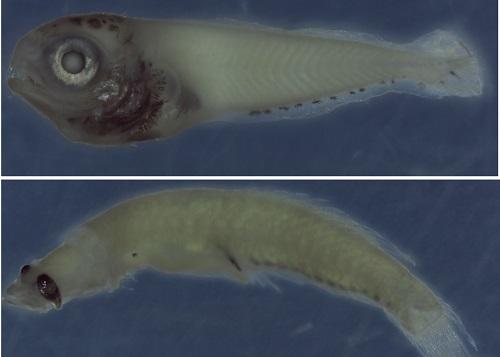
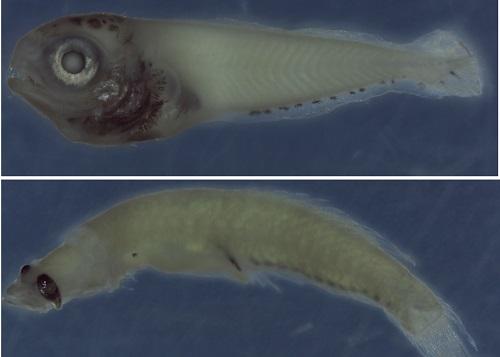
IMAGE

Credit: © 2017 Stamatina Isari

A year-long survey of the taxonomic diversity of Red Sea fish larvae has revealed how the community changes throughout the year and has also established a baseline for future studies.

Researchers used a fine net to collect fish larvae from a near-shore and an off-shore site in the Red Sea every month for a year. The team from KAUST, working with two Spanish institutions, used conventional morphological analysis to approximately identify the fish larvae followed by DNA barcoding to pin down the species.

"There are no descriptions of most of these species as larvae," says Stamatina Isari, a plankton ecologist who led the study. "In a way, I was teaching myself. Once I had the barcode of a larva and identified its species using reference databases, then I knew how the larvae of that species looked." This enabled Isari to identify samples she saw later, based solely on their morphology: eventually these descriptions could form the basis of a larval identification key.

The stock of fish larvae was found to vary through the seasons. A larger stock of fish larvae was observed at the near-shore site during the colder months, though the abundance at the two sites was similar in the warmer part of the year.

There were also differences noted in the community structure, with the near-shore site harboring a higher number of species of certain reef families and greater overall diversity, particularly during the colder months. Meanwhile the offshore site was home to deeper depth-adapted species that were absent from the shallower, near-shore site. The team also measured environmental variables at the two sites and found that temperature was the major driver of changes in the communities during the course of the year.

"Exploring larval distribution patterns in space and time will help us understand the factors affecting fish population dynamics" says Isari, adding that "the majority of collected larvae appeared to be species not commonly seen as adults in the area."

A complete picture of Red Sea fish calls for an understanding of the larval communities as well as the juvenile and adult communities. Many of the barcoding sequences didn't have a match in DNA databases, highlighting the scant knowledge of Red Sea fish communities and the need to establish a reliable database of Red Sea fish taxonomic data.

This study also highlights the value of plankton net tows in estimating fish biodiversity. It also provides an important baseline and a reference database for future work. Using this database, Isari is now studying the diversity of fish larvae at different latitudes in the Red Sea.

###

Media Contact

Carolyn Unck
[email protected]

http://kaust.edu.sa/

Original Source

http://www.kaust.link/2yBkngx http://dx.doi.org/10.1371/journal.pone.0182503

Share12Tweet8Share2ShareShareShare2

Related Posts

New Model Uncovers Hidden Disease Signals and Predicts Health Outcomes

New Model Uncovers Hidden Disease Signals and Predicts Health Outcomes

July 16, 2026
AI designs functional CRISPR-like nucleases surpassing natural models

AI designs functional CRISPR-like nucleases surpassing natural models

July 16, 2026

UW Physician-Scientist Honored by Association for Molecular Pathology for Exceptional Service

July 16, 2026

Enhanced Bayesian Hybrid Inference Using Genome Sequence Data

July 16, 2026
Please login to join discussion

POPULAR NEWS

  • New Drug Candidate Developed at McMaster Shows Potential for Treating Brain Cancer

    58 shares
    Share 23 Tweet 15
  • Scientists Overcome Antimicrobial Resistance in Bacteria Linked to Cystic Fibrosis

    42 shares
    Share 17 Tweet 11
  • Porcine Heart Transplant

    50 shares
    Share 20 Tweet 13
  • A varied menu

    51 shares
    Share 22 Tweet 12

About

We bring you the latest biotechnology news from best research centers and universities around the world. Check our website.

Follow us

Recent News

New Model Uncovers Hidden Disease Signals and Predicts Health Outcomes

Global study finds shipping and human activity reshape bacteria in port waters

Cold Radioactive Molecules Prepared for Next Physics Breakthroughs

Subscribe to Blog via Email

Enter your email address to subscribe to this blog and receive notifications of new posts by email.

Join 85 other subscribers
  • Contact Us

Bioengineer.org © Copyright 2023 All Rights Reserved.

Welcome Back!

Login to your account below

Forgotten Password?

Retrieve your password

Please enter your username or email address to reset your password.

Log In
No Result
View All Result
  • Homepages
    • Home Page 1
    • Home Page 2
  • News
  • National
  • Business
  • Health
  • Lifestyle
  • Science

Bioengineer.org © Copyright 2023 All Rights Reserved.