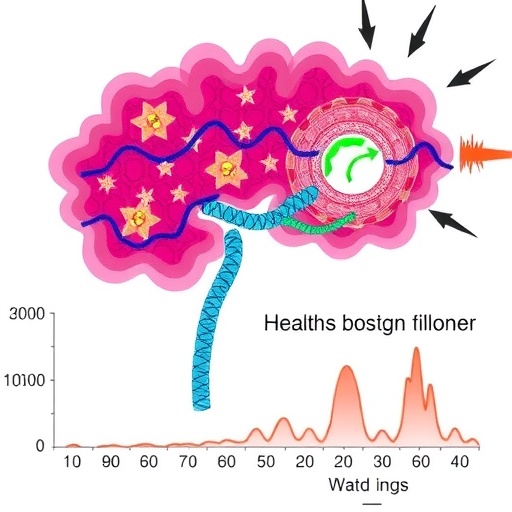
A new Nature study from Mass General Brigham and collaborators proposes a Bayesian way to turn messy, longitudinal electronic health record (EHR) streams into biologically meaningful disease trajectories. Lead author Sarah Urbut, MD, PhD, and co–senior author Pradeep Natarajan, MD, MMSc, argue that today’s medicine still treats diagnoses as fixed labels—processing them in silos—rather than as evolving processes shaped by genetics and time.
The core challenge is that a single clinical label can conceal multiple underlying mechanisms. Two patients labeled with the same condition may differ dramatically in how their disease unfolds, how risk accumulates, and how they respond to treatment. Until now, researchers have lacked a practical framework to connect diseases over years and across individuals in a single coherent model.
The study addresses three linked questions: how seemingly unrelated diseases relate across time, what joint modeling of hundreds of conditions can reveal about hidden biology, and how genetic variation shapes individual disease “signatures” and progression paths. The goal is not only prediction, but interpretability—capturing the latent processes that drive real-world trajectories.
To do this, the team developed ALADYNOULLI, an advanced generative Bayesian model. It learns latent disease signatures by integrating longitudinal diagnosis patterns with age and genetic risk information. By borrowing statistical strength across patients and conditions, the model discovers shared mechanisms that may remain invisible when diseases are analyzed separately.
In extensive evaluations, ALADYNOULLI compressed 348 diseases into 21 reproducible latent signatures. These signatures aligned closely across three independent biobanks totaling more than 683,000 individuals with up to 52 years of follow-up, suggesting the learned processes are stable rather than dataset-specific.
Genetic analyses tied to the signatures confirmed established associations and surfaced additional signals that would likely be missed by single-disease approaches. In other words, the “biological fingerprint” of a patient’s disease is distributed across a pattern of latent processes—not trapped within a diagnostic label.
The model also demonstrated strong ability to forecast future disease risk. Crucially, risk estimates improved when predictions were updated as new EHR information arrived, mirroring how clinical care unfolds over time rather than at a single snapshot.
Beyond performance, the most consequential implication may be practical transferability. Because ALADYNOULLI can generalize across health systems without requiring every site to have access to an enormous genetic dataset, it could support wider deployment of dynamic, evolving risk assessment.
Ultimately, the work aims to make disease trajectories multidimensional and concrete. Two patients with the same diagnosis can map onto distinct latent signature profiles—capturing why their progression and treatment responses diverge.
Subject of Research: Bayesian generative modeling of longitudinal EHR and genetics to discover latent disease signatures and improve dynamic disease prediction.
Article Title: A Bayesian framework for longitudinal HER and genetic discovery
News Publication Date: 15-Jul-2026
Web References: https://www.nature.com/articles/s41586-026-10780-5 ; http://dx.doi.org/10.1038/s41586-026-10780-5
References: Urbut, S., et al. “A Bayesian framework for longitudinal HER and genetic discovery.” Nature. DOI: 10.1038/s41586-026-10780-5
Image Credits: Not provided
Keywords: Human genetics, electronic health records, Bayesian models, longitudinal prediction, latent disease signatures
Tags: advanced generative models in healthcareBayesian disease trajectory modelingbiologically meaningful health outcomeselectronic health record analysisgenetic risk factors in disease progressionhealth data integration techniqueshidden disease signalsinterpretability in disease modelinglatent disease signatureslongitudinal health datamulti-condition disease relationshipspersonalized disease prediction