• HOME
  • NEWS
  • EXPLORE
    • CAREER
      • Companies
      • Jobs
    • EVENTS
    • iGEM
      • News
      • Team
    • PHOTOS
    • VIDEO
    • WIKI
  • BLOG
  • COMMUNITY
    • FACEBOOK
    • INSTAGRAM
    • TWITTER
Thursday, July 2, 2026
BIOENGINEER.ORG
No Result
View All Result
  • Login
  • HOME
  • NEWS
  • EXPLORE
    • CAREER
      • Companies
      • Jobs
        • Lecturer
        • PhD Studentship
        • Postdoc
        • Research Assistant
    • EVENTS
    • iGEM
      • News
      • Team
    • PHOTOS
    • VIDEO
    • WIKI
  • BLOG
  • COMMUNITY
    • FACEBOOK
    • INSTAGRAM
    • TWITTER
  • HOME
  • NEWS
  • EXPLORE
    • CAREER
      • Companies
      • Jobs
        • Lecturer
        • PhD Studentship
        • Postdoc
        • Research Assistant
    • EVENTS
    • iGEM
      • News
      • Team
    • PHOTOS
    • VIDEO
    • WIKI
  • BLOG
  • COMMUNITY
    • FACEBOOK
    • INSTAGRAM
    • TWITTER
No Result
View All Result
Bioengineer.org
No Result
View All Result
Home NEWS Science News Biology

Know your ally: Cooperative male dolphins can tell who’s on their team

Bioengineer by Bioengineer
April 22, 2021
in Biology
Reading Time: 2 mins read
0
IMAGE
Share on FacebookShare on TwitterShare on LinkedinShare on RedditShare on Telegram

IMAGE

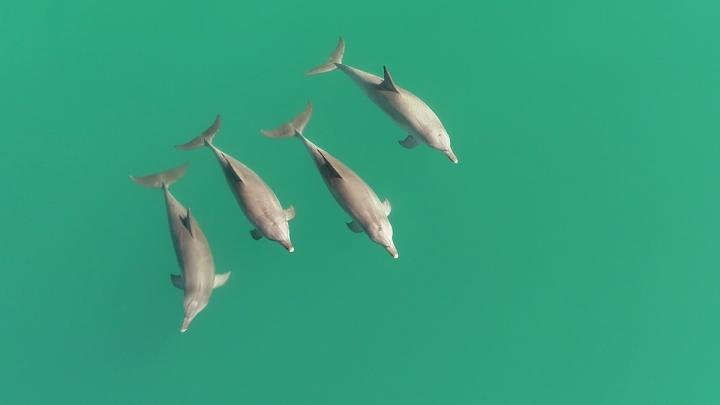
Credit: Dr Simon Allen

When it comes to friendships and rivalries, male dolphins know who the good team players are. New findings, published in Nature Communications by University of Bristol researchers, reveal that male dolphins form a social concept of team membership based on cooperative investment in the team.

The Bristol researchers, with colleagues from the University of Zurich and University of Massachusetts, used 30 years of observational data from a dolphin population in Shark Bay, Western Australia, and sound playback experiments to assess how male dolphins responded to the calls of other males from their alliance network.

Dr Stephanie King, Senior Lecturer from Bristol’s School of Biological Sciences who led the research, said: “Social animals can possess sophisticated ways of classifying relationships with members of the same species. In our own society, we use social knowledge to classify individuals into meaningful groups, like sports teams and political allies. Bottlenose dolphins form the most complex alliances outside humans, and we wanted to know how they classify these relationships.”

Dr Simon Allen, Research Fellow at Bristol’s School of Biological Sciences, who contributed to the study, added: “We flew drones above dolphin groups, recording their behaviour during the sound playbacks, tracking their movements underwater and revealing novel insights into how dolphins respond to the calls of other males in their network of allies.”

Males responded strongly to all of the allies that had consistently helped them out in the past, even if they weren’t currently close friends. On the other hand, they didn’t respond strongly to males who hadn’t consistently helped them out in the past, even if they were friends. What this shows is that these dolphins form social concepts of ‘team membership’, categorizing allies according to a shared cooperative history.

Dr King said: “Such concepts develop through experience and likely played a role in the cooperative behaviour of early humans. Our results show that cooperation-based concepts are not unique to humans, but also occur in other animal societies with extensive cooperation between non-kin.”

###

The study was funded by The Branco Weiss Fellowship – Society in Science and the National Geographic Society.

Media Contact
Stephanie King
[email protected]

Tags: BiologyMarine/Freshwater Biology
Share12Tweet8Share2ShareShareShare2

Related Posts

Evolution-Inspired Biosensors Revolutionize Lipid Tracking in Real Time — Biology

Evolution-Inspired Biosensors Revolutionize Lipid Tracking in Real Time

July 2, 2026
New Study Reveals How to Reduce Risk of Dangerous Wildlife Encounters This Summer — Biology

New Study Reveals How to Reduce Risk of Dangerous Wildlife Encounters This Summer

July 2, 2026

Hepatic IFRD1 Alleviates Metabolic Dysfunction-Linked Steatohepatitis Through the GLUD1/α-KG Pathway

July 2, 2026

Intricate Food Webs Support Ecosystem Health and Stability

July 2, 2026
Please login to join discussion

POPULAR NEWS

  • Detection of EDCs in Breast Milk and Infant Urine Up to Six Months Highlights Early Exposure Risks

    77 shares
    Share 31 Tweet 19
  • Saying Goodbye to PGY-6: Pediatric Fellowship Realities

    103 shares
    Share 41 Tweet 26
  • New Drug Candidate Developed at McMaster Shows Potential for Treating Brain Cancer

    58 shares
    Share 23 Tweet 15
  • KTU Researchers Explore Ultrasound’s Role in Enhancing Blood Flow Beyond Diagnostics

    53 shares
    Share 21 Tweet 13

About

BIOENGINEER.ORG

We bring you the latest biotechnology news from best research centers and universities around the world. Check our website.

Follow us

Recent News

Steatosis Drives Liver Metastasis Diversity in CRC

Unlocking the Mysteries of Alzheimer’s Disease

Pensoft Introduces New Peer-Reviewed Journal of Regeneration to Advance Restorative Biology Across Species

Subscribe to Blog via Email

Enter your email address to subscribe to this blog and receive notifications of new posts by email.

Join 83 other subscribers
  • Contact Us

Bioengineer.org © Copyright 2023 All Rights Reserved.

Welcome Back!

Login to your account below

Forgotten Password?

Retrieve your password

Please enter your username or email address to reset your password.

Log In
No Result
View All Result
  • Homepages
    • Home Page 1
    • Home Page 2
  • News
  • National
  • Business
  • Health
  • Lifestyle
  • Science

Bioengineer.org © Copyright 2023 All Rights Reserved.