In a groundbreaking discovery poised to transform the landscape of gastrointestinal cancer treatment, researchers in Australia have unveiled a novel mechanism by which components of the nervous system actively promote tumor growth within the gut. This revelation centers on the role of the sensory neuropeptide Calcitonin Gene-Related Peptide (CGRP) and its co-receptor, Receptor Activity Modifying Protein 1 (RAMP1), both of which have been identified as significant drivers of tumor proliferation in colorectal and stomach cancers. The implications of this finding extend far beyond fundamental science, presenting a compelling case for repurposing drugs currently approved for migraine therapy to combat these deadly malignancies.
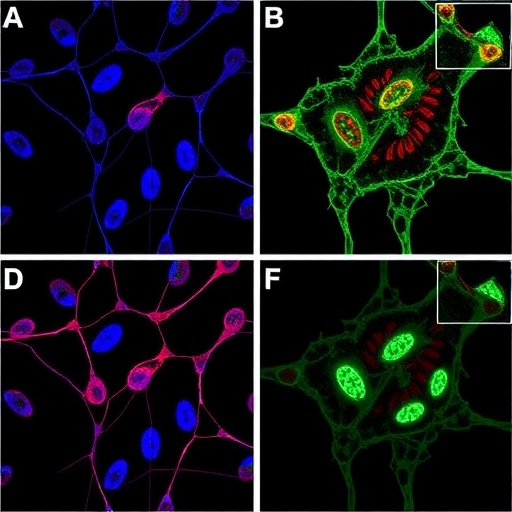
The human gastrointestinal tract is uniquely equipped with its own extensive nervous system, often dubbed the “second brain,” which orchestrates a myriad of physiological functions critical to digestive health. Among the constituents of this enteric nervous system, neuropeptides such as CGRP function as potent signaling molecules that modulate intercellular communication by binding to specific receptors on target cells. These interactions govern diverse biological processes, including vascular modulation, immune responses, and tissue homeostasis. The new research has uncovered that within the tumor microenvironment, CGRP is not only present in nerve fibers infiltrating the neoplastic tissue but is also aberrantly synthesized by the tumor cells themselves, suggesting an autocrine loop that fosters malignancy.
This phenomenon was elucidated by a collaborative research team from the Olivia Newton-John Cancer Research Institute (ONJCRI) and the La Trobe School of Cancer Medicine, who employed sophisticated genetic engineering techniques to dissect the molecular interplay between CGRP, RAMP1, and tumor cell dynamics. By selectively knocking out the RAMP1 receptor gene in cancer cells, the researchers observed a marked attenuation of tumor growth, affirming the receptor’s critical role in this pathway. Such findings underscore a paradigm shift in our understanding of tumorigenesis, implicating the nervous system as an active participant, rather than a passive backdrop, in cancer progression.
One of the most promising aspects of this discovery lies in the translational potential it holds. Given that pharmaceutical agents targeting CGRP and RAMP1 have already received regulatory approval and are widely prescribed for the treatment of migraine headaches, there exists a tangible opportunity to repurpose these drugs as anti-cancer therapies. This strategy could dramatically shorten the timeline for clinical application, circumventing the protracted drug development and approval processes typically associated with novel cancer treatments.
Dr. Pavitha Parathan, lead author of the landmark study published in BMJ Oncology, emphasized the significance of these findings: “The presence of CGRP within tumor nerves and the ability of the cancer cells to produce CGRP themselves highlight a previously unrecognized mechanism by which tumors can manipulate their microenvironment to sustain growth.” She further elucidated the therapeutic promise by noting that existing CGRP-inhibiting drugs might offer a readily available means to disrupt this malignant crosstalk, potentially halting cancer progression with well-tolerated pharmacological agents.
The study’s senior author, Dr. Lisa Mielke, who also serves as the Laboratory Head at ONJCRI and La Trobe School of Cancer Medicine, acknowledges the exciting frontier this research opens: “The nervous system’s involvement in cancer biology is an emerging research area, ripe with opportunities for innovative therapeutic approaches. Our future work is focused on evaluating the efficacy of existing migraine medications in combating colorectal cancer, with the aim of incorporating them into clinical trials alongside standard treatment regimens.”
The global burden of gastrointestinal cancers remains immense, accounting for approximately one-quarter of all cancer diagnoses and one-third of cancer-related deaths worldwide. These statistics translate to millions of new cases and fatalities annually, underscoring the urgent need for novel, more effective treatment strategies. The identification of a druggable nerve-tumor axis offers a beacon of hope for improving patient outcomes in these challenging malignancies.
The research, supported by prestigious bodies such as the Australian National Health and Medical Research Council and the Victorian Cancer Agency, represents a highly interdisciplinary effort that included collaborations with renowned institutions like Austin Health, Monash University, Harvard University, and the Walter and Eliza Hall Institute of Medical Research (WEHI). Funding from various foundations, including the Colorectal Cancer Alliance and Tour de Cure, facilitated this comprehensive investigation.
At a mechanistic level, the role of CGRP and RAMP1 in tumor biology may involve modulation of tumor cell proliferation, angiogenesis, and evasion of immune surveillance. CGRP is known for its vasoactive properties and ability to influence inflammatory pathways, which could contribute to creating a tumor-favorable microenvironment. By interfering with CGRP/RAMP1 signaling, it may be possible to disrupt these pathological processes and restore control over unchecked cell growth.
This discovery dovetails with an evolving recognition of the tumor microenvironment’s complexity, which extends beyond cancer cells to include stromal cells, immune components, and now, importantly, neuronal elements. The interplay between these diverse cellular constituents forms a dynamic ecosystem that cancer cells exploit for survival and dissemination. Targeting neuronal signaling pathways within this milieu represents a novel therapeutic frontier.
The existing CGRP inhibitors, such as monoclonal antibodies and small molecules authorized for migraine therapy, have an established safety profile, significantly enhancing their appeal for rapid clinical translation in oncology. Future clinical trials will be crucial to determine optimal dosing, efficacy, and potential synergistic effects when combined with conventional chemotherapies or immunotherapies.
In light of these findings, the concept of cancer management is poised to incorporate neuromodulatory strategies, heralding a new era of precision medicine wherein the neurobiology of tumors is explicitly targeted. This approach aligns with ONJCRI’s mission to develop cancer treatments that are not only effective but also kinder and more tolerable for patients, potentially minimizing side effects and improving quality of life.
The impact of this research resonates globally, offering hope for millions affected by gastrointestinal cancers—a heterogeneous group of diseases that includes some of the most aggressive and treatment-resistant tumor types. By bridging fundamental neurobiological insights with translational potential, the study sets a precedent for future explorations into the neural underpinnings of cancer and the therapeutic opportunities they present.
As the oncology community anticipates the forthcoming clinical evaluations of CGRP-targeting drugs in cancer therapy, this discovery underscores the necessity of interdisciplinary research approaches that integrate neuroscience, molecular biology, and clinical medicine. The innovative repurposing of migraine drugs to combat gastrointestinal cancers exemplifies how existing pharmacological tools can be harnessed to meet urgent unmet needs, accelerating the path from bench to bedside and ultimately saving lives.
Subject of Research: Human tissue samples
Article Title: Sensory neuropeptide CGRP and its co-receptor RAMP1 drive tumour cell growth in gastrointestinal cancers
News Publication Date: 24-Oct-2025
Web References:
DOI link to the original paper
References:
Established roles of neuropeptides in nervous system signaling.
Existing FDA-approved drugs targeting CGRP and RAMP1 for migraine therapy.
Global epidemiology of gastrointestinal cancers.
Keywords:
Health and medicine, Clinical medicine
Tags: Calcitonin Gene-Related Peptidecolorectal cancer researchdrug repurposing strategiesenteric nervous system functionsgastrointestinal cancer treatmentmigraine therapy applicationsneurobiology of gastrointestinal tumorsneuropeptide role in tumor growthReceptor Activity Modifying Protein 1signaling molecules in cancerstomach cancer mechanismstumor microenvironment interactions