Karen Nolan, PhD, of Kessler Foundation, is site investigator for a multi-site trial of a music-based digital therapeutic device with the potential to improve mobility after stroke
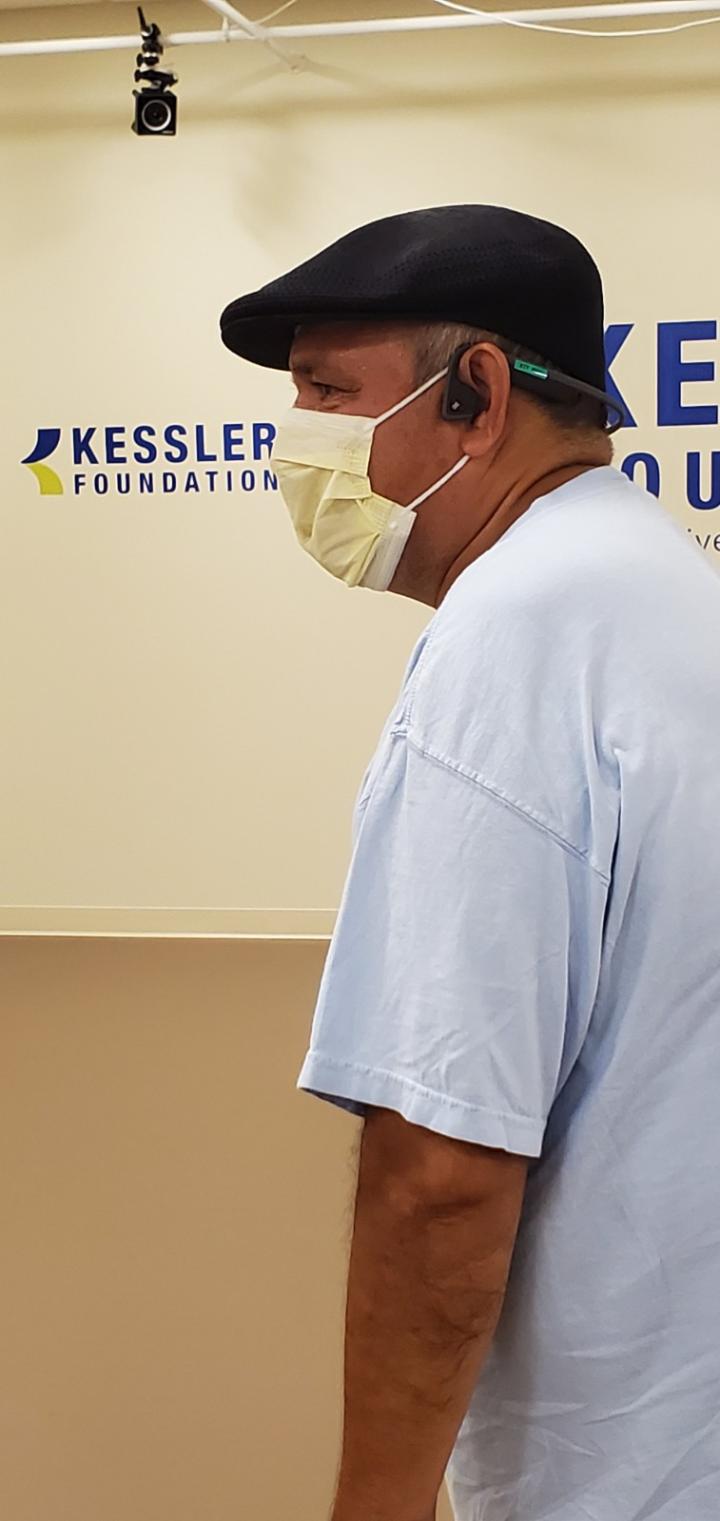
Credit: Kessler Foundation
East Hanover, NJ. September 16, 2020. Karen Nolan, PhD, of Kessler Foundation, received a grant from MedRhythms to test the company’s investigational digital therapeutic device, the Stride Plus, in individuals striving to recover mobility after stroke. Dr. Nolan, a senior research scientist in the Center for Mobility and Rehabilitation Engineering Research, specializes in the study of new technologies with potential applications in rehabilitation research for deficits in gait and balance that impair mobility.
Kessler Foundation is one of six sites participating in the randomized controlled study, “Post-stroke walking speed and community ambulation conversion: A pivotal study.” The other sites are the Shirley Ryan AbilityLab in Chicago, The Mount Sinai Hospital in New York, Spaulding Rehabilitation Hospital in Boston, Boston University Neuromotor Recovery Laboratory, and Atrium Health in Charlotte, North Carolina.
The study’s objective is to help individuals whose walking ability is affected by stroke to improve their walking speed and advance from limited community ambulation to community ambulation. The data collected from the six sites will support MedRhythm’s application for FDA approval of the device, which received Breakthrough Device Designation from the FDA in June 2020.
The Stride Plus device, which relies on internet connectivity, includes: 1) mobile device that provides rhythmic auditory stimulation in the form of music and rhythmic cues to facilitate the speed and quality of walking; 2) sensors that attach to each shoe to measure biomechanics; and 3) headphones that deliver the auditory cues. Feedback from the sensors is used to augment the music to encourage stable gait patterns and faster walking speed. The sensors also allow for monitoring and recording of the individual’s progress.
A total of 78 participants, including stroke survivors and controls, will be randomized to treatment and control groups. The treatment group will train in the Stride Plus three times a week for five weeks.
“Loss of mobility after stroke exerts a huge toll on individuals, their caregivers, our healthcare system, and society,” said Dr. Nolan, site investigator for the Kessler site. “Stroke rehabilitation is an area where we need to test new technologies to change the outlook for recovery. Applying digital therapeutics is a promising approach for restoring lost mobility,” she noted, “which may foster greater independence and better quality of life in this population.”
As stroke survival rates increase and the population ages, the population of stroke survivors in the U.S. is growing, according to Brian Harris, founder and CEO of MedRhythms. “Progress in stroke rehabilitation has lagged the needs of this growing population. Randomized controlled trials like this pivotal study will help us determine the potential for digital therapeutics in filling these unmet needs for rehabilitation that improves outcomes,” Harris added. “We are encouraged by the FDA’s Breakthrough Device Designation for Stride Plus, which supports our efforts to raise the standard of care for chronic stroke.”
###
About MedRhythms
MedRhythms, a privately held company headquartered in Portland, ME, is a digital therapeutics company that uses sensors, music, and software to build evidence-based, neurologic interventions to measure and improve walking. The MedRhythms team has extensive experience in rehabilitation techniques utilizing music in clinical rehabilitation. To learn more, visit: http://www.
About Kessler Foundation
Kessler Foundation, a major nonprofit organization in the field of disability, is a global leader in rehabilitation research that seeks to improve cognition, mobility, and long-term outcomes–including employment–for people with neurological disabilities caused by diseases and injuries of the brain and spinal cord. Kessler Foundation leads the nation in funding innovative programs that expand employment opportunities for people with disabilities.
For more information on Kessler Foundation’s research, visit KesslerFoundation.org.
Facebook |http://www.
Twitter | http://twitter.
Instagram | https:/
YouTube | http://www.
iTunes & SoundCloud | http://soundcloud.
Contacts:
Carolann Murphy, PA; 973.324.8382; [email protected]
Media Contact
Carolann Murphy, PA
[email protected]