• HOME
  • NEWS
  • EXPLORE
    • CAREER
      • Companies
      • Jobs
    • EVENTS
    • iGEM
      • News
      • Team
    • PHOTOS
    • VIDEO
    • WIKI
  • BLOG
  • COMMUNITY
    • FACEBOOK
    • INSTAGRAM
    • TWITTER
Friday, May 22, 2026
BIOENGINEER.ORG
No Result
View All Result
  • Login
  • HOME
  • NEWS
  • EXPLORE
    • CAREER
      • Companies
      • Jobs
        • Lecturer
        • PhD Studentship
        • Postdoc
        • Research Assistant
    • EVENTS
    • iGEM
      • News
      • Team
    • PHOTOS
    • VIDEO
    • WIKI
  • BLOG
  • COMMUNITY
    • FACEBOOK
    • INSTAGRAM
    • TWITTER
  • HOME
  • NEWS
  • EXPLORE
    • CAREER
      • Companies
      • Jobs
        • Lecturer
        • PhD Studentship
        • Postdoc
        • Research Assistant
    • EVENTS
    • iGEM
      • News
      • Team
    • PHOTOS
    • VIDEO
    • WIKI
  • BLOG
  • COMMUNITY
    • FACEBOOK
    • INSTAGRAM
    • TWITTER
No Result
View All Result
Bioengineer.org
No Result
View All Result
Home NEWS Science News Health

K-State study first to show SARS-CoV-2 is not transmitted by mosquitoes

Bioengineer by Bioengineer
July 17, 2020
in Health
Reading Time: 2 mins read
0
IMAGE
Share on FacebookShare on TwitterShare on LinkedinShare on RedditShare on Telegram

IMAGE

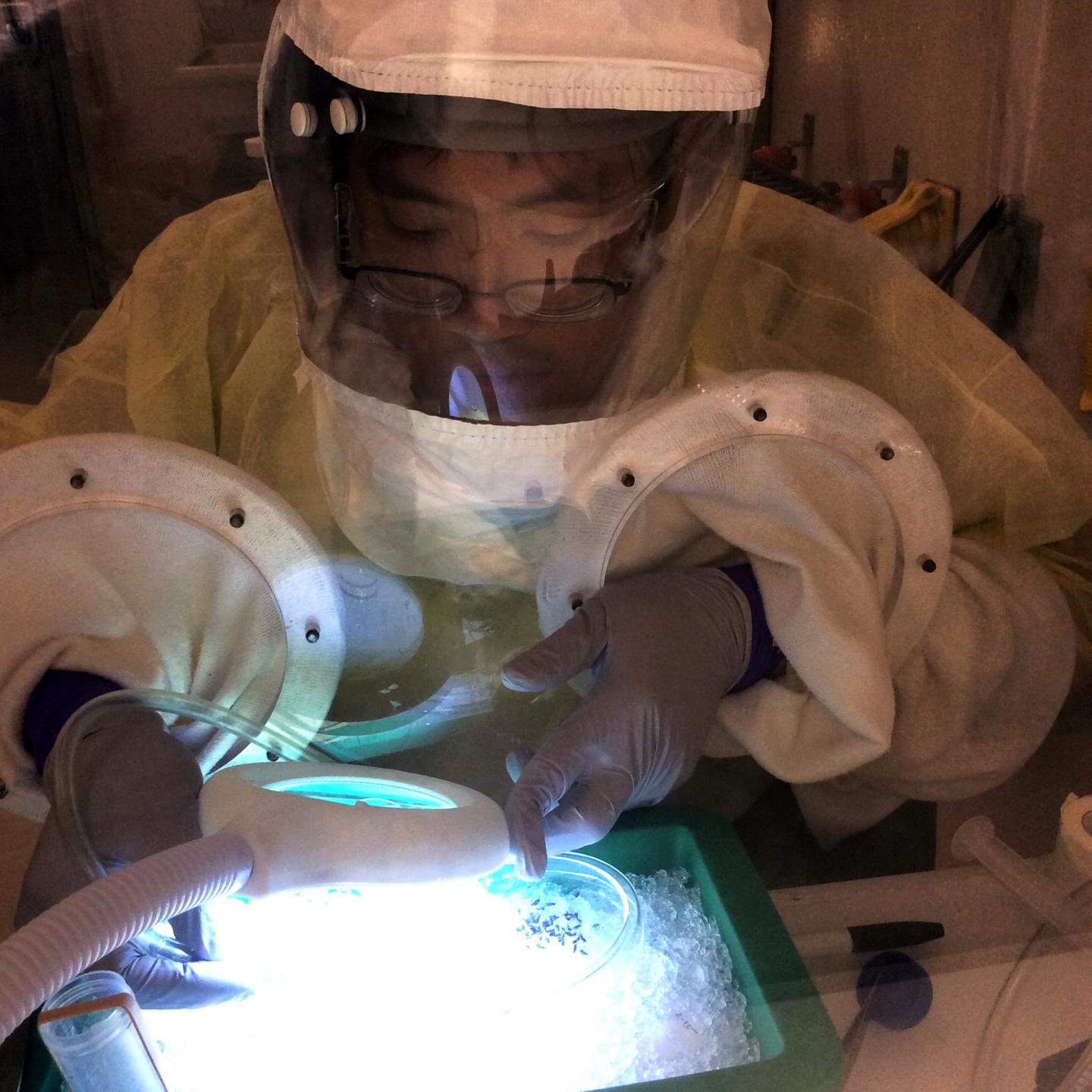
Credit: Kansas State University

MANHATTAN, KANSAS — A new study by Kansas State University researchers is the first to confirm that SARS-CoV-2 cannot be transmitted to people by mosquitoes.

Stephen Higgs, associate vice president for research and director of the university’s Biosecurity Research Institute, or BRI, together with colleagues from the BRI and the College of Veterinary Medicine had the findings published July 17 by Scientific Reports.

The article, “SARS-CoV-2 failure to infect or replicate in mosquitoes: an extreme challenge,” details the study’s findings, which provide the first experimental investigation on the capacity of SARS-CoV-2, the virus that causes COVID-19 disease, to infect and be transmitted by mosquitoes.

“While the World Health Organization has definitively stated that mosquitoes cannot transmit the virus, our study is the first to provide conclusive data supporting the theory,” said Higgs, Peine professor of biosecurity and university distinguished professor of diagnostic medicine and pathobiology.

The study, which was done at the BRI, a biosecurity level-3 facility, ultimately found that the virus is unable to replicate in three common and widely distributed species of mosquitoes — Aedes aegypti, Aedes albopictus and Culex quinquefasciatus — and therefore cannot be transmitted to humans.

“I am proud of the work we are doing at K-State to learn as much as we can about this and other dangerous pathogens,” said Higgs. “This work was possible because of the unique capabilities of the BRI and the dedicated BRI and institutional staff.”

Colleagues involved with the study include Yan-Jang Huang, research assistant professor of diagnostic medicine and pathobiology; Dana Vanlandingham, professor of diagnostic medicine and pathobiology; Ashley Bilyeu and Haelea Sharp, research assistants in diagnostic medicine and pathobiology; and Susan Hettenbach, research assistant at the BRI.

Researchers at the BRI have completed four additional studies on COVID-19 since March and this is the first peer-reviewed publication based on SARS-CoV-2 experiments wholly conducted at K-State.

Research at the Biosecurity Research Institute has been ongoing with other animal pathogens that can be transmitted from animals to people, including Rift Valley fever and Japanese encephalitis, as well as diseases that could devastate America’s food supply, such as African swine fever and classical swine fever. The research was in part supported by the National Bio and Agro-Defense Facility Transition Fund provided by the state of Kansas.

“We have remarkable talent and capabilities working within our research and training facility at the BRI,” said Peter Dorhout, K-State vice president for research. “The BRI is one of the critical anchor facilities in the North Campus Corridor, which serves as our growing research and development space for private sector and government agency partnerships with K-State.”

###

Media Contact
Stephen Higgs
[email protected]

Original Source

https://www.k-state.edu/media/newsreleases/2020-07/higgs-mosquitoes-no-covid71720.html

Related Journal Article

http://dx.doi.org/10.1038/s41598-020-68882-7

Tags: BiologyInfectious/Emerging DiseasesMedicine/HealthVirology
Share12Tweet8Share2ShareShareShare2

Related Posts

Nonlinear Atomic Tunneling Enhanced by Bright Squeezed Vacuum

May 21, 2026

Genetic Insights from 619,372 Metabolic Profiles

May 21, 2026

Bacterial STIs Hit Record Levels in Europe as Congenital Syphilis Cases Nearly Double

May 21, 2026

Oral Semaglutide Lowers Cardiometabolic Risks in Obesity

May 21, 2026
Please login to join discussion

POPULAR NEWS

  • blank

    New Study Reveals Plants Can Detect the Sound of Rain

    733 shares
    Share 292 Tweet 183
  • ESMO 2025: mRNA COVID Vaccines Enhance Efficacy of Cancer Immunotherapy

    304 shares
    Share 122 Tweet 76
  • Research Indicates Potential Connection Between Prenatal Medication Exposure and Elevated Autism Risk

    846 shares
    Share 338 Tweet 212
  • Breastmilk Balances E. coli and Beneficial Bacteria in Infant Gut Microbiomes

    58 shares
    Share 23 Tweet 15

About

We bring you the latest biotechnology news from best research centers and universities around the world. Check our website.

Follow us

Recent News

Innovative Reusable Brick Walls Revolutionize Construction Industry

Nonlinear Atomic Tunneling Enhanced by Bright Squeezed Vacuum

Label-Free Super-Resolution Imaging of Live Cells

Subscribe to Blog via Email

Success! An email was just sent to confirm your subscription. Please find the email now and click 'Confirm' to start subscribing.

Join 82 other subscribers
  • Contact Us

Bioengineer.org © Copyright 2023 All Rights Reserved.

Welcome Back!

Login to your account below

Forgotten Password?

Retrieve your password

Please enter your username or email address to reset your password.

Log In
No Result
View All Result
  • Homepages
    • Home Page 1
    • Home Page 2
  • News
  • National
  • Business
  • Health
  • Lifestyle
  • Science

Bioengineer.org © Copyright 2023 All Rights Reserved.