Credit: Stowers Institute
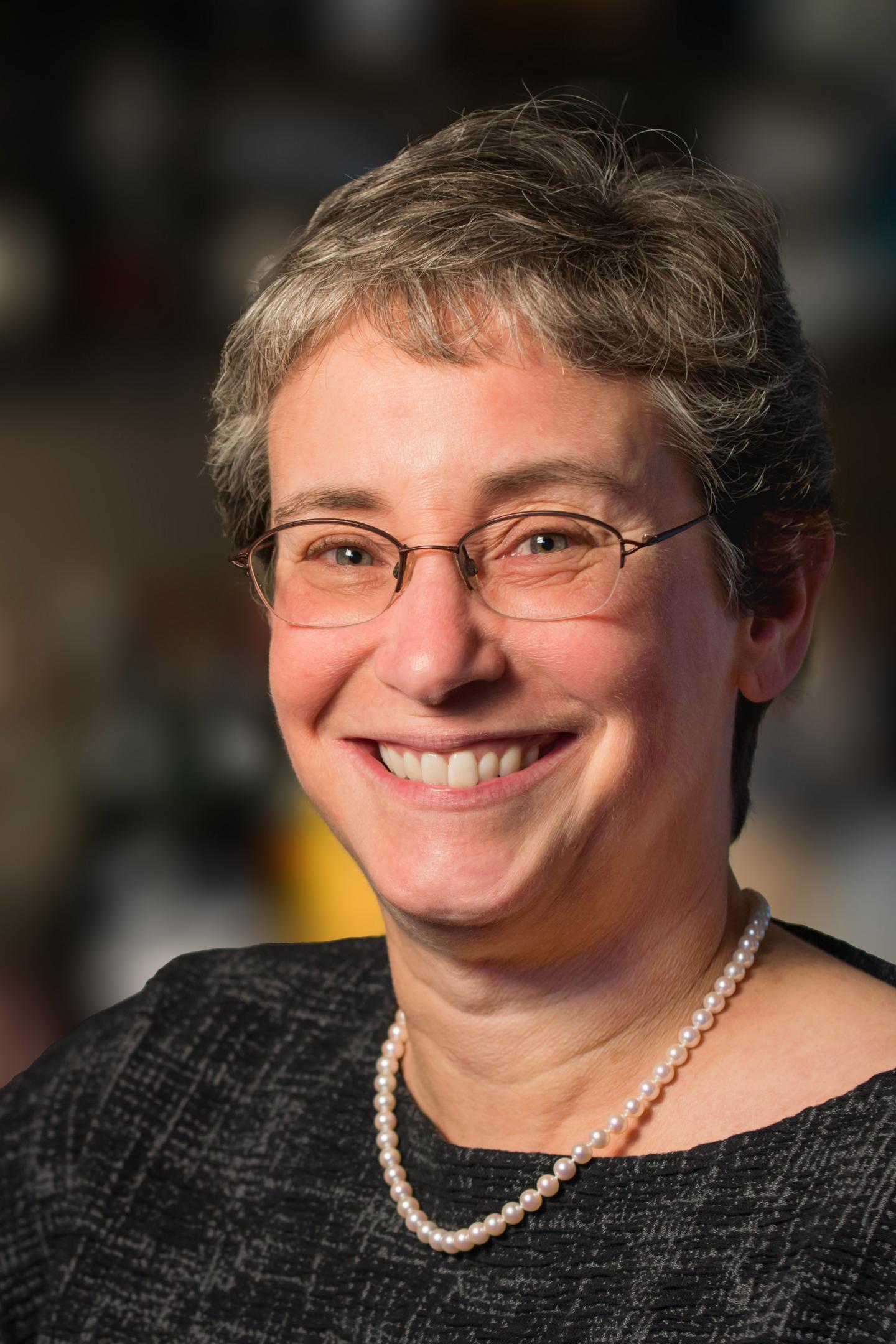
KANSAS CITY, MO–The Stowers Institute for Medical Research is pleased to announce that Joan Weliky Conaway, PhD, a Stowers Investigator since 2001, has been elected a member of the prestigious National Academy of Sciences (NAS) for her distinguished and continuing achievements in original scientific research. The recognition reflects the exceptional productivity and impact of the research program co-led by Conaway and her lifelong collaborator and husband Ron Conaway, PhD.
NAS announced the selection of Conaway on Monday, April 27, 2020. Membership in the NAS is considered one of the highest honors given to a scientist in the United States. The Stowers investigator will be inducted into the NAS at its 158th annual meeting in 2021.
Conaway joins Scott Hawley, PhD, Robb Krumlauf, PhD, and Alejandro Sánchez Alvarado, PhD, as Stowers investigators elected to the society of distinguished scholars. Founded in 1863, the NAS includes more than 200 living Nobel laureates and such historic figures as Alexander Graham Bell, Albert Einstein, Thomas Edison, Barbara McClintock, and Orville Wright.
Conaway, the Helen Nelson Distinguished Chair at Stowers, is also an Affiliate Professor in the Department of Biochemistry and Molecular Biology at the University of Kansas Medical Center.
Through their 30-year scientific partnership, Conaway and her husband, Stowers Investigator Ron Conaway, PhD, have significantly advanced scientific understanding of one of life’s most fundamental processes – how information encoded in the DNA of our genome is transcribed into a blueprint that is then used to make proteins involved in virtually every biological process.
The Conaways’ discoveries have shed new light on the molecular mechanisms of transcriptional regulation – the complicated biological process that transcribes a gene’s DNA instructions for a specific protein into a format (messenger RNA, or mRNA) that can be interpreted by the cell’s protein manufacturing machinery. In addition to revealing how gene transcription occurs at the molecular level, the Conaways’ research has highlighted some of the steps in the process which, when disrupted, can play a role in cancer and other diseases.
“We at the Stowers Institute are tremendously proud that Joan Conaway was honored with membership in NAS,” says David Chao, PhD, president and CEO of the Institute. “Joan and her husband Ron Conaway, also a Stowers investigator, have a true scientific partnership. They regard their collaboration as a team effort, where both the responsibility and credit are shared by them.”
Conaway was awarded an AB degree in chemistry and biology from Bryn Mawr College and completed her PhD studies in cell biology in the laboratory of Nobel Laureate Roger Kornberg, PhD, at Stanford University School of Medicine.
Prior to joining Stowers, Conaway was interim head and member of the Program in Molecular and Cell Biology at the Oklahoma Medical Research Foundation and Adjunct Professor in the Department of Biochemistry and Molecular Biology at the University of Oklahoma Health Sciences Center. She was also an Associate Investigator at the Howard Hughes Medical Institute until relinquishing the position for her move to the Stowers Institute.
###
About the National Academy of Sciences
The National Academy of Sciences is a private, nonprofit honorific society of distinguished scholars engaged in scientific and engineering research, dedicated to the furthering of science and technology and to their use for the general welfare. The NAS has served to “investigate, examine, experiment, and report upon any subject of science or art” whenever called upon to do so by any department of the government. For more information, or for the full list of newly elected members, visit http://www.
About the Stowers Institute for Medical Research
The Stowers Institute for Medical Research is a non-profit, basic biomedical research organization dedicated to improving human health by studying the fundamental processes of life. Jim Stowers, founder of American Century Investments, and his wife Virginia opened the Institute in 2000. Currently the Institute is home to nearly 500 researchers and support personnel, over 20 independent research programs, and more than a dozen technology development and core facilities. Learn more about the Institute at http://www.
Media Contact
Kimberly Bland, PhD
[email protected]