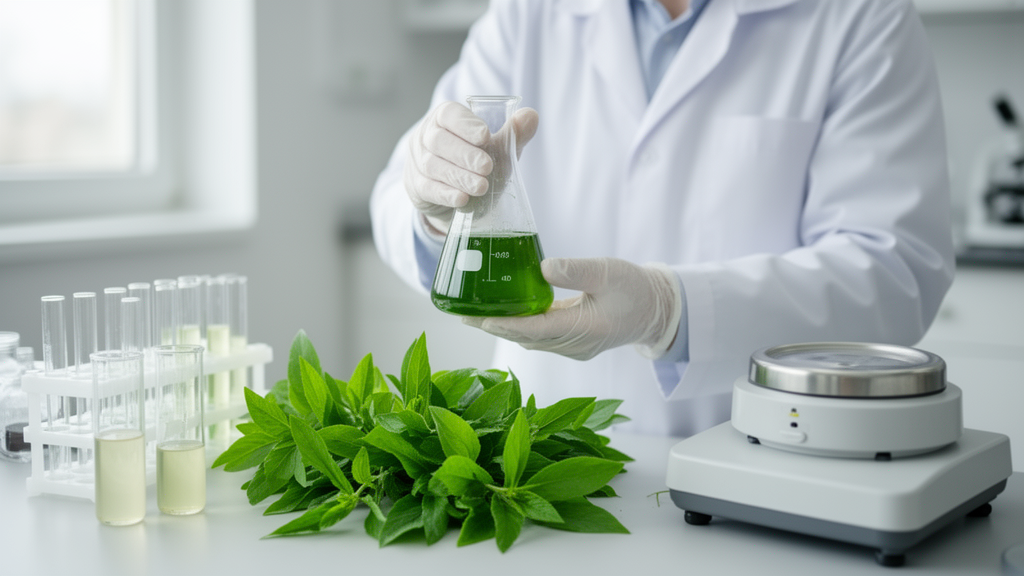
Leaf extracts of Jatropha curcas, a plant widely used in Nigerian traditional medicine and commonly taken by people living with HIV, can inhibit two of the most important drug-metabolizing enzymes in the liver, according to a new laboratory study published in Clinical Phytoscience.
The finding matters because CYP1A2 and CYP3A4 sit at the heart of human drug metabolism. The liver is the primary site of drug metabolism, where cytochrome P450 enzymes convert drugs into metabolites through oxidation, hydrolysis and reduction reactions. The human CYP family comprises 57 proteins, of which roughly twelve are involved in xenobiotic metabolism. Historically, five isoforms — CYP1A2, 2C9, 2C19, 2D6 and 3A4 — have accounted for approximately 90 percent of phase I drug metabolism reactions. CYP1A2 alone accounts for 13 to 15 percent of all hepatic CYP enzymes and catalyzes the clearance of about 9 percent of conventional drugs, while CYP3A4 handles the metabolism of roughly 33 percent of them.
Jatropha curcas, known in Nigeria as physic nut and by the local names “igi lapalapa” in Yoruba and “Bini da zugu” in Hausa, belongs to the Euphorbiaceae family, a tribe containing approximately 170 recognized species. The plant is also frequently used to treat HIV infection and associated opportunistic infections, which is precisely why the authors set out to examine whether it could interfere with antiretroviral therapy. Patients on highly active antiretroviral therapy often take multiple drugs, and any compound that slows the enzymes clearing those drugs could raise their plasma concentrations and raise the risk of herb-drug interactions.
To prepare the extracts, the team collected fresh leaves from a residential property in Malete, in Kwara State, Nigeria, and had them identified and authenticated by a botanist at the University of Ilorin herbarium, where the specimen was filed under reference number UILH001/1030/2024. The dried, pulverized leaves were extracted exhaustively with distilled water and with analytical grade ethanol, using mechanical agitation designed to mimic traditional plant preparation. The aqueous extract was concentrated at 40 degrees Celsius, freeze-dried and labelled AJC, while the ethanol extract was evaporated to dryness at 45 degrees Celsius and labelled EJC. Preliminary phytochemical screening revealed the presence of flavonoids, alkaloids, phenols, saponins, triterpenoids, tannins and coumarins in the extracts, with glycosides undetectable in the aqueous preparation. Gas chromatography–mass spectrometry was used to identify individual compounds.
The enzyme assays were carried out in rat liver microsomes pooled from the livers of six male rats weighing at least 200 grams each. The animals were acclimatized for seven days, handled under an ethical clearance number UERC/ASN/2021/2292, and anesthetized with ketamine before their livers were excised, perfused with ice-cold phosphate buffered saline, homogenized in sucrose and Tris buffer, and processed through a series of differential centrifugation steps to yield a pink microsomal pellet, which was stored at minus 80 degrees Celsius in potassium phosphate buffer with 20 percent glycerol. Microsomal protein content was determined by the biuret method.
CYP1A2 activity was measured using the phenacetin O-demethylation reaction, in which the enzyme converts the probe substrate phenacetin into the metabolite paracetamol, quantified by high-performance liquid chromatography with ultraviolet detection. Reaction mixtures contained 100 micromolar phenacetin, potassium phosphate buffer, magnesium chloride, microsomal protein at 1 milligram per milliliter, and either extract or the positive control ciprofloxacin, a known CYP1A2 inhibitor. After a five-minute preincubation at 37 degrees Celsius, the reaction was started with NADPH and run for 15 minutes before being terminated with cold methanol and an internal caffeine standard. CYP3A4 activity was assessed through the erythromycin N-demethylation reaction, with ketoconazole as the positive control, and the formaldehyde produced was quantified colorimetrically at 410 nanometers using the Nash reagent.
Both positive controls significantly inhibited their target enzymes compared with control reactions, with p values below 0.0001, confirming that the assay system was performing as expected. The extracts were then tested across a concentration range of 7.81 to 1000 micrograms per milliliter to generate inhibition curves, and half-maximal inhibitory concentration values were calculated by nonlinear regression in GraphPad Prism. According to the results section of the paper, the aqueous extract inhibited CYP1A2 with an IC50 of 42.51 plus or minus 3.39 micrograms per milliliter and the ethanol extract with an IC50 of 54.00 plus or minus 1.77 micrograms per milliliter. For CYP3A4, the aqueous extract yielded an IC50 of 79.11 plus or minus 8.22 micrograms per milliliter and the ethanol extract 11.67 plus or minus 3.68 micrograms per milliliter. The authors note that the abstract of the paper reports somewhat different values for the same comparisons — 90.24 and 83.36 micrograms per milliliter for CYP1A2, and 194 and 33.96 micrograms per milliliter for CYP3A4 — a discrepancy within the published text itself. Under the study’s classification, in which IC50 values below 10 micrograms per milliliter indicate potent inhibition, 10 to 100 micrograms per milliliter moderate inhibition, and above 100 micrograms per milliliter weak inhibition, both extracts showed moderate inhibition of both enzymes in the main results.
The team then attempted to translate these in vitro numbers into an estimate of in vivo risk. Using the local daily dose of 400 milligrams of powdered Jatropha curcas taken by patients, the measured extraction yields — 1.04 percent for the aqueous extract and 3.06 percent for the ethanol extract — and an assumed human plasma volume of 3 liters, they calculated estimated bioavailable concentrations of 14.46 micrograms per milliliter for the aqueous extract and 124.85 micrograms per milliliter for the ethanol extract. Their prediction rule holds that if the bioavailable concentration is at least twice the in vitro IC50, enough extract could reach the systemic circulation to cause a real herb-drug interaction. By this criterion, the ethanol extract was predicted to be likely to cause in vivo inhibition of both CYP1A2 and CYP3A4, while the aqueous extract’s predicted risk profile was more limited.
The clinical implications center on drugs cleared by these two enzymes. The authors point out that CYP1A2 and CYP3A4 contribute significantly to the clearance of acetaminophen, phenacetin, caffeine, erythromycin and dolutegravir, among others. The authors draw parallels with xanthotoxin, a furanocoumarin known to inhibit CYP1A2 and alter the pharmacokinetics of tacrine, and with reports that Moringa oleifera stem bark moderately inhibits CYP1A2 and other drug-metabolizing enzymes.
The authors are careful to state the limits of what this study can show. All experiments were conducted in rat liver microsomes, an in vitro system, and the paper concludes that further studies are required to determine the effect of this CYP inhibition on the pharmacokinetics of specific drugs in vivo. Nevertheless, the core message stands on the direct experimental data: both aqueous and ethanol leaf extracts of Jatropha curcas inhibit CYP1A2 and CYP3A4 activity in a concentration-dependent manner at levels the authors classify as moderate, and when the plant is used alongside conventional drugs metabolized by these enzymes, the possible risk of herb-drug interactions should be considered. For the many patients in Nigeria and elsewhere who combine this traditional remedy with prescription medicines, the study provides a concrete biochemical reason for caution and a starting point for the human pharmacokinetic studies that will be needed to confirm the risk.
Subject of Research: Inhibition of cytochrome P450 enzymes CYP1A2 and CYP3A4 by Jatropha curcas leaf extracts in rat liver microsomes
Article Title: Inhibitory effect of Jatropha curcas aqueous and ethanol leaf extracts on cytochrome P450 enzyme activity in rat liver microsomes
Article References: Yusuf, O. A., Ologe, M. O., Atolani, O., Bello, M. K., & Tella, A. C. (2026). Inhibitory effect of Jatropha curcas aqueous and ethanol leaf extracts on cytochrome P450 enzyme activity in rat liver microsomes. Clinical Phytoscience, 12(1), Article 29. https://doi.org/10.1186/s40816-026-00444-2
Image Credits: AI Generated
DOI: 10.1186/s40816-026-00444-2
Keywords: Jatropha curcas, cytochrome P450, CYP1A2, CYP3A4, herb-drug interactions, rat liver microsomes, drug metabolism, medicinal plants, HIV, antiretroviral therapy, phytochemistry, Nigeria
News Source: Ophelia Keating. (October 28, 2026). Jatropha curcas Leaf Extracts Inhibit Key Drug-Metabolizing Enzymes in Rat Liver Microsomes. Scienmag.