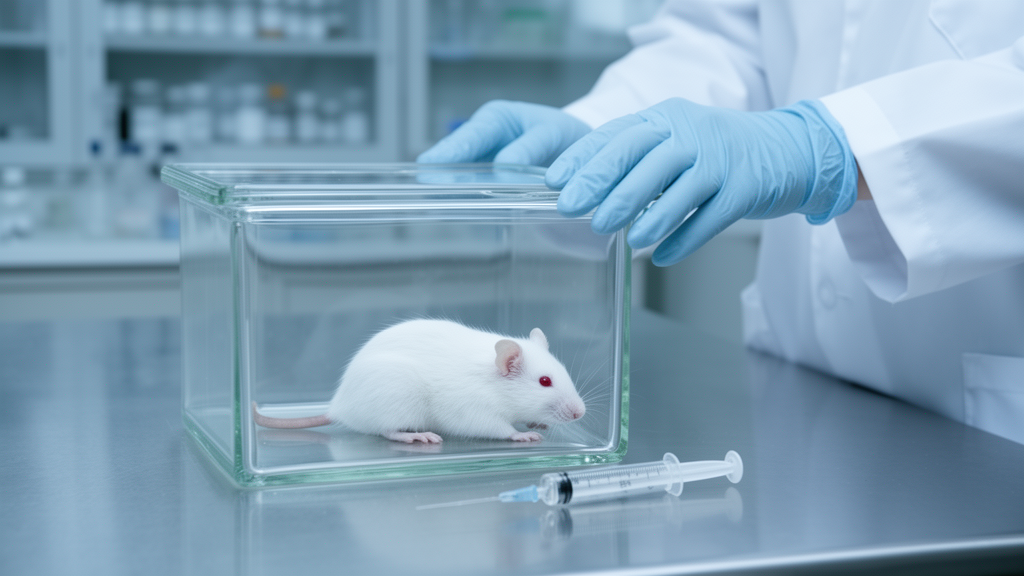
The finding points to a drug already in clinical use as a candidate preventive measure against a hazard for which no proactive protection currently exists. The team, based at institutions including the PLA Navy 971 Hospital in Qingdao and Naval Medical University in Shanghai, exposed male mice to 100% oxygen at 5 atmospheres absolute (ATA) for 30 minutes, a condition used to trigger central nervous system oxygen toxicity in animal models. Before the exposure, mice received oral doses of istradefylline ranging from 0.5 to 20 mg/kg.
Compared with vehicle-treated controls, the treated animals showed a significantly longer latency to seizure onset and markedly reduced seizure intensity and frequency across the exposure window. The work builds on the group's earlier studies implicating adenosine A2A receptor signaling in oxygen toxicity. Istradefylline blocks this receptor, and the new experiments were designed to test whether that blockade could protect the brain before toxic exposure begins rather than treating symptoms afterward.
The authors emphasize that effective proactive preventive and therapeutic measures for central nervous system oxygen toxicity are currently lacking. To understand the mechanism, the researchers performed targeted metabolomics on the cerebral cortex. Hyperbaric oxygen exposure decreased the inhibitory neurotransmitter GABA and increased the excitatory neurotransmitter glutamate, a shift that would be expected to push neural circuits toward hyperexcitability.
Istradefylline treatment increased cortical GABA without significantly reducing cortical glutamate, suggesting that part of its protective effect comes from restoring the balance between neuronal braking and acceleration. Separate ELISA measurements in the hippocampus found lower glutamate levels in istradefylline-treated mice than in hyperbaric oxygen-exposed vehicle controls, although reductions in the other brain regions examined did not reach statistical significance. The authors are careful to note these regional differences, presenting the hippocampal result as a specific finding rather than a brain-wide pattern.
In the striatum, the drug was associated with a broader signaling shift. Treated animals showed lower cAMP concentrations, reduced immunoreactive PKA protein, and decreased phosphorylated CREB, indicating dampened activity along the cAMP–PKA–CREB pathway. The team also observed reduced phosphorylation of the AMPA receptor subunit GluA1 at Ser845, which would be expected to weaken excitatory synaptic transmission, together with increased phosphorylation of the GABA_A receptor β3 subunit at Ser408/409, changes consistent with enhanced inhibitory signaling.
Oxidative stress and inflammation also showed measurable changes. In the cortex, istradefylline treatment was associated with lower levels of malondialdehyde, a marker of lipid peroxidation, and increased catalase activity, an antioxidant enzyme, while glutathione peroxidase activity decreased further. In the striatum, mRNA levels of the inflammatory cytokines IL-1β, IL-6, and TNF-α were reduced, indicating a blunted inflammatory-gene response in that region.
Taken together, the authors argue, these results support a prophylactic effect of istradefylline against hyperbaric oxygen-induced seizures in male mice and identify a coordinated set of changes in neurotransmitter levels, receptor phosphorylation, intracellular signaling markers, oxidative-stress measures, and inflammatory-gene expression. They describe the findings as a theoretical basis for developing proactive prevention and treatment strategies for central nervous system oxygen toxicity with potential clinical application. The study's limitations are significant.
All experiments were conducted in male mice, and seizure latency and severity were measured during a single controlled hyperbaric exposure. The authors also note that the claims in the paper represent those of the authors alone and do not necessarily reflect those of their affiliated organizations or the publisher. If the mechanistic findings hold up in further studies, adenosine A2A receptor antagonism could be examined as a strategy for protecting the brain before oxygen toxicity develops, rather than managing convulsions once they begin.
Subject of Research: Prevention of central nervous system oxygen toxicity in mice with the adenosine A2A receptor antagonist istradefylline
Article Title: Istradefylline prevents central nervous system oxygen toxicity
Article References: Du, Z., Li, R., Jiang, Y., Zhang, Y., Zheng, C., & Li, R. (2026). Istradefylline prevents central nervous system oxygen toxicity. Frontiers in Molecular Neuroscience, 19, Article 1922859. https://doi.org/10.3389/fnmol.2026.1922859
Image Credits: AI Generated
DOI: 10.3389/fnmol.2026.1922859
Keywords: istradefylline, oxygen toxicity, hyperbaric oxygen, seizures, adenosine A2A receptor, GABA, glutamate, oxidative stress, neuroinflammation, diving medicine, preclinical study, cAMP signaling
News Source: Ophelia Keating. (October 23, 2026). Istradefylline Blocks Oxygen-Induced Seizures in Mice, Study Finds. Scienmag.