• HOME
  • NEWS
  • EXPLORE
    • CAREER
      • Companies
      • Jobs
    • EVENTS
    • iGEM
      • News
      • Team
    • PHOTOS
    • VIDEO
    • WIKI
  • BLOG
  • COMMUNITY
    • FACEBOOK
    • INSTAGRAM
    • TWITTER
Thursday, May 14, 2026
BIOENGINEER.ORG
No Result
View All Result
  • Login
  • HOME
  • NEWS
  • EXPLORE
    • CAREER
      • Companies
      • Jobs
        • Lecturer
        • PhD Studentship
        • Postdoc
        • Research Assistant
    • EVENTS
    • iGEM
      • News
      • Team
    • PHOTOS
    • VIDEO
    • WIKI
  • BLOG
  • COMMUNITY
    • FACEBOOK
    • INSTAGRAM
    • TWITTER
  • HOME
  • NEWS
  • EXPLORE
    • CAREER
      • Companies
      • Jobs
        • Lecturer
        • PhD Studentship
        • Postdoc
        • Research Assistant
    • EVENTS
    • iGEM
      • News
      • Team
    • PHOTOS
    • VIDEO
    • WIKI
  • BLOG
  • COMMUNITY
    • FACEBOOK
    • INSTAGRAM
    • TWITTER
No Result
View All Result
Bioengineer.org
No Result
View All Result
Home NEWS Science News Biology

Is planet Earth young or old?

Bioengineer by Bioengineer
April 28, 2020
in Biology
Reading Time: 2 mins read
0
IMAGE
Share on FacebookShare on TwitterShare on LinkedinShare on RedditShare on Telegram

IMAGE

Credit: World Scientific

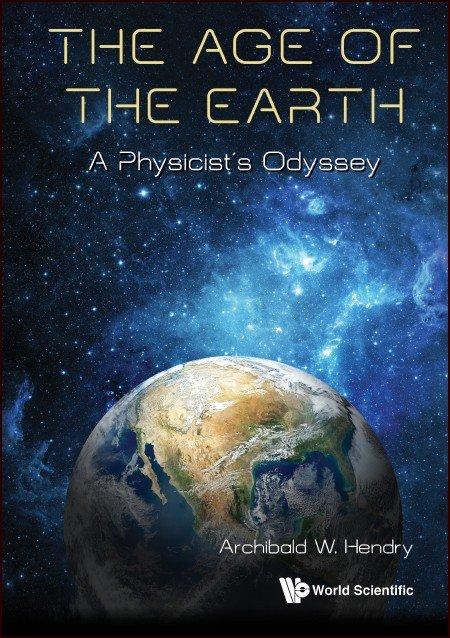
The Age of the Earth — A Physicist’s Odyssey spells out how the age of our planet has been determined over the years. What do you want to know? The result? Two diametrically opposite answers. They can’t both be right.

The first major attempt at calculating how old the Earth is, was done in the 17th century using biblical sources. We follow the Bible’s genealogical records explicitly, step by step, to show how the crucial date of Creation was determined to be 4004 BC, which makes the Earth about 6000 years old.

Next, we investigate the major scientific efforts made over the succeeding years – by interpreting the geological record of the rocks (James Hutton and Charles Darwin), by calculating how long it takes for an initially hot Earth to cool down (Lord Kelvin), and finally by using the properties of radioactive materials. Final answer? About 4.5 billion years.

The successive chapters provide all the details of each approach in a way that is accessible to a diverse readership. You can trace each step taken, for each line of investigation.

So, is the planet Earth young or old? You decide.

The Age of the Earth – A Physicist’s Odyssey,

This book retails for US$28 / £25 (paperback) and US$58 / £50 (hardback). To order or know more about the book, visit https://www.worldscientific.com/worldscibooks/10.1142/11260.

###

About the Author

Archibald Hendry is an Emeritus Professor of Physics. He has taught physics at all levels (from freshmen to advanced graduate), receiving numerous teaching awards.

Born in Scotland, Hendry received first class honours in mathematics and natural philosophy, and a doctorate at the University of Glasgow. Most of his career has been in the US, his research area being primarily quark physics and high energy collisions.

He captained the first university soccer team at UCSD, and subsequently coached boys’ and girls’ soccer and Little League baseball.

About World Scientific Publishing Co.

World Scientific Publishing is a leading international independent publisher of books and journals for the scholarly, research and professional communities. World Scientific collaborates with prestigious organisations like the Nobel Foundation and US National Academies Press to bring high quality academic and professional content to researchers and academics worldwide. The company publishes about 600 books and over 140 journals in various fields annually. To find out more about World Scientific, please visit http://www.worldscientific.com.

For more information, contact Andreea at [email protected].

Media Contact
Andreea Zaharia
[email protected]

Original Source

https://www.worldscientific.com/page/pressroom/2020-04-03-01

Tags: ArchaeologyAstrophysicsAtmospheric ScienceEarth ScienceEvolutionGeology/SoilPlate Tectonics
Share13Tweet8Share2ShareShareShare2

Related Posts

“‘Last Titan’: Discovery of Southeast Asia’s Largest Dinosaur Unveiled” — Biology

“‘Last Titan’: Discovery of Southeast Asia’s Largest Dinosaur Unveiled”

May 14, 2026
Study Offers In-Depth Analysis of Changes in Toxin-Producing Phytoplankton Populations — Biology

Study Offers In-Depth Analysis of Changes in Toxin-Producing Phytoplankton Populations

May 14, 2026

UMass Chan Scientists Pioneer Gene Editing Technology That Rewrites Entire Genome Chapters

May 13, 2026

Scientists Observe Rice Plants Capturing and Eliminating Fall Armyworm Caterpillars

May 13, 2026
Please login to join discussion

POPULAR NEWS

  • Research Indicates Potential Connection Between Prenatal Medication Exposure and Elevated Autism Risk

    842 shares
    Share 337 Tweet 211
  • New Study Reveals Plants Can Detect the Sound of Rain

    729 shares
    Share 291 Tweet 182
  • Salmonella Haem Blocks Macrophages, Boosts Infection

    62 shares
    Share 25 Tweet 16
  • Breastmilk Balances E. coli and Beneficial Bacteria in Infant Gut Microbiomes

    57 shares
    Share 23 Tweet 14

About

We bring you the latest biotechnology news from best research centers and universities around the world. Check our website.

Follow us

Recent News

ALS Progresses Through a Domino-Like Chain Reaction Initiated in Nerve Cells

Liquid Metal Nano-Gyroid Enables Ultra-Resilient Electronics

Intense Precipitation Reduces Terrestrial Water Storage

Subscribe to Blog via Email

Enter your email address to subscribe to this blog and receive notifications of new posts by email.

Join 82 other subscribers
  • Contact Us

Bioengineer.org © Copyright 2023 All Rights Reserved.

Welcome Back!

Login to your account below

Forgotten Password?

Retrieve your password

Please enter your username or email address to reset your password.

Log In
No Result
View All Result
  • Homepages
    • Home Page 1
    • Home Page 2
  • News
  • National
  • Business
  • Health
  • Lifestyle
  • Science

Bioengineer.org © Copyright 2023 All Rights Reserved.