• HOME
  • NEWS
  • EXPLORE
    • CAREER
      • Companies
      • Jobs
    • EVENTS
    • iGEM
      • News
      • Team
    • PHOTOS
    • VIDEO
    • WIKI
  • BLOG
  • COMMUNITY
    • FACEBOOK
    • INSTAGRAM
    • TWITTER
Thursday, November 19, 2026
BIOENGINEER.ORG
No Result
View All Result
  • Login
  • HOME
  • NEWS
  • EXPLORE
    • CAREER
      • Companies
      • Jobs
        • Lecturer
        • PhD Studentship
        • Postdoc
        • Research Assistant
    • EVENTS
    • iGEM
      • News
      • Team
    • PHOTOS
    • VIDEO
    • WIKI
  • BLOG
  • COMMUNITY
    • FACEBOOK
    • INSTAGRAM
    • TWITTER
No Result
View All Result
Bioengineer.org
No Result
View All Result
Home NEWS Science News Agriculture

Intercropping Areca Trees With Tea Plants Reshapes Soil Microbes and Flavor

by
November 16, 2026
in Agriculture
Reading Time: 2 mins read
0
Intercropping Areca Trees With Tea Plants Reshapes Soil Microbes and Flavor

Intercropping Areca Trees With Tea Plants Reshapes Soil Microbes and Flavor

Share on FacebookShare on TwitterShare on LinkedinShare on RedditShare on Telegram

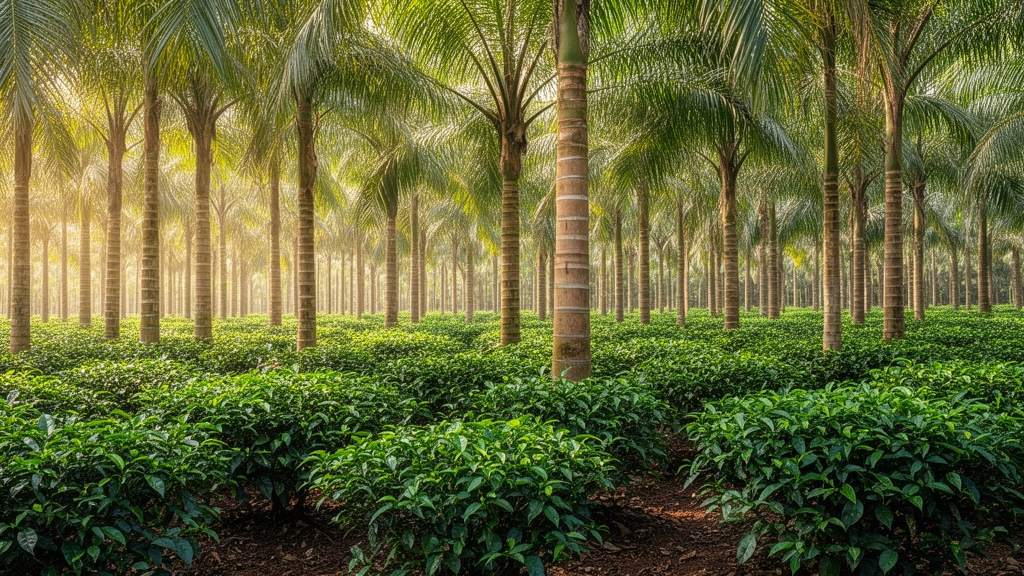
A research study published in npj Science of Food reports that intercropping Hainan Dayezhong tea plants with areca trees alters the plantation microenvironment and reshapes the flavor profile of white tea. Led by Yunfei Hu, Liangyu Wu, and colleagues, the investigation examined the specific physiological and environmental consequences of introducing areca trees into tea fields, utilizing monocultured tea plants as an experimental control. The study evaluated how this mixed-crop system influences the surrounding microenvironment, belowground soil microbial communities, and the resulting biochemical development of white tea.

Environmental assessments conducted across the plantations demonstrated that the intercropping system significantly altered physical and biological conditions on site. In particular, planting areca trees alongside the tea crops reduced solar irradiation within the tea plantation compared to the control plots. In addition to attenuating solar irradiation, the intercropping model significantly enriched beneficial soil microbial taxa in the plantation soil, specifically fostering populations belonging to the microbial groups Acidobacteriota and Actinomycetota.

The researchers determined that these shifts in soil microbial composition enhanced overall nutrient cycling and significantly improved key soil fertility indices. Specifically, the intercropped plantation soil demonstrated marked improvements in microbial biomass nitrogen, microbial biomass carbon, and soluble nitrogen. By stimulating nutrient cycling and elevating these measured fertility indices, the areca-tea intercropping model substantially modified the nutritional conditions of the plantation soil relative to the monoculture control system.

These alterations in the plantation microenvironment and soil fertility indices corresponded with pronounced biochemical changes within the tea plants. Analyses of fresh tea shoots revealed that the intercropping model significantly increased the contents of glutamic acid, glutamine, aspartic acid, theanine, and beta-ionone. At the same time, the intercropping system concurrently reduced catechin concentrations in the fresh shoots when compared directly against shoots harvested from the monocultured control plants.

The resulting biochemical modifications contributed directly to a distinctive flavor profile in the harvested tea. Higher levels of theanine, glutamic acid, glutamine, and aspartic acid, coupled with reduced catechin concentrations, resulted in an enhanced umami taste and reduced astringency compared to tea derived from monoculture systems. Concurrently, the elevated content of beta-ionone conferred an enhanced floral aroma. Together, the findings demonstrate that areca-tea intercropping improves both the plantation microenvironment and tea quality, offering a theoretical basis for sustainable, high-quality tea production in land-limited regions.

Subject of Research: Effects of areca-tea intercropping on plantation microenvironment, soil microbiota, and white tea flavor

Article Title: Intercropping with Areca catechu reshapes flavor of Hainan Dayezhong white tea via microenvironment modulation

Article References: Hu, Y., Huang, J., Zhang, Q., Fang, Q., Pan, L., & Wu, L. (2026). Intercropping with Areca catechu reshapes flavor of Hainan Dayezhong white tea via microenvironment modulation. npj Science of Food. https://doi.org/10.1038/s41538-026-01154-2

Image Credits: AI Generated

DOI: 10.1038/s41538-026-01154-2

Keywords: Areca catechu, Hainan Dayezhong, white tea, intercropping, monoculture, microenvironment, solar irradiation, Acidobacteriota, Actinomycetota, soil microbiome, nutrient cycling, microbial biomass nitrogen, microbial biomass carbon, soluble nitrogen, theanine, glutamic acid, glutamine, aspartic acid, beta-ionone, catechins

News Source: Morgan Morrow. (November 16, 2026). Intercropping Areca Trees With Tea Plants Reshapes Soil Microbes and Flavor. Scienmag.


Tags: AcidobacteriotaActinomycetotaAreca catechuaspartic acidbeta-iononecatechinsglutamic acidglutamineHainan Dayezhongintercroppingmicrobial biomass carbonmicrobial biomass nitrogenmicroenvironmentmonoculturenutrient cyclingsoil microbiomesolar irradiationsoluble nitrogentheaninewhite tea
Share12Tweet7Share2ShareShareShare1

Related Posts

Pre-Fermentation Seed Tannin Size Reshapes Phenolic Chemistry and Astringency in Marselan Wine

Pre-Fermentation Seed Tannin Size Reshapes Phenolic Chemistry and Astringency in Marselan Wine

November 19, 2026
Selected Digestate and Sapropel Substrates Support Early Cucumber Growth in Pot Trials

Selected Digestate and Sapropel Substrates Support Early Cucumber Growth in Pot Trials

November 19, 2026

Prickly Pear Cacti Stems Produce Harvestable Electricity for Farm Sensors

November 19, 2026

Ethylene Promotes Sweet Cherry Fruit Softening by Downregulating Transcription Factor PavSPL7

November 19, 2026

POPULAR NEWS

  • Review Outlines Extraction and Health Benefits of Blackcurrant Polysaccharides

    Review Outlines Extraction and Health Benefits of Blackcurrant Polysaccharides

    29 shares
    Share 12 Tweet 7
  • Canadian Focus Groups Reveal Core Lessons for Wildlife One Health Integration

    29 shares
    Share 12 Tweet 7
  • Bevacizumab Biosimilar Shows Similar Blood Clot Risk to Reference Drug in Cancer Study

    29 shares
    Share 12 Tweet 7
  • Biotelemetry Array Identifies Wild Murray Cod Nesting Sites in Turbid Waters

    29 shares
    Share 12 Tweet 7

About

We bring you the latest biotechnology news from best research centers and universities around the world. Check our website.

Follow us

Recent News

Pre-Fermentation Seed Tannin Size Reshapes Phenolic Chemistry and Astringency in Marselan Wine

Case Details Early Duodenal Perforation During Bevacizumab Therapy for Ovarian Cancer

Critical Review Evaluates Anti-Tuberculosis Potential and Evidence Gaps in Traditional Ginger Species

Subscribe to Blog via Email

Enter your email address to subscribe to this blog and receive notifications of new posts by email.

Join 90 other subscribers
  • Contact Us

Bioengineer.org © Copyright 2023 All Rights Reserved.

Welcome Back!

Login to your account below

Forgotten Password?

Retrieve your password

Please enter your username or email address to reset your password.

Log In
No Result
View All Result
  • Homepages
    • Home Page 1
    • Home Page 2
  • News
  • National
  • Business
  • Health
  • Lifestyle
  • Science

Bioengineer.org © Copyright 2023 All Rights Reserved.