An integrative taxonomic review of the freshwater shrimp genus Caridina in southern Thailand identified five species new to science and brought the region’s documented diversity to 21 species. The animal-taxonomy study combined detailed morphological examination with molecular phylogenetic analyses of mitochondrial DNA, finding 18 species-level clades among the sampled shrimp, including 13 previously described species and five undescribed lineages.
The newly described species are Caridina kuehnei, C. nangroma, C. srivijaya, C. takkola and C. tambralinga. Each showed morphological differences from its congeners and was distinguishable as a supported lineage in the phylogenetic analyses. The new species are formally documented alongside taxonomic descriptions, diagnoses, specimen records, colour information and DNA sequences generated by the study.
Freshwater shrimps were collected with dip nets near the banks of rivers and streams across southern Thailand, including Phetchaburi and Prachuab Khiri Khan provinces. Live colour was recorded before selected animals were photographed and preserved for examination. Morphological measurements were made under microscopes, principally from ovigerous females, while male characters were taken from the first and second pleopods. Voucher specimens were deposited at the Mahidol University Museum of Natural History in Salaya, Thailand, and the Museum für Naturkunde in Berlin.
For the molecular work, researchers extracted DNA from abdominal muscle tissue and amplified approximately 590 base pairs of the mitochondrial 16S ribosomal RNA gene and 861 base pairs of the mitochondrial cytochrome c oxidase subunit I gene. The phylogenetic dataset contained 208 sequences representing 46 Caridina species and seven outgroup sequences. Of these, 131 sequences represented newly sequenced individuals in the study and 77 came from GenBank. Maximum-likelihood and Bayesian analyses produced broadly concordant trees, with species groups defined only where molecular support was accompanied by congruent morphological characters.
Most species-level clades had high support, with maximum-likelihood bootstrap values of 85–100% and Bayesian posterior probabilities of 0.99–1.00. One notable exception was C. lanceifrons, for which support was moderate, at 51% bootstrap and 0.86 posterior probability. The authors stated that this result warrants further phylogenetic investigation using additional genes and a wider geographic sample. The newly sequenced topotypes of C. thai were recovered with full nodal support.
The review also revised the treatment of several named taxa and species groups. The authors proposed excluding C. turipi from the C. typus species group because it possesses dorsal rostral teeth, unlike the other members, while noting that its taxonomic position required further study. They retained the gracilirostris-group taxa within Caridina rather than transferring them to the newly proposed genus Gracidina, arguing that the broader genus still requires a comprehensive systematic revision based on comparative morphology and phylogenomic evidence.
Embryo measurements also revealed substantial interspecific variation among the southern Thai Caridina. Analyses separated the examined species into three broad statistical groups. The first carried numerous small embryos, measuring 0.35–0.52 by 0.20–0.34 mm and ranging from 195 to 1,483 embryos per female. The second carried intermediate numbers of medium-sized embryos, while the third generally carried fewer, larger embryos. Embryo number differed significantly among species, and Group I had significantly more embryos than Groups II and III after post-hoc comparison; the lower counts of Groups II and III did not differ significantly from one another.
Across the species examined, embryo size showed an inverse association with the number of embryos carried: species producing larger individual embryos tended to produce fewer embryos. This pattern was observed in the study data, but the analysis did not establish that embryo size causes changes in reproductive output. Other limitations were also evident. The researchers did not collect C. gracilirostris or C. thai at the previously reported southern Thai localities they revisited, and the molecular placement of C. lanceifrons remained weakly supported. The regional inventory may therefore remain incomplete despite the addition of five species and the first broadly integrative assessment of Caridina in southern Thailand.
Subject of Research: Taxonomic and phylogenetic review of Caridina freshwater shrimp diversity in southern Thailand
Article Title: A taxonomic review of the freshwater shrimp genus Caridina H. Milne Edwards, 1837 ( Decapoda , Atyidae ) from southern Thailand, with descriptions of five new species
Article References: Macharoenboon, K., von Rintelen, T., Klotz, W., Sutcharit, C., Siriwut, W., & Jeratthitikul, E. (2026). A taxonomic review of the freshwater shrimp genus Caridina H. Milne Edwards, 1837 (Decapoda, Atyidae) from southern Thailand, with descriptions of five new species. ZooKeys, 1292, 1-126. https://doi.org/10.3897/zookeys.1292.193168
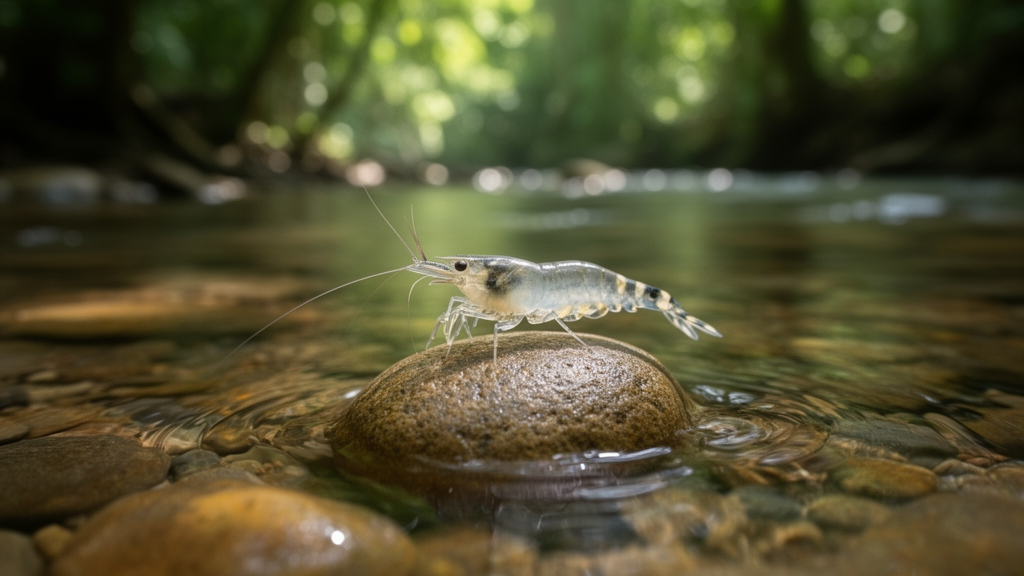
Image Credits: AI Generated
DOI: 10.3897/zookeys.1292.193168
Keywords: Caridina, freshwater shrimp, integrative taxonomy, species discovery, southern Thailand, molecular phylogeny, morphology, Atyidae, embryo size, taxonomic, review, freshwater
News Source: Drew Townsend. (October 20, 2026). Integrative taxonomic review identifies five new freshwater shrimp species in southern Thailand. Scienmag.