• HOME
  • NEWS
  • EXPLORE
    • CAREER
      • Companies
      • Jobs
    • EVENTS
    • iGEM
      • News
      • Team
    • PHOTOS
    • VIDEO
    • WIKI
  • BLOG
  • COMMUNITY
    • FACEBOOK
    • INSTAGRAM
    • TWITTER
Thursday, August 13, 2026
BIOENGINEER.ORG
No Result
View All Result
  • Login
  • HOME
  • NEWS
  • EXPLORE
    • CAREER
      • Companies
      • Jobs
        • Lecturer
        • PhD Studentship
        • Postdoc
        • Research Assistant
    • EVENTS
    • iGEM
      • News
      • Team
    • PHOTOS
    • VIDEO
    • WIKI
  • BLOG
  • COMMUNITY
    • FACEBOOK
    • INSTAGRAM
    • TWITTER
  • HOME
  • NEWS
  • EXPLORE
    • CAREER
      • Companies
      • Jobs
        • Lecturer
        • PhD Studentship
        • Postdoc
        • Research Assistant
    • EVENTS
    • iGEM
      • News
      • Team
    • PHOTOS
    • VIDEO
    • WIKI
  • BLOG
  • COMMUNITY
    • FACEBOOK
    • INSTAGRAM
    • TWITTER
No Result
View All Result
Bioengineer.org
No Result
View All Result
Home NEWS Science News Chemistry

Insights in the search for new antibiotics

Bioengineer by Bioengineer
November 19, 2020
in Chemistry
Reading Time: 2 mins read
0
IMAGE
Share on FacebookShare on TwitterShare on LinkedinShare on RedditShare on Telegram

IMAGE

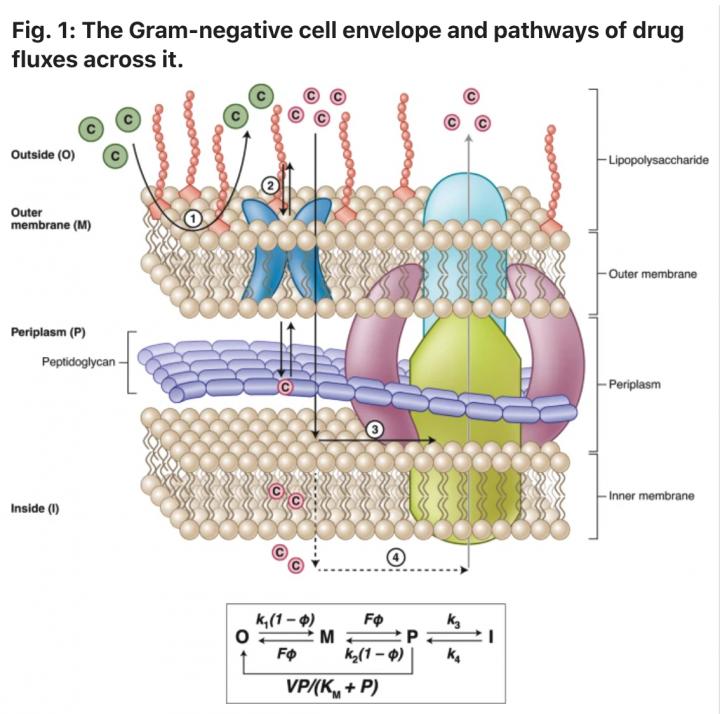
Credit: Zhao, S., Adamiak, J.W., Bonifay, V. et al. Defining new chemical space for drug penetration into Gram-negative bacteria. Nat Chem Biol 16, 1293-1302 (2020). https://doi.org/10.1038/s41589-020-00674-6…

A collaborative research team from the University of Oklahoma, the Memorial Sloan Kettering Cancer Center
and Merck & Co. published an opinion article in the journal, Nature Chemical Biology, that addresses the gap in the discovery of new antibiotics.

“The rapid spread of antibiotic-resistant bacteria in clinics challenges our modern medicine and the traditional approaches to antibiotic discovery fail to generate new drugs needed for treatment of antibiotic resistant infections,” Zgurskaya said. “The current COVID-19 pandemic further magnifies this problem because patients in intensive care units are particularly vulnerable to such infections … (our) team is working on developing new tools to guide the discovery and optimization of new antibacterial agents.”

Zgurskaya adds that the increasing frequency of antibiotic resistance has created a significant health care challenge and will progressively worsen without innovative solutions.

“In particular, Gram-negative pathogens present both biological and chemical challenges that hinder the discovery of new antibacterial drugs,” Zgurskaya said. “As a result of these challenges, intensive screening campaigns have led to few successes, highlighting the need for new approaches to identify regions of chemical space that are specifically relevant to antibacterial drug discovery.”

In the article, the research team provides an overview of emerging insights into this problem and outline a general approach for researchers and scientists to address it.

“The overall goal is to develop robust cheminformatic tools to predict Gram-negative permeation and efflux, which can then be used to guide medicinal chemistry campaigns and the design of antibacterial discovery libraries,” Zgurskaya said.

###

The research was supported with funding from the U.S. Department of Health and Human Services and the National Institutes of Health. The article, Defining new chemical space for drug penetration into Gram-negative bacteria, is available in the November 2020 issue of the academic journal, Nature Chemical Biology.

Zhao, S., Adamiak, J.W., Bonifay, V. et al. Defining new chemical space for drug penetration into Gram-negative bacteria. Nat Chem Biol 16, 1293-1302 (2020).
https://doi.org/10.1038/s41589-020-00674-6

Media Contact
Helen Zgurskaya
[email protected]

Original Source

https://bit.ly/NCBantibiotics

Related Journal Article

http://dx.doi.org/10.1038/s41589-020-00674-6

Tags: BiochemistryMedicine/HealthPharmaceutical ChemistryPharmaceutical SciencePharmaceutical Sciences
Share12Tweet8Share2ShareShareShare2

Related Posts

Physics-Informed Networks for Data Generation and Noise Removal in Distributed Acoustic Sensing

August 13, 2026
Gluons Carry the Proton’s Baryon Number, Study Finds

Gluons Carry the Proton’s Baryon Number, Study Finds

August 13, 2026

Laboratory differences may mislead scientific AI models, researchers warn

August 13, 2026

Physics-guided AI creates low-noise amplifiers using 62% less power than expert designs

August 13, 2026
Please login to join discussion

POPULAR NEWS

  • Next-Generation Chips Advance Autonomous Driving Technology

    29 shares
    Share 12 Tweet 7
  • Harmonizing Personalized Cancer Vaccines to Advance Cancer Immunotherapy

    29 shares
    Share 12 Tweet 7
  • Astrocytes Directly Control Brain Circuits That Consolidate Memories

    29 shares
    Share 12 Tweet 7
  • Preoperative Chemo-Immunotherapy Outperforms Immunotherapy Alone in Head and Neck Cancer Patients

    29 shares
    Share 12 Tweet 7

About

We bring you the latest biotechnology news from best research centers and universities around the world. Check our website.

Follow us

Recent News

Next-Generation Chips Advance Autonomous Driving Technology

Harmonizing Personalized Cancer Vaccines to Advance Cancer Immunotherapy

Astrocytes Directly Control Brain Circuits That Consolidate Memories

Subscribe to Blog via Email

Enter your email address to subscribe to this blog and receive notifications of new posts by email.

Join 85 other subscribers
  • Contact Us

Bioengineer.org © Copyright 2023 All Rights Reserved.

Welcome Back!

Login to your account below

Forgotten Password?

Retrieve your password

Please enter your username or email address to reset your password.

Log In
No Result
View All Result
  • Homepages
    • Home Page 1
    • Home Page 2
  • News
  • National
  • Business
  • Health
  • Lifestyle
  • Science

Bioengineer.org © Copyright 2023 All Rights Reserved.