Adult patients undergoing hematopoietic stem cell transplantation experience substantial declines in physical fitness, elevated fatigue, and diminished quality of life, but different exercise modalities produce distinct benefits across these clinical outcomes, according to a network meta-analysis of randomized controlled trials.
The study sought to address longstanding uncertainty regarding the optimal exercise strategy for adult hematologic malignancy patients receiving hematopoietic stem cell transplantation. To assess relative efficacy across multiple rehabilitation approaches, researchers conducted comprehensive systematic database searches across PubMed, Embase, the Cochrane Library, Web of Science, and CINAHL from database inception through January 2026.
Eligible investigations were limited to randomized controlled trials that evaluated structured exercise interventions specifically in adult transplantation recipients. Across the identified literature, twenty randomized controlled trials meeting the criteria were incorporated into the analysis, encompassing a combined total of 1,886 participating patients.
Statistical syntheses were carried out using Stata version 19.0. Investigators calculated effect sizes as standardized mean differences or mean differences accompanied by 95 percent confidence intervals, and they employed the surface under the cumulative ranking curve to rank the comparative performance of each evaluated intervention across outcomes.
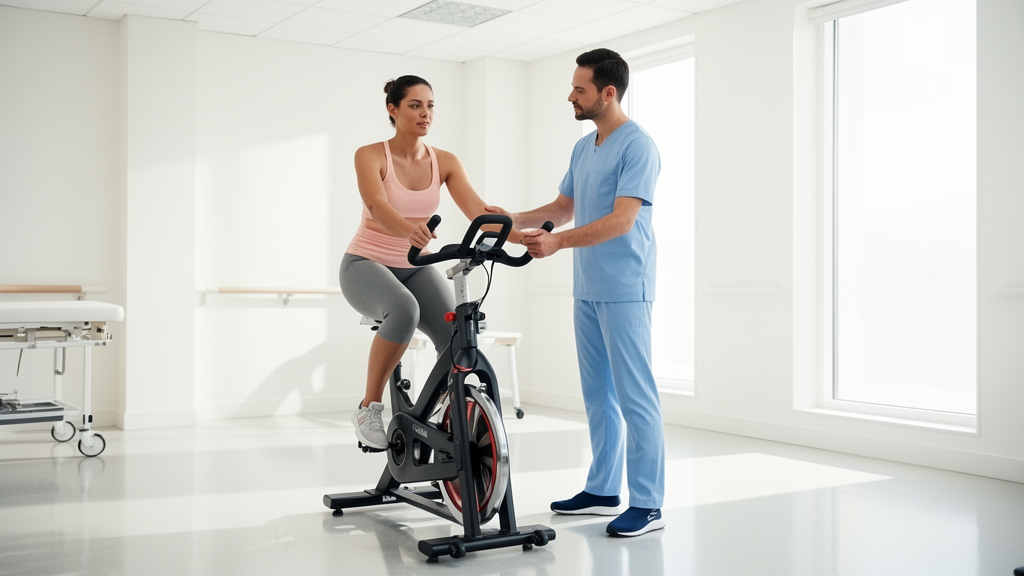
For cardiorespiratory fitness and physical performance, supervised combined exercise yielded statistically significant improvements over control conditions, increasing the six-minute walk test distance by a mean difference of 46.24 meters, with a 95 percent confidence interval from 20.87 to 71.61 meters. Supervised combined exercise also significantly improved peak oxygen uptake by a mean difference of 2.37 milliliters per kilogram per minute, with a 95 percent confidence interval from 0.56 to 4.19, securing the highest ranking for peak oxygen consumption with a cumulative ranking score of 0.919.
In contrast, multidirectional walking, exergaming, and whole body vibration emerged as the top-performing category for muscular strength and fatigue alleviation. This combined modality delivered the greatest gains in handgrip strength, showing a mean difference of 11.9 kilograms, with a 95 percent confidence interval between 6.34 and 17.46 kilograms, and achieved a cumulative ranking score of 0.992. For fatigue, multidirectional walking, exergaming, and whole body vibration demonstrated significant efficacy with a standardized mean difference of negative 0.66, with a 95 percent confidence interval from negative 1.29 to negative 0.04, ranking first with a score of 0.691, while supervised combined exercise also significantly reduced fatigue with a standardized mean difference of negative 0.39, with a 95 percent confidence interval from negative 0.67 to negative 0.12.
Regarding general quality of life, inspiratory muscle training stood out as the sole intervention associated with a statistically significant improvement relative to usual care, demonstrating a standardized mean difference of 0.54, with a 95 percent confidence interval ranging from 0.04 to 1.04, and attaining the highest ranking score of 0.455. Conversely, across all evaluated exercise modalities, no intervention generated a statistically significant improvement in functional lower-body performance as measured by the 30-second sit-to-stand test.
The authors emphasized that while these findings provide preliminary comparative evidence to inform the selection of targeted exercise modalities in rehabilitation planning, the results warrant cautious interpretation. The observed benefit of inspiratory muscle training on quality of life was characterized by a moderate ranking value and a wide confidence interval. Furthermore, the network meta-analysis did not directly test whether outcome-guided or individualized exercise prescriptions yield superior clinical outcomes compared with uniform rehabilitation regimens, indicating that direct head-to-head confirmatory trials remain necessary before practice-changing clinical guidelines can be established.
Subject of Research: Comparative efficacy of structured exercise interventions on fitness, fatigue, and quality of life in adult hematopoietic stem cell transplantation patients
Article Title: Effects of exercise interventions on physical fitness, fatigue, and quality of life in adult hematologic malignancy patients receiving hematopoietic stem cell transplantation: a network meta-analysis
Article References: Xiaoxuan, L., Shanshan, L., Huili, C., Xule, Z., Rui, Y., Jiemin, Q., & Xiaopeng, X. (2026). Effects of exercise interventions on physical fitness, fatigue, and quality of life in adult hematologic malignancy patients receiving hematopoietic stem cell transplantation: a network meta-analysis. Supportive Care in Cancer, 34(12), Article 1263. https://doi.org/10.1007/s00520-026-11468-2
Image Credits: AI Generated
DOI: 10.1007/s00520-026-11468-2
Keywords: hematopoietic stem cell transplantation, exercise interventions, network meta-analysis, hematologic malignancy, physical fitness, fatigue, quality of life, supervised combined exercise, inspiratory muscle training, exergaming, whole body vibration, multidirectional walking, six-minute walk test, peak oxygen uptake, handgrip strength, randomized controlled trials, cancer supportive care
News Source: Drew Townsend. (November 20, 2026). Network Meta-Analysis Evaluates Distinct Exercise Interventions for Stem Cell Transplant Patients. Scienmag.