A comprehensive scientific review published in Health Nanotechnology examines the accelerating convergence of deoxyribonucleic acid nanotechnology, synthetic biology, and bio-robotics across modern technological frameworks. Authored by Melaku Mekonen Kasegn, Hailay Mehari Gebremedhn, Ashenafi Teklay Yaekob, and Etsay Mesele, the paper evaluates how boundaries separating physical machinery from living organisms are progressively dissolving. The fourth industrial revolution has catalyzed advances in artificial intelligence, big data analytics, and omnipresent robotics, while Society 5.0 prioritizes collaborative human-machine integration to empower human capabilities. Central to this transformation is deoxyribonucleic acid, which serves not only as the carrier of hereditary instructions in living cells but also as a programmable building block for nanoscale engineering. By integrating biological polymers with computational decoders, researchers are developing autonomous bio-robotic systems capable of sensing environmental changes and executing precise mechanical actions. The authors synthesize breakthroughs across molecular computing, multi-dimensional additive manufacturing, and laboratory automation, establishing how engineered bio-hybrid systems are transforming scientific research, therapeutics, and global industrial workflows.
The foundational utility of deoxyribonucleic acid in nanotechnology originates from its precisely defined physical and chemical characteristics, first structurally elucidated by Watson and Crick in 1953. Composed of complementary strands pairing adenine, cytosine, guanine, and thymine, the macromolecule adheres to predictable base-pairing principles that govern molecular self-assembly. Nanotechnology researchers exploit these dependable hybridization rules to fabricate nanoscale architectures using structural DNA nanotechnology and origami methodologies. These synthetic structures can be programmed with molecular recognition capabilities, enabling dynamic conformational shifts in response to optical, chemical, or magnetic triggers. Combining nucleic acid strands with inorganic particles enables the fabrication of hybrid materials with exceptional mechanical properties. For example, composite materials formed from hollow nanoparticles bound by DNA molecules exhibit remarkable strength, stiffness, lightness, and resilience. Furthermore, dynamic base-pairing mechanisms facilitate the construction of mobile nanoscale devices, including synthetic molecular motors that process chemical signals to coordinate spatial reconfiguration for versatile diagnostic biosensors and targeted drug delivery systems.
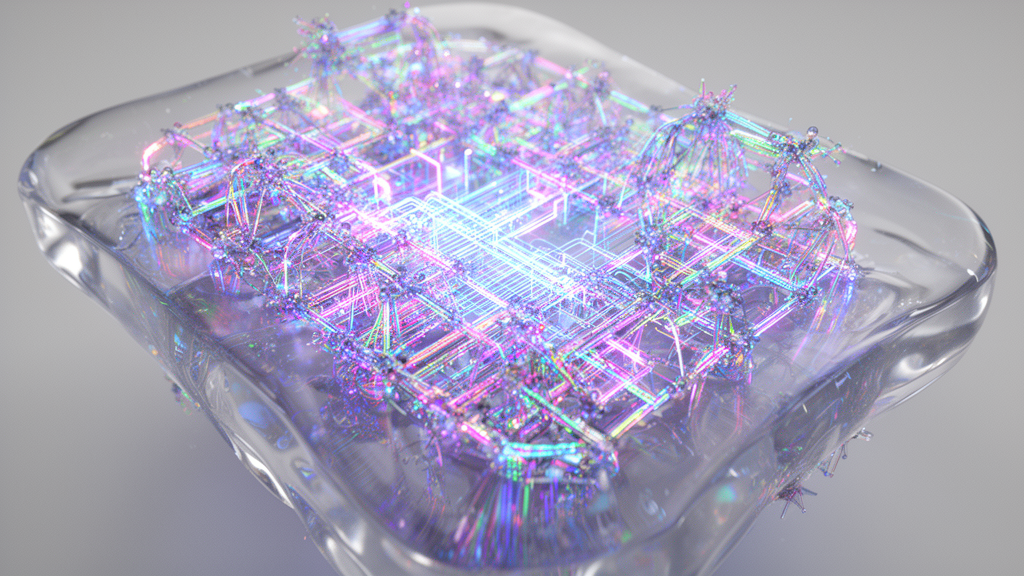
A primary driver behind integrating nucleic acids into bio-robotics is the global data storage crisis confronting conventional silicon-based computing hardware. With global digital information projected to reach 3 multiplied by 10 to the twenty-fourth bits within two decades, and annual storage requirements estimated at 1.75 multiplied by 10 to the fourteenth gigabytes by 2025, silicon media capped at densities of approximately 10 to the third gigabytes per cubic millimeter face physical limits. In contrast, deoxyribonucleic acid provides high-density, durable storage capable of enduring extreme conditions with minimal maintenance costs and energy efficiency. Approximately 700 terabytes of data can be stored in one gram of DNA, vastly outperforming magnetic storage where equivalent capacity requires 233 hard disks weighing 151 kilograms, with density reaching 10 terabytes per cubic centimeter. The practical storage workflow involves oligonucleotide synthesis, storage solution incorporation, and sequencing retrieval. Halvorsen and Wong demonstrated this by decoding an eleven-byte binary message spelling “Hello world” on an electrophoresis gel. Additionally, mapping binary data through Chargaff’s rules provides cryptographic randomness for image encryption.
Beyond passive information storage, nucleic acid nanotechnology serves as the mechanical engine powering autonomous molecular robotics. Living cells employ specialized molecular motors, such as enzymatic complexes executing transcription, replication, and adenosine triphosphate synthesis, to convert chemical energy into mechanical displacement. Researchers have harnessed these mechano-chemical principles to construct synthetic computerized DNA motors, programmable circuits, and autonomous walkers. Landmark achievements include the self-assembling DNA force clamp developed by Nickels and colleagues for nanoscale manipulation of individual molecular objects. Subsequent investigations by Wickham and collaborators demonstrated a 100-nanometer DNA track supporting an autonomous motor completing a complex sixteen-step trajectory with continuous directional fidelity. Structural origami designs have also yielded bipedal DNA walkers that emulate kinesin stepping kinematics across origami surfaces. Furthermore, Gu and team constructed a programmable molecular assembly line utilizing a tensegrity-triangle walker with manipulators to retrieve cargo from specific cassettes, while Thubagere developed algorithms directing DNA robots to sort two distinct molecular payloads simultaneously across designated origami destinations.
The fusion of biological principles with mechanical engineering extends directly into macroscale robotics, establishing the multidisciplinary domain of bio-robotics. Bio-robotics explores systems that bridge biotic and abiotic boundaries through biomimicry and soft robotics. Soft robots incorporate compliant polymeric and elastomeric materials that closely replicate the elasticity and rheological behaviors of biological tissues, enabling safer and more natural interactions with unstructured physical surroundings. Interactive robotic platforms now incorporate multimodal sensory arrays capable of replicating biological senses, including vision, audition, touch, smell, and taste, alongside specialized sensory interfaces that measure temperature and pressure changes. Notably, bio-inspired robotic optical sensors are being engineered to perceive ultraviolet light, mirroring navigational adaptations observed in insects, birds, and aquatic species. Furthermore, bio-hybrid robotics integrates living cellular tissues directly with synthetic structures, exemplified by bio-actuators that utilize contracting muscle cells to drive locomotive movements. Parallel developments in bioelectronics unite biological structures and synthetic electronics for motor control and non-invasive physiological monitoring, including flexible epidermal sensors designed for real-time sweat analysis.
Advancements in additive manufacturing represent another critical pillar enabling bio-robotic fabrication, particularly through the transition from three-dimensional printing to dynamic four-dimensional bio-printing. Following the first three-dimensional printing patent granted to Hull in 1986, early additive manufacturing was constrained by the static nature of rigid printed products, which could not replicate the mobile nature of living tissues. Four-dimensional bio-printing surmounts this limitation by introducing stimuli-responsive biomaterials as functional bio-inks that undergo controlled conformational transformations after fabrication. Designing these dynamic constructs necessitates mathematical modeling that accounts for print toolpaths, intended target shapes, bio-ink properties, and specific actuation mechanisms. The scientific literature documents diverse stimuli-responsive bio-inks tailored to distinct physical triggers. Temperature-responsive polymers like poly(N-isopropylacrylamide) exhibit reversible physicochemical transitions near 32 degrees Celsius, while chemical detectors integrate functional carboxyl, pyridine, sulfonic, phosphate, or tertiary amine groups that absorb or release protons in response to pH variations. Cellulosic materials respond to ambient humidity, polyelectrolyte hydrogels bend or swell under electrical fields, photochromic polymers initiate photoreactions upon optical irradiation, and acoustic-responsive materials actuate under sound waves.
Practical implementations of advanced bio-printing span regenerative medicine, targeted therapeutics, and bio-mimetic machinery. In robotics engineering, three-dimensional printing platforms fabricate programmable silicone actuators featuring bio-inspired lead angles that replicate the contraction and elongation kinematics of muscular hydrostats. This manufacturing adaptability enabled the development of the Faive Hand, a biomimetic robotic terminal controlled by synthetic human tendons that carries out routine household and manual tasks. In pharmaceutical manufacturing, additive manufacturing enables the localized delivery of customized chemical compounds tailored to patient requirements. A notable commercial example is the T21 drug product developed by Triastek, which utilizes three-dimensional tablet printing to achieve targeted release within the human colon for the treatment of ulcerative colitis. Beyond pharmacological delivery, additive bio-fabrication supports the production of personalized prosthetics, bone fracture fixation devices, cardio stimulators, and vascular regeneration scaffolds, mitigating chronic shortages of donor organs. In forensic investigations, three-dimensional printed anatomical skull replicas have provided decisive physical evidence to secure murder convictions during judicial proceedings, demonstrating the broad practical applicability of biologically inspired additive manufacturing.
Laboratory automation represents another vital arena where bio-robotics is accelerating biological research, shifting historically labor-intensive protocols toward high-throughput automated workflows. In microbial engineering and enzymology, automated robotic platforms integrated with machine learning algorithms systematically optimize enzyme screening, parameter optimization, and bioprocess control. A prominent system is the RoboLector automated platform, which performs high-throughput screening of upstream and downstream fermentation conditions while evaluating cellulose cel5A protein expression in Kluyveromyces lactis cultures. Automated robotic setups have similarly streamlined the functional screening of diverse industrial biocatalysts, including hydrolases, Baeyer-Villiger monooxygenases, dehalogenases, transaminases, and acylases. Specialized robotic systems have screened aspartate kinase III variants displayed on M13 bacteriophage surfaces, while automated high-throughput flow cytometry platforms have isolated mutated glucose oxidase enzymes presented on yeast surfaces. Furthermore, Leferink engineered automated screening systems to analyze plant monoterpene cyclase libraries expressed in Escherichia coli, while droplet-based microfluidic chips have evaluated five active enzymes secreted by Yarrowia lipolytica derived from Aspergillus niger, illustrating how automated robotics has become indispensable for managing massive biological data sets.
Automated DNA assembly and high-throughput molecular cloning represent transformative milestones that address the limitations of manual pipetting, which is inherently vulnerable to human fatigue and variability. Robotic liquid-handling platforms streamline high-throughput cloning protocols, enabling the rapid assembly of extensive genetic libraries and expression constructs at reduced reaction volumes and lower reagent costs. In an illustrative experimental achievement, Bairy and colleagues established complete laboratory automation encompassing gene cloning, in vivo expression screening, large-scale protein purification, and subsequent protein crystallization within Escherichia coli host organisms. To quantify the comparative advantages of automated workflows over traditional manual techniques, Pavan and collaborators developed the Puppeteer software platform, which utilizes specialized Q-metric evaluation algorithms to assess output, monetary expense, and protocol duration during DNA assembly. Further expanding accessibility, researchers developed the open-source DNA-BOT platform, demonstrating the simultaneous assembly of 88 genetic constructs consisting of ten separate elements to explore the design space of a three-gene operon. Beyond microbial platforms, automated micro-robotic instruments are deployed to execute precise genetic microinjections and manipulations in complex multicellular organisms, including fruit flies and zebrafish embryos.
Despite the transformative promise of bio-robotics and automated biotechnology, the authors emphasize critical technical bottlenecks, safety risks, and ethical governance imperatives that require cautious management. From a technical standpoint, bio-robotic platforms currently lack comprehensive explanations of in vivo pharmacokinetics, structure-performance relationships, and physiological circulating half-lives. Furthermore, laboratory automation faces challenges in integrating disparate liquid-handling machinery, adapting rigid mechanical grippers to handle varied glass tubes and plates, and absorbing high initial equipment expenses. On a broader societal scale, expanding automated cloning and bio-printing technologies raises biosecurity concerns regarding bioterrorism, ecological disruptions, patent disputes, and the potential displacement of agricultural labor by synthetic food manufacturing. In artificial intelligence systems, embedded algorithmic bias, catastrophic forgetting, and uncertain liability assignment for autonomous errors present persistent regulatory difficulties. Compounding these considerations, the authors reflect on deeper societal dilemmas, including potential workforce displacement, commodification of printed tissues, and scenarios involving autonomous biological systems operating without human control. To prevent unmonitored ecological or societal harms, the review underscores that clear legal statutes, standardized biosecurity procedures, and strict ethical oversight must ensure that autonomous bio-robotics remain strictly under human control.
Subject of Research: Technological integration of DNA nanotechnology, bio-robotics, and automated cloning systems
Article Title: The power of deoxyribonucleic acid and bio-robotics in creating new global revolution: a review
Article References: Kasegn, M. M., Gebremedhn, H. M., Yaekob, A. T., & Mesele, E. (2025). The power of deoxyribonucleic acid and bio-robotics in creating new global revolution: a review. Health Nanotechnology, 1(1), Article 3. https://doi.org/10.1186/s44301-024-00002-0
Image Credits: AI Generated
DOI: 10.1186/s44301-024-00002-0
Keywords: DNA nanotechnology, bio-robotics, DNA computing, synthetic biology, 4D bio-printing, automated cloning, molecular motors, DNA origami, stimuli-responsive materials, RoboLector, DNA-BOT, bio-hybrid robots, high-throughput screening, data storage, precision medicine, biotechnology automation, bioelectronics
News Source: Denise Maddox. (November 19, 2026). DNA Computing and Bio-Robotics Revolutionize Biological Data Storage and Automation. Scienmag.